

Description
Silk Floss Tree – Chorisia Speciosa Overview
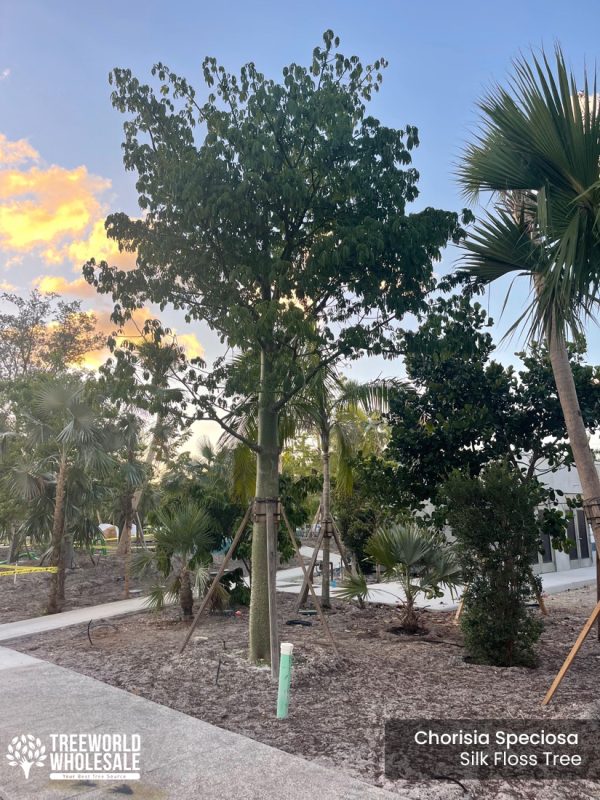
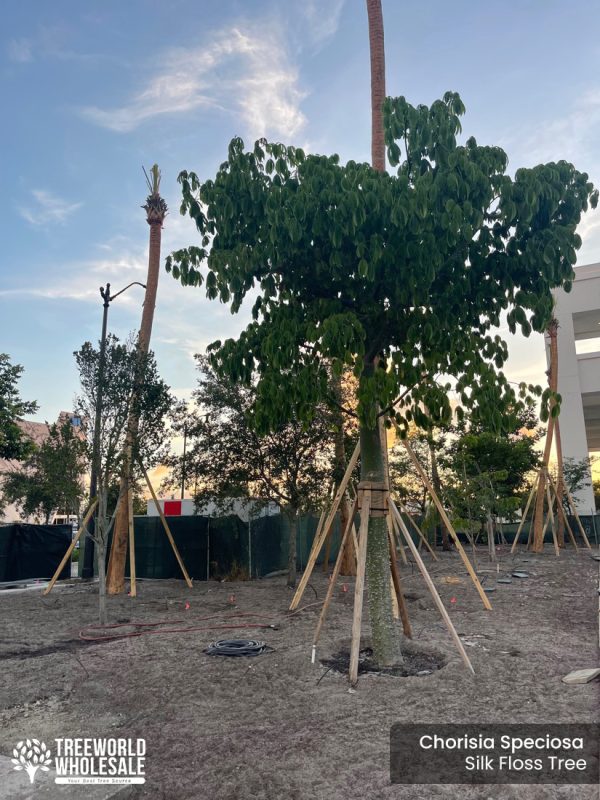
Chorisia Speciosa (Floss Silk tree), also known by its current botanical name Ceiba Speciosa, is a large ornamental tree native to the tropical and subtropical forests of South America. It reaches up to 60 feet (18.29 m) in height, initially developing a conical shape that broadens into a wide, umbrella-like crown with age.
Floss Silk Tree – Description
One of the most visually distinctive trees in any landscape, the Silk Floss tree features a bulbous swollen trunk with green bark that turns gray with age, covered in blunt triangular spines — on both trunk and branches. The light green leaves are palmately compound with 5 to 7 lance-shaped leaflets, each about 5 inches (12.7 cm) long, dropping just before flowering. Large horizontal branches give the crown a dramatic, spreading silhouette.
The Pink Silk Floss tree flowers are among the showiest of any South Florida specimen — funnel-shaped, 4 to 6 inches (15.24 cm) in diameter, pink with a creamy white center, attracting butterflies and other pollinators. Fruits are woody ovoid pods about 8 inches (20.32 cm) long, splitting open when ripe to release fluffy white fibers and bean-sized black seeds.
Ceiba Speciosa – Cultivation & Landscape Use
In cultivation, Ceiba Speciosa requires well-drained soils and regular watering for full flowering. Outside tropical climates it seldom sets seeds; propagation is by tip cuttings. The silky fiber from the pods is a substitute for true Kapok (Ceiba Pentandra) and has historically been used as stuffing for life jackets and mattresses.
Its unusual spiny trunk, dramatic crown, and spectacular fall bloom make the Silk Floss tree an outstanding specimen plant for public open spaces, large gardens, and conservatories. It also performs well in large planters and xerophytic gardens, tolerating drought once established.
🌳 More popular and beautiful plants: Red Silk-Cotton Tree