
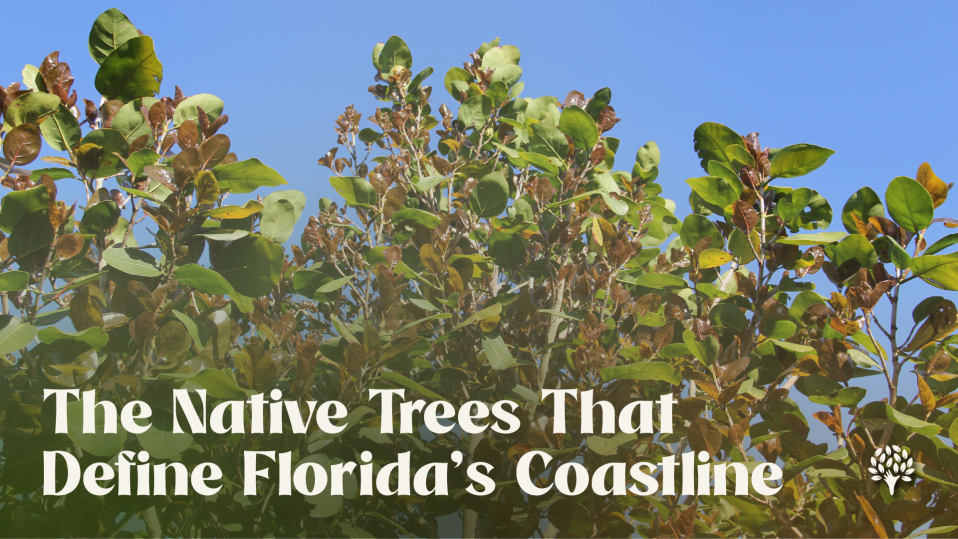
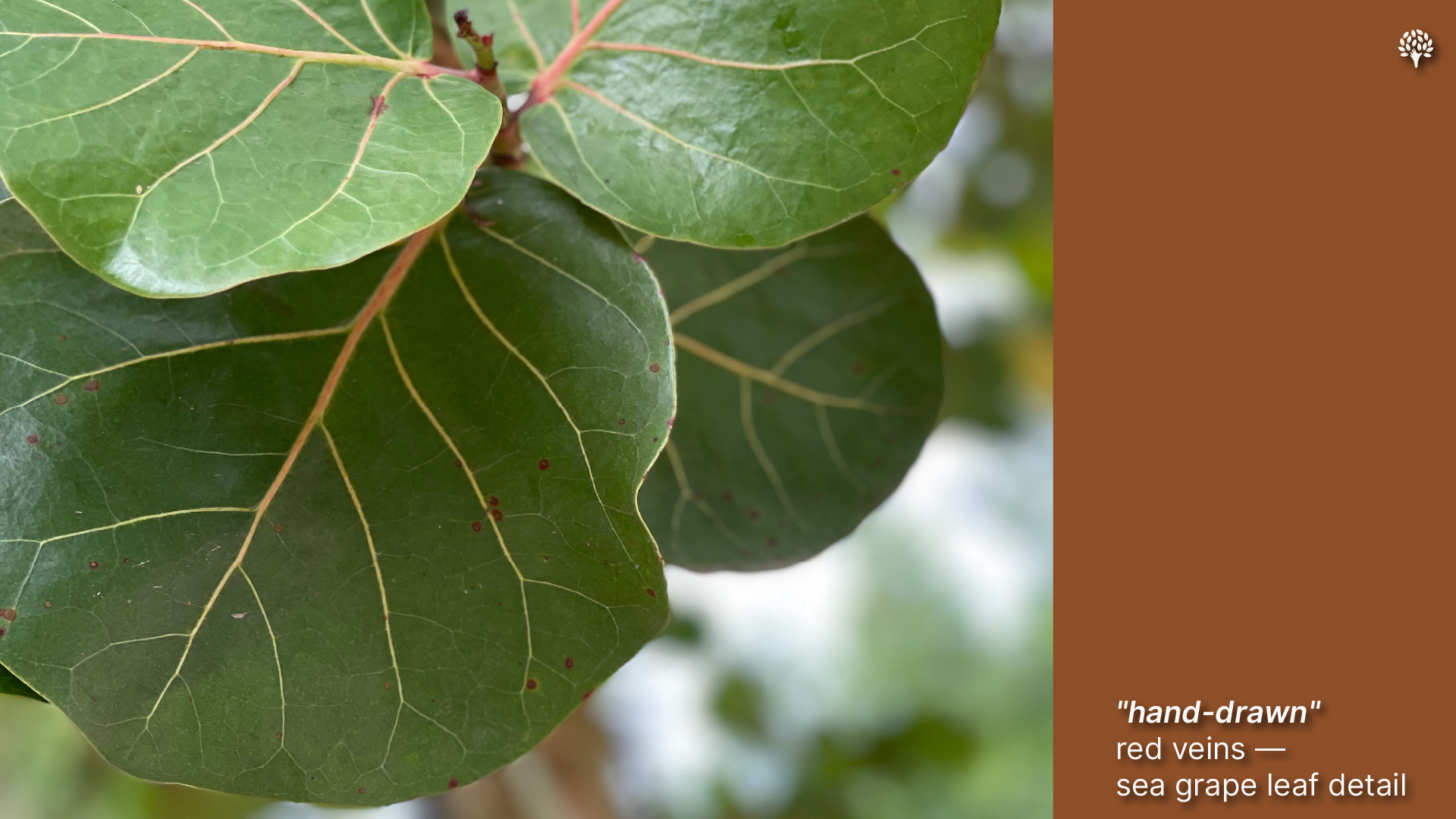
We have some coastal native trees that have become a trademark not only in Florida but in the Caribbean as well. If you’ve ever walked a beach in South Florida or wandered through a coastal hammock, you’ve probably run into large, rounded, leathery leaves with reddish veins that look almost hand-drawn. Not far from this jewel there’s also a close relative that, seen from afar, looks like a single unbroken wall of green. But walk up to it, and that illusion breaks apart — every leaf has quietly taken its own shape, no two quite alike.
That’s the trick hiding in its name: diversifolia, “diverse leaves.” And between both, a unique natural hybrid that has been crowned the “sea plum.” All three belong to Coccoloba, a tropical genus native to the Caribbean and Central America that has adapted to thrive in some of Florida’s harshest coastal environments.
Key Takeaways:
- Coccoloba genus – tropical flowering plants perfectly adapted to Florida’s harshest coastal conditions: salt spray, drought, hurricanes, and poor soil.
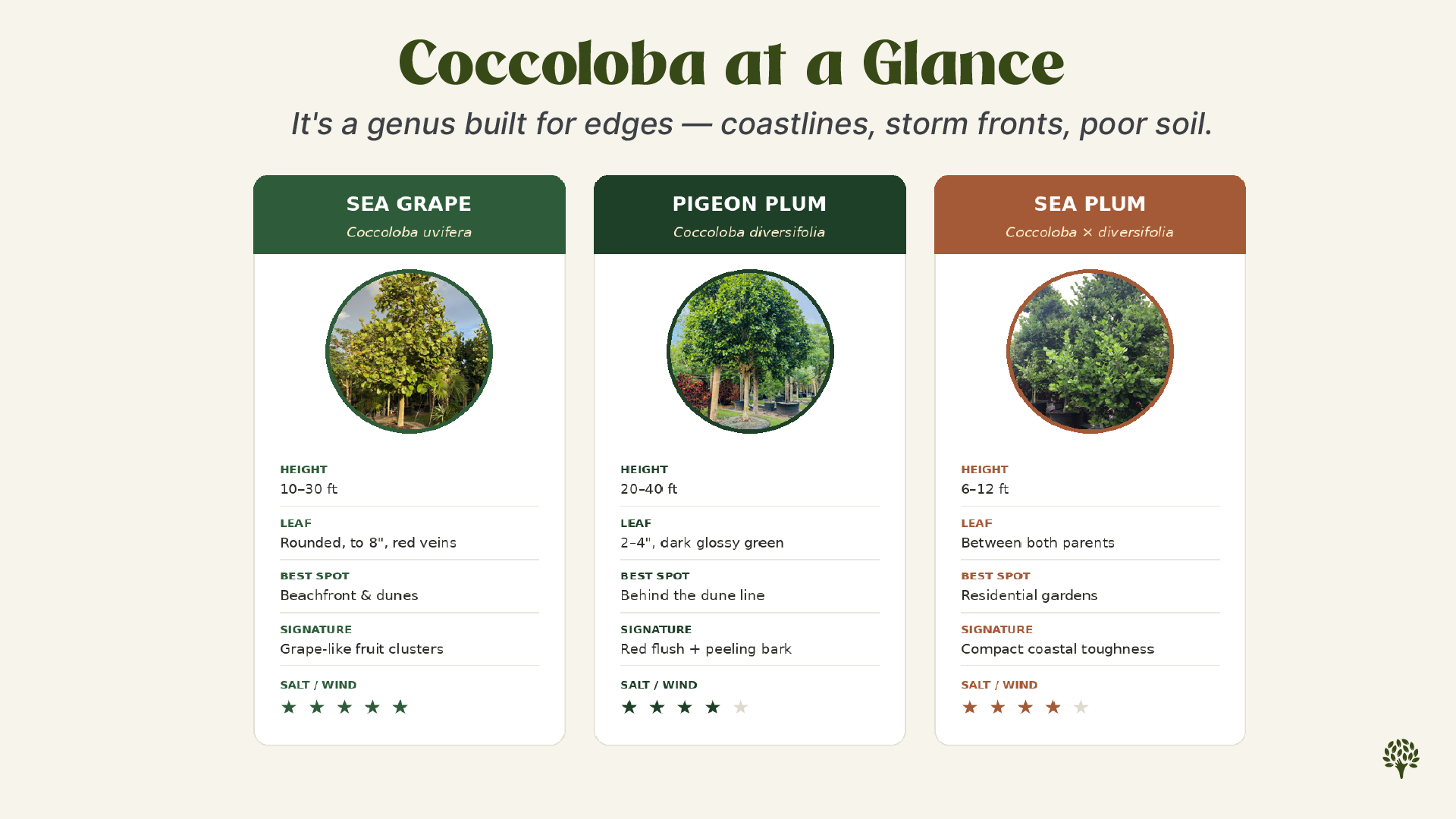
- Three species at TreeWorld: Sea Grape (10-30 ft, multi-trunk, beachfront), Pigeon Plum (20-40 ft, formal, inland), and their natural hybrid Sea Plum (6-12 ft, compact).
- All three are salt-tolerant, drought-resistant, hurricane-proof, and low-maintenance once established — no excessive water, fertilizer, or chemicals needed.
- Functional landscape uses: privacy screens, windbreaks, dune stabilizers, erosion control, and coastal shade trees suitable for resort and residential projects.
- Ecosystem benefits: glossy evergreen foliage with distinctive red veins, fragrant flowers attract pollinators, edible fruit feeds native birds (mockingbirds, doves, robins).
- Choose based on space and location: Sea Grape for waterfront maximum salt exposure; Pigeon Plum for formal, inland, part-shade sites; Sea Plum for compact residential gardens.
- Native choice = authenticity and resilience: plants genuinely built for Florida’s coast, requiring minimal maintenance and supporting native wildlife.
Coccoloba, Explained: A Storm-Resistant, Low-Water Native for Beachfront Yards
Both revealing their familiarity, they belong to Coccoloba, a genus of flowering plants in the buckwheat family (Polygonaceae). With roughly 120 species of trees and shrubs native to the tropical Americas, with its greatest diversity found across the Caribbean and Central and South America.
Florida sits near the northern edge of that range, home to a small handful of species that have adapted to some of the harshest ground in the state:
- exposed dunes,
- salt spray,
- limestone rock,
- the battering of hurricane season.
It’s a genus built for edges — coastlines, storm fronts, poor soil — and among the species that made it this far north are:
- sea grape (Coccoloba uvifera)
- pigeon plum (Coccoloba diversifolia),
- along with the natural hybrid between them, Coccoloba × diversifolia.
Across the genus, these traits tend to repeat themselves. Coccoloba species are built to withstand salt spray and drought, which is what makes them such reliable windbreaks, privacy screens, and dune stabilizers — much like mangroves, they help hold shorelines together against the erosion that hurricanes and storms leave behind.
Many also bear drooping clusters of berries that ripen from green to a deep purplish-red by fall, edible if a little tart, and often turned into jams, jellies, or wine. Their foliage tends to be broad, rounded, and evergreen, frequently marked with those same reddish veins that give the genus its quiet, distinctive look.
It’s this combination of resilience, fruit, and form that defines the genus Coccoloba.
At TreeWorld, we proudly grow three species:
- sea grape (Coccoloba uvifera),
- pigeon plum (Coccoloba diversifolia),
- their natural hybrid, commonly referred to as sea plum (Coccoloba × diversifolia).
Sea Grape: Salt-Tolerant Landscaping Built for the Shoreline
Sea grape (Coccoloba uvifera) is probably the most recognizable Coccoloba in Florida.
It’s a shrub or small tree, 10 to 30 feet tall, with large, rounded leaves with heart-shaped bases, up to 8 inches across, glossy green and often veined in red. In summer it produces fragrant white flower spikes 6 to 10 inches long, and by fall those flowers turn into grape-like fruit clusters that ripen from red to deep purple.
It’s native to coastal hammocks and dunes throughout central and south peninsular Florida, as well as the Caribbean and parts of Central and South America, and its salt tolerance is extraordinary: it grows naturally right along the beachfront, in sandy soil, needing very little water once established. Its extensive root system helps anchor sand in place, making it a real ally against coastal erosion and storm surge damage.
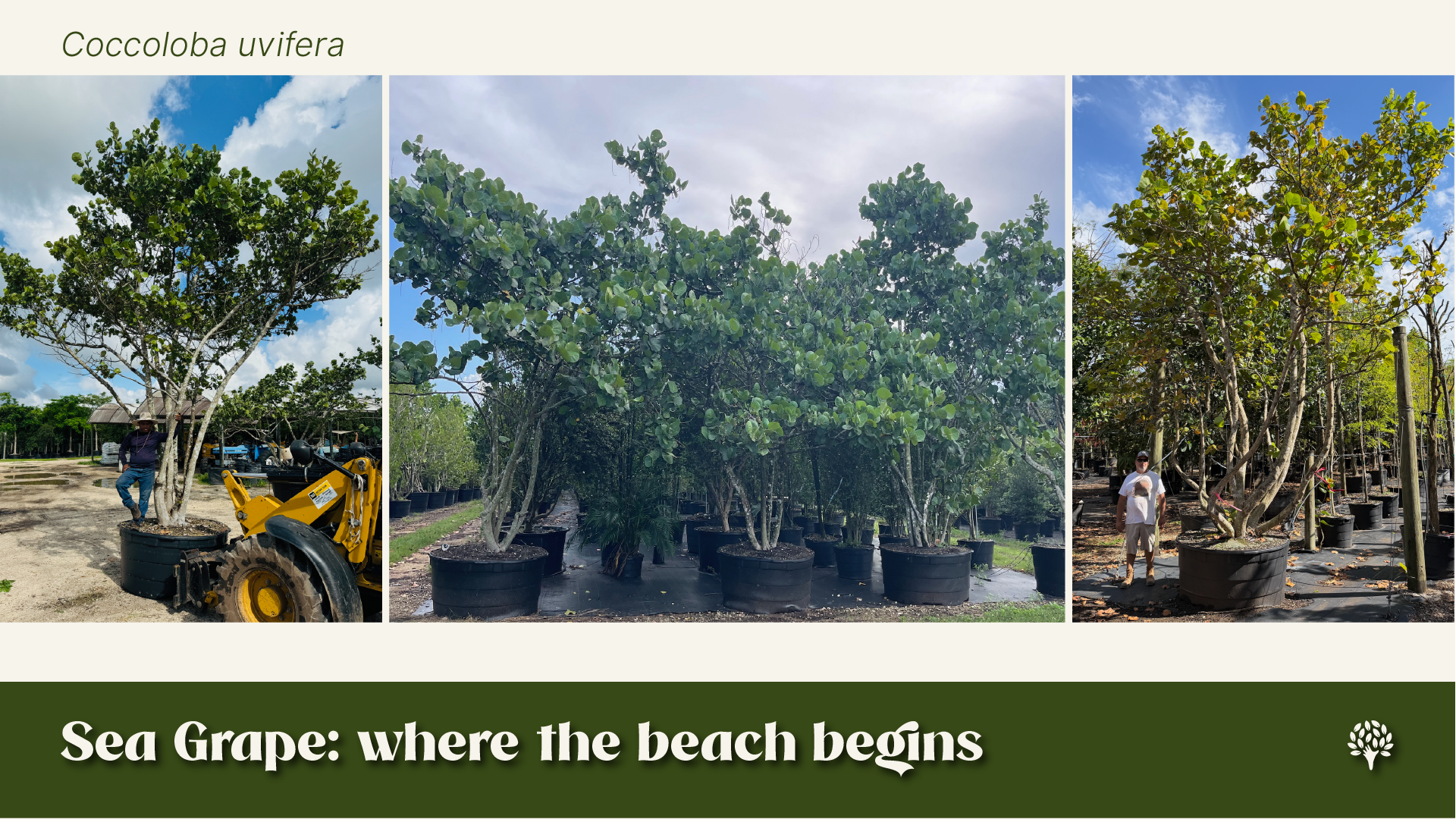
In the landscape Sea grape works as a:
- privacy hedge, windbreak,
- sculptural specimen tree: its flowers attract butterflies and bees, and its fruit is devoured by birds.
If your project sits just steps from the water, you’d be hard-pressed to find a species better suited to the site.
It’s also a favorite in resort and hospitality landscaping, where its dense canopy and tropical look do double duty as shade and screening. At TreeWorld, we grow sea grape both in its natural multi-trunk form and trained to a single trunk, depending on whether the look you’re after is a lush, layered hedge or a cleaner, more architectural specimen tree.
Pigeon Plum: A Storm-Resistant Native Tree for Year-Round Interest
Pigeon plum (Coccoloba Diversifolia) is the less famous sibling, but just as valuable.
Native to the Florida Keys, South Florida, and the West Indies, it’s a more upright, formal tree than sea grape: 20 to 40 feet tall, with multiple trunks, a dense canopy, and a pyramidal to columnar form when young that rounds out with age. While sea grape claims the front line of the beach, pigeon plum generally sets its roots a bit further inland, in hammocks and upland sites just behind the dune line, where it’s less exposed to direct salt spray.
Its leaves are smaller than sea grape’s (2 to 4 inches), glossy, leathery, dark green, and drop uniformly in March only to flush back almost immediately in bright red — a seasonal display few native trees offer.
The bark is another distinctive feature: light gray and smooth when young, it becomes mottled and peels off in large plates as it matures, revealing a dark purplish tone underneath, which gives it ornamental value even in winter.
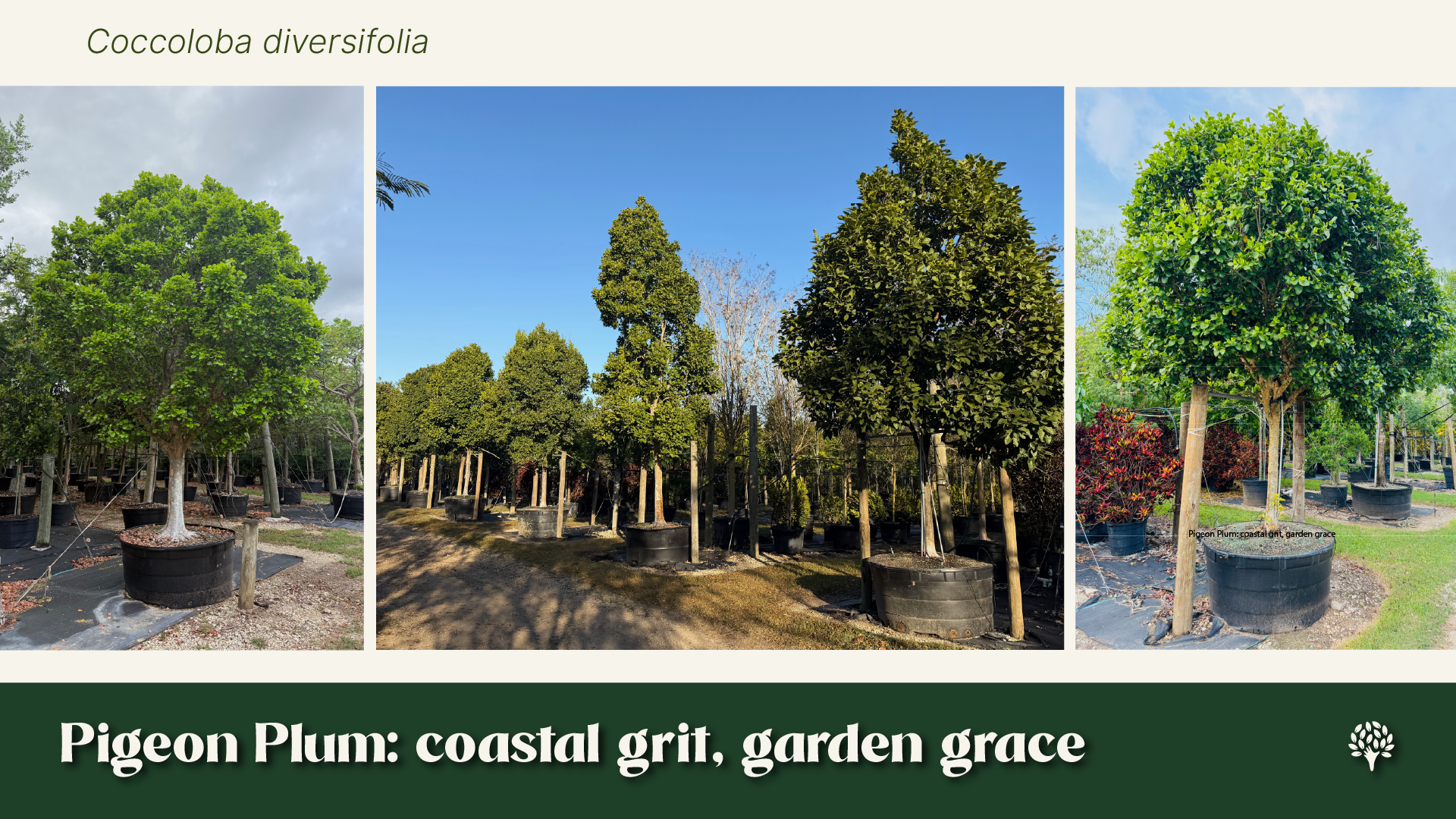
It produces clusters of whitish-green flowers in spring and summer, followed by small, dark, edible fruit that ripens in fall and winter and is irresistible to mockingbirds, doves, robins, and woodpeckers.
Unlike sea grape, pigeon plum tolerates partial shade better and thrives in limestone, rocky, or sandy soils with good drainage. It’s just as resistant to salt, drought, and hurricane-force winds, making it ideal as a dense, multi-trunk hedge along fences, highway medians, parking lots, or any urban site that needs a tough, low-maintenance green screen.
Sea Plum: Florida’s Own Natural Hybrid
Between these two relatives, a natural hybrid emerged spontaneously — presumed to have occurred in Florida — combining the best of both: Coccoloba × diversifolia, often sold as “sea plum.”
It’s not a lab-bred cross but the result of cross-pollination between sea grape and pigeon plum growing near each other, something that happens naturally wherever the two species coexist.
Sea plum has a more compact form than either parent, typically 6 to 12 feet tall and 4 to 6 feet wide, making it a great fit for residential gardens where a mature sea grape or pigeon plum would simply be too large. Its leaves are bigger than pigeon plum’s, with a texture closer to sea grape’s — a visual compromise between the two parents.
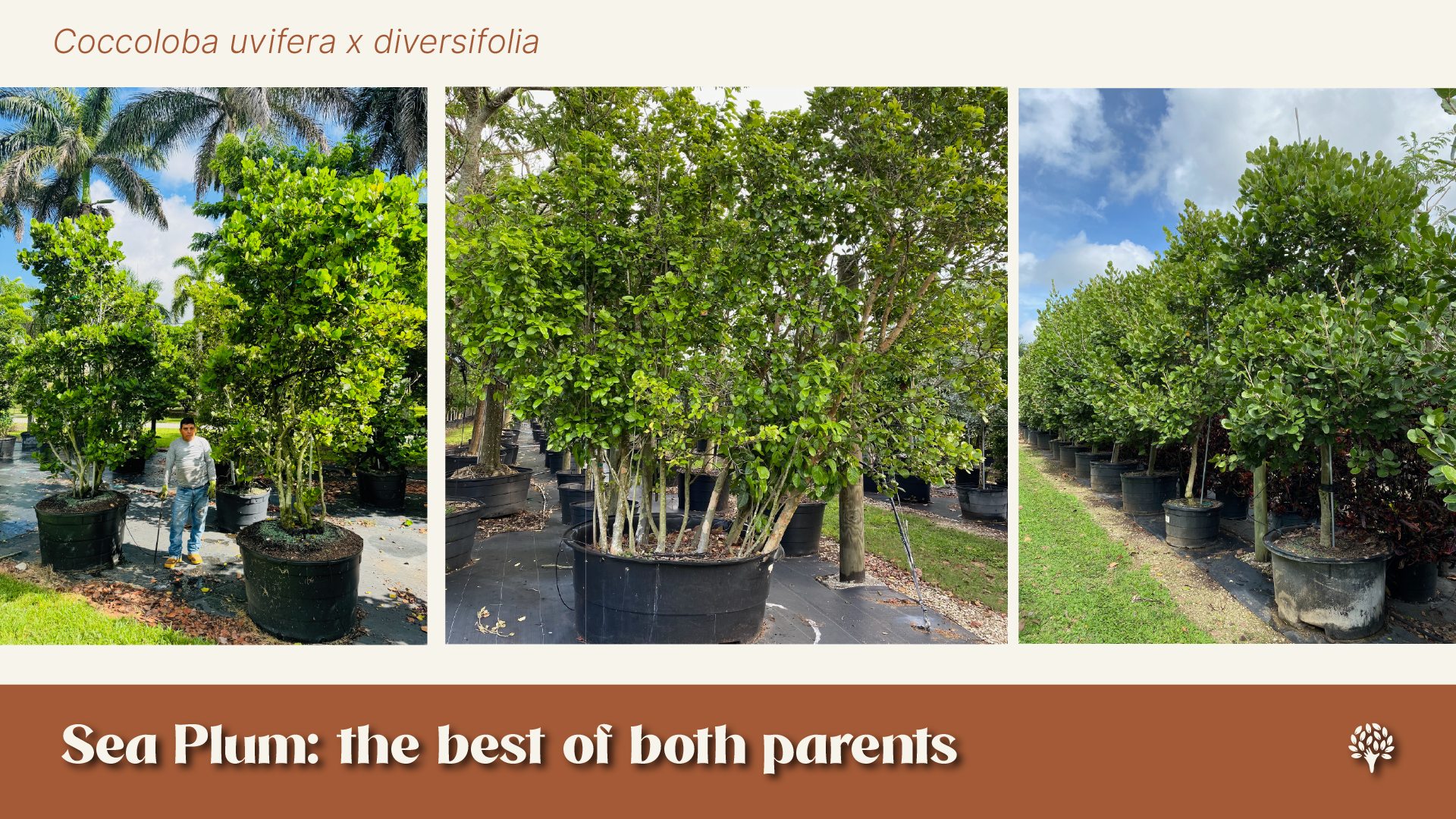
Sea Plum inherits the best of both species’ toughness:
- high tolerance for salt,
- salt-laden wind,
- drought,
- full sun,
- partial shade,
- in soils ranging from dry to moist.
Because it’s a hybrid, its seeds don’t breed true to the parent plant, so it’s propagated from stem cuttings, which in practice means every specimen sold is genetically identical to the original selected plant.
Native by Design: Why Coccoloba Belongs in Florida Landscaping
Beyond the botanical trivia, these three Coccoloba matter to anyone who thinks of their garden as part of an ecosystem rather than just decoration:
- they’re plants that evolved specifically for the toughest conditions the Florida coast throws at them — salt, wind, drought, hurricanes,
- supporting native wildlife with flowers for pollinators and fruit for birds.
Choosing among the three comes down to space and the effect you’re after.
- If your garden sits right on the water and you want maximum salt tolerance and a classic tropical character, sea grape (C. uvifera) is the pick.
- If you want a more formal shade tree with year-round interest thanks to its bark and red flush, pigeon plum (C. diversifolia) is the better fit, especially further inland or in partly shaded sites.
- If space is limited but you still want that coastal toughness in a compact package, the hybrid Coccoloba × diversifolia is probably the best middle ground, particularly for hedges of manageable size.
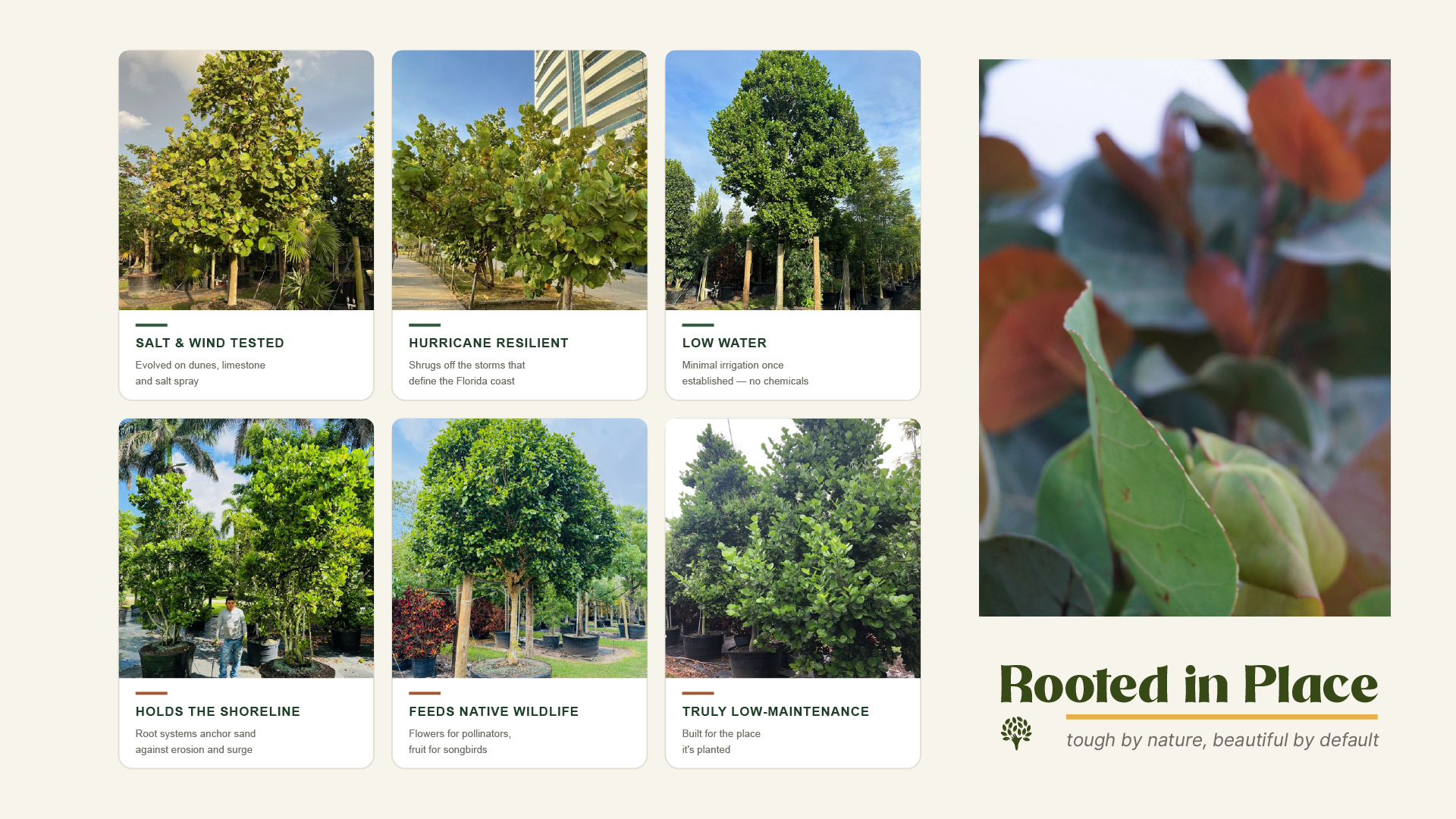
All three share something worth underscoring: once established, they need very little water, require minimal fertilizing, and shrug off the weather events that define Florida. In that sense they’re low-maintenance in the truest sense of the word — not because they need no care at all, but because they’re genuinely built for the place they’re planted.
Bringing native Coccoloba into a garden project isn’t just an aesthetic or practical choice — it’s a way of grounding the landscape in the real identity of the Florida coast, instead of importing ornamentals that demand water, chemicals, and constant upkeep to survive in a climate they don’t belong to.
Sea grape, pigeon plum, and their natural hybrid are each, in their own way, living emblems of that coastline: they’ve spent generations adapting to salt, sun, and storms, and they remain some of the smartest — and most beautiful — choices for anyone who wants a garden that truly belongs to Florida.
Rounding Out the Palette: Other Florida Coastal Natives
If you’re building out a broader native, salt-tolerant landscape, Coccoloba pairs naturally with other Florida coastal stalwarts.
Green buttonwood (Conocarpus erectus) — often called the fourth mangrove for how well it handles salt water and salty soil — brings that same wind- and drought-tolerant toughness in a smaller, often wind-sculpted form.
Crabwood, or oysterwood (Gymnanthes lucida), is a quieter hammock native with glossy, reddish new growth and the same appetite for salt, wind, and drought, and it also happens to be the larval host plant for the Florida purplewing butterfly.
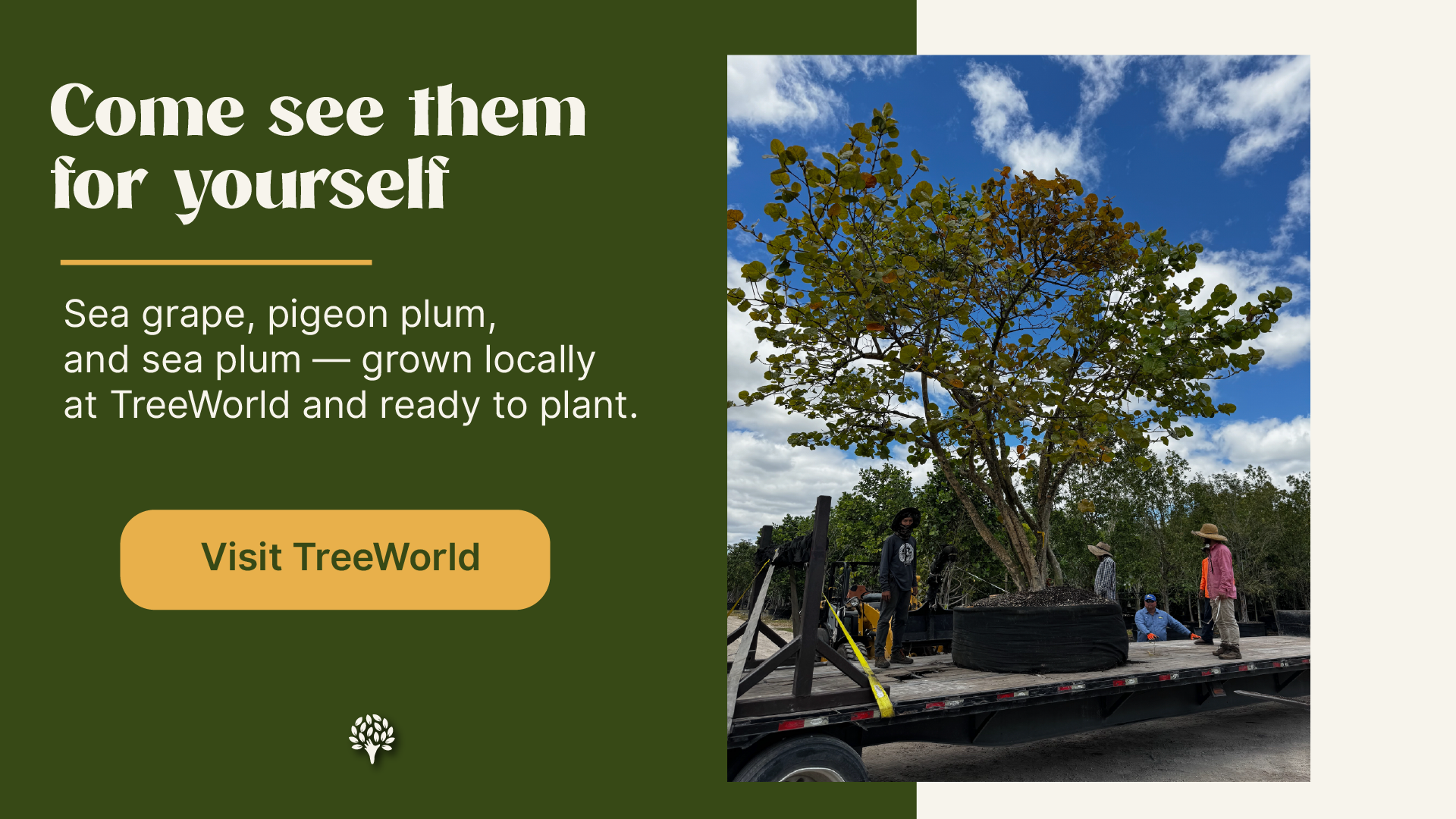
Both make excellent companions to sea grape, pigeon plum, and sea plum in a landscape built entirely around Florida’s native coastal palette.If any of these caught your eye, come see them for yourself at TreeWorld — we’ve got sea grape, pigeon plum, and sea plum on hand, grown locally and ready to plant.
📍 24605 SW 192 Ave, Homestead, FL 33031
📞 305-245-6886
✉️ info@treeworldwholesale.com
Frequently Asked Questions About Coccoloba Trees in Florida Coastal Landscaping
Which Coccoloba species should I choose for my landscape?
Sea Grape if your site sits right on the water with maximum sun and salt exposure — it’s the most salt-tolerant and creates a classic tropical aesthetic. Pigeon Plum if you’re planting further inland, want a taller formal tree with year-round ornamental interest, or have partial shade. Sea Plum if space is limited but you still want that coastal toughness — it’s the most compact and flexible of the three, working equally well in residential gardens and as a hedge.
How fast do Coccoloba trees grow, and how large do they get?
Sea Grape reaches 10–30 feet tall; Pigeon Plum 20–40 feet; Sea Plum 6–12 feet (the most manageable). Growth rates vary with soil, water, and sun, but all three establish faster once their root systems are developed. Sea Plum offers the quickest payoff for residential projects because it reaches mature size sooner.
Do Coccoloba trees need a lot of water?
No. Once established, all three are extremely drought-tolerant and need minimal supplemental watering. Sea Grape grows naturally in sandy beach soil with virtually no water. This makes them ideal for water-conscious landscapes and coastal sites where irrigation infrastructure may be limited.
Can I prune or shape Coccoloba trees?
Yes. Sea Grape can be trained to single or multi-trunk forms and responds well to pruning for shape and density. Pigeon Plum naturally forms a formal canopy but tolerates shaping. Sea Plum’s compact form requires less pruning overall but benefits from occasional thinning to maintain air circulation. Avoid heavy pruning during hurricane season.
When is the best time to plant Coccoloba, and do they need fertilizer?
Plant in spring or early summer to allow root establishment before hurricane season. All three prefer well-draining soil — amend sandy or rocky soil with compost if planting in poor conditions. Minimal fertilizing is needed once established; a light spring application supports new growth but isn’t necessary for survival or health.