

Description
Jamaican Caper Tree – Plant Description
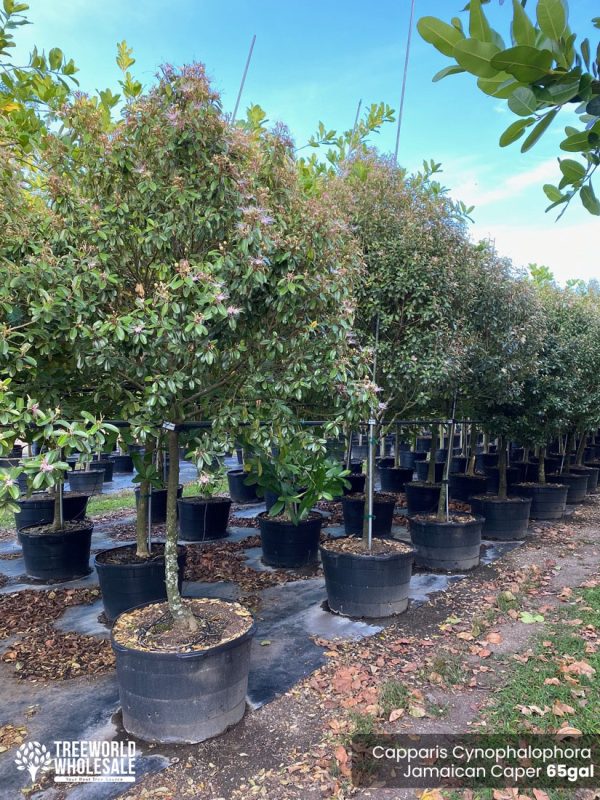
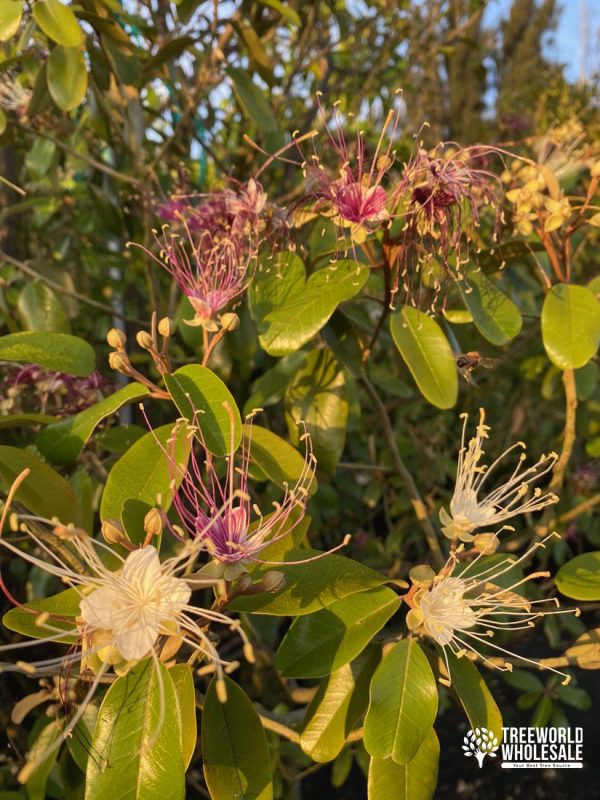
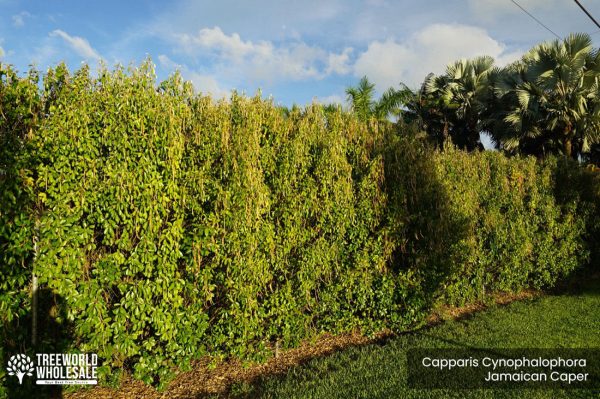
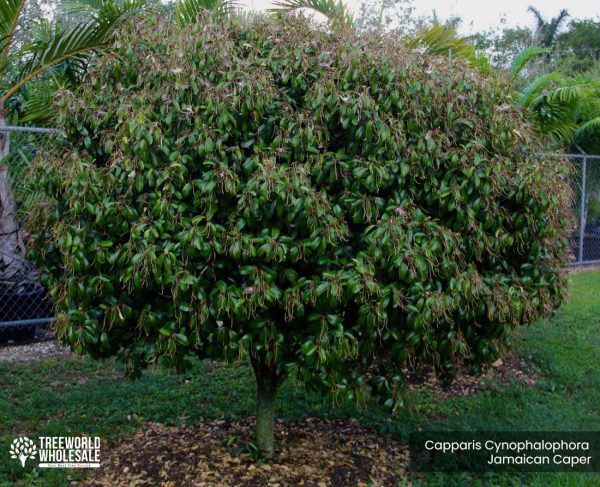
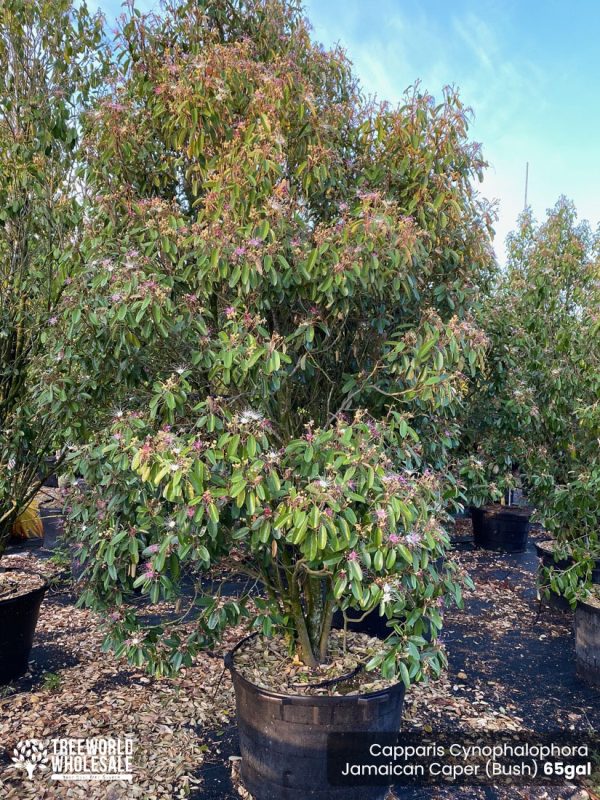
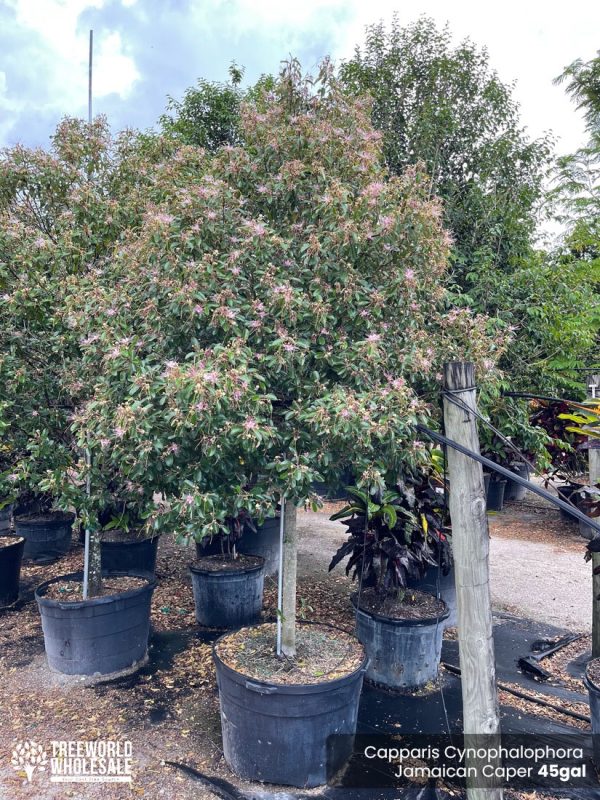
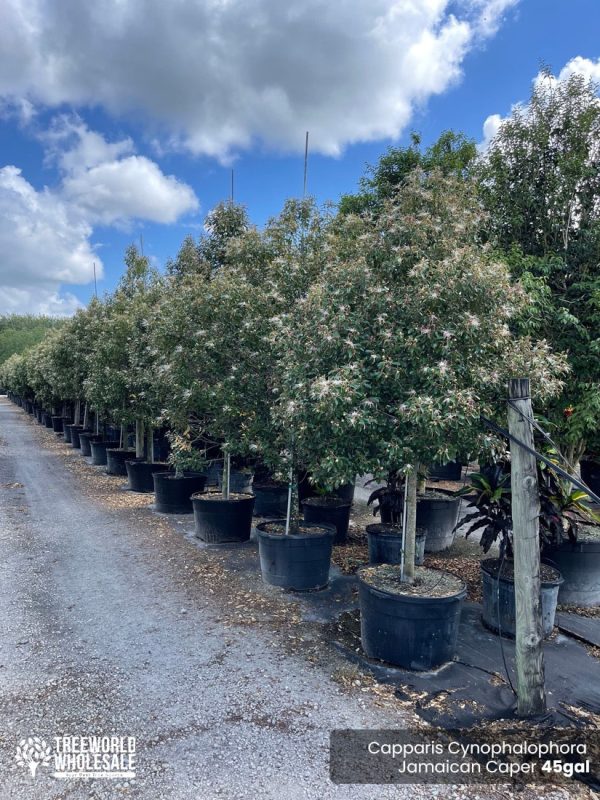
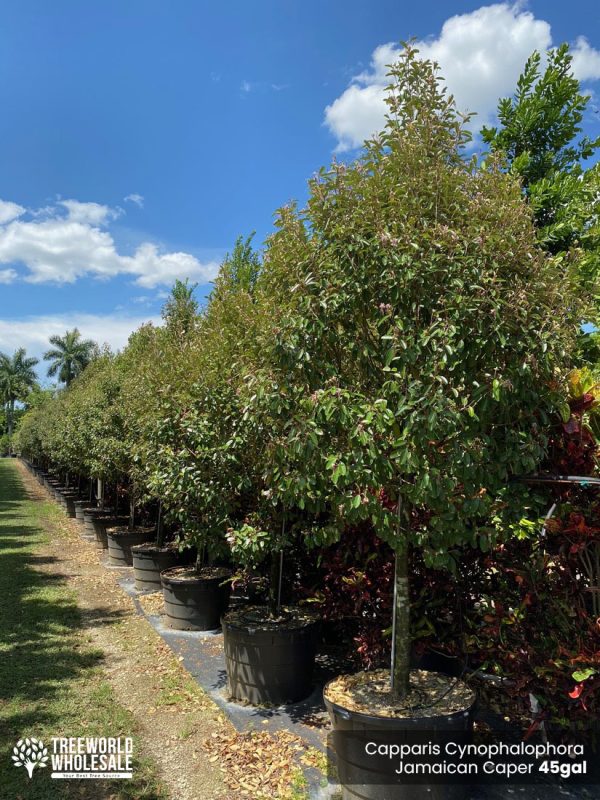
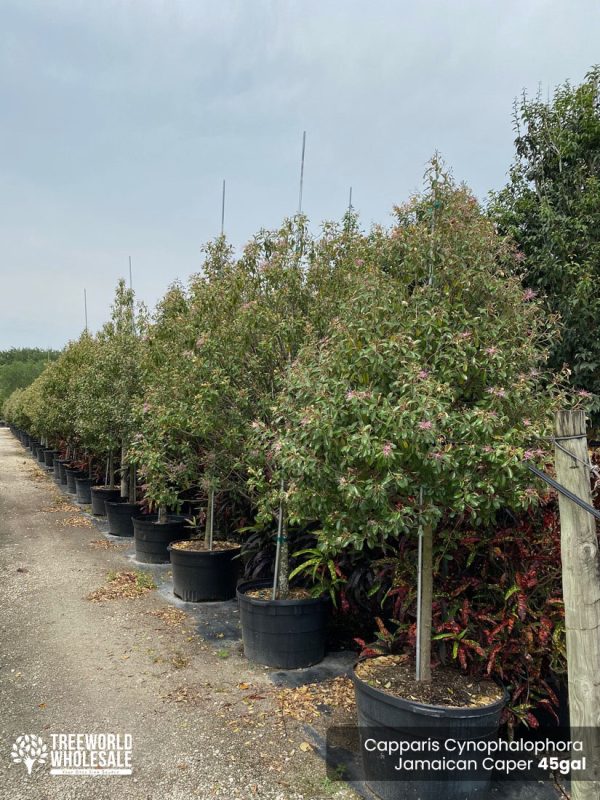
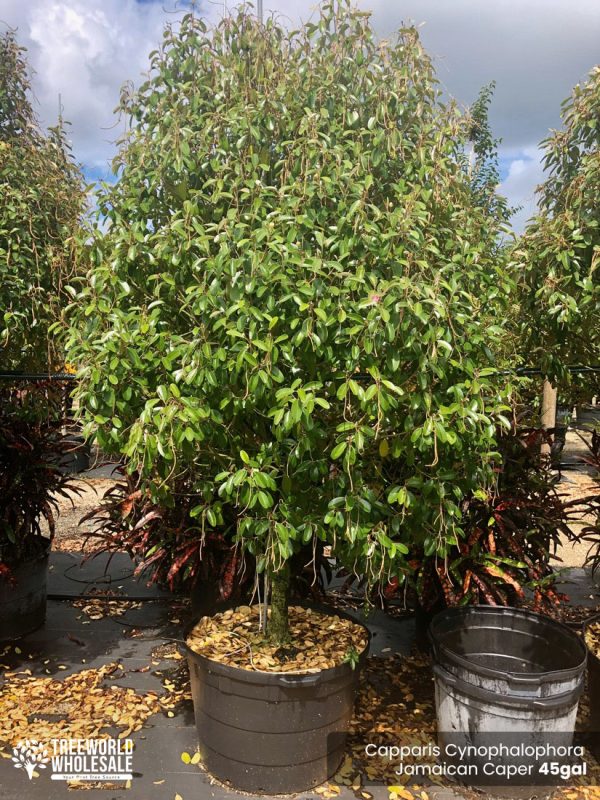
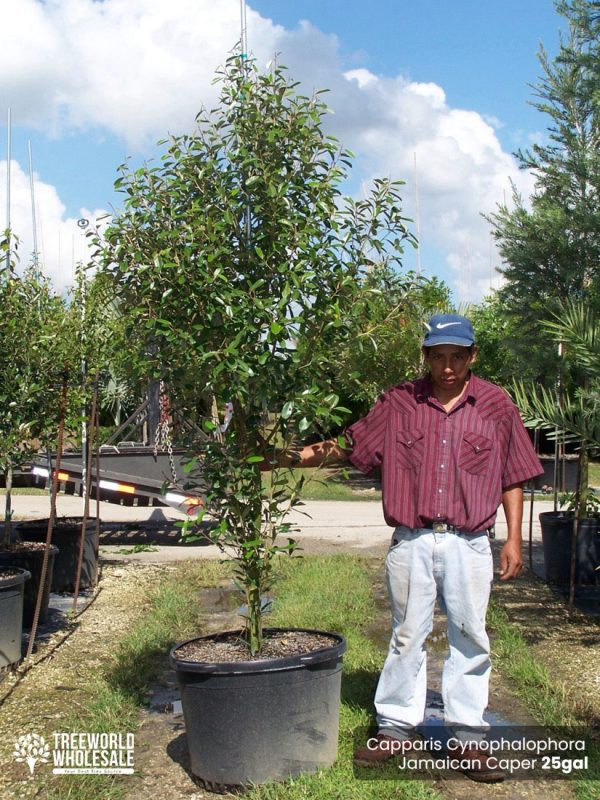
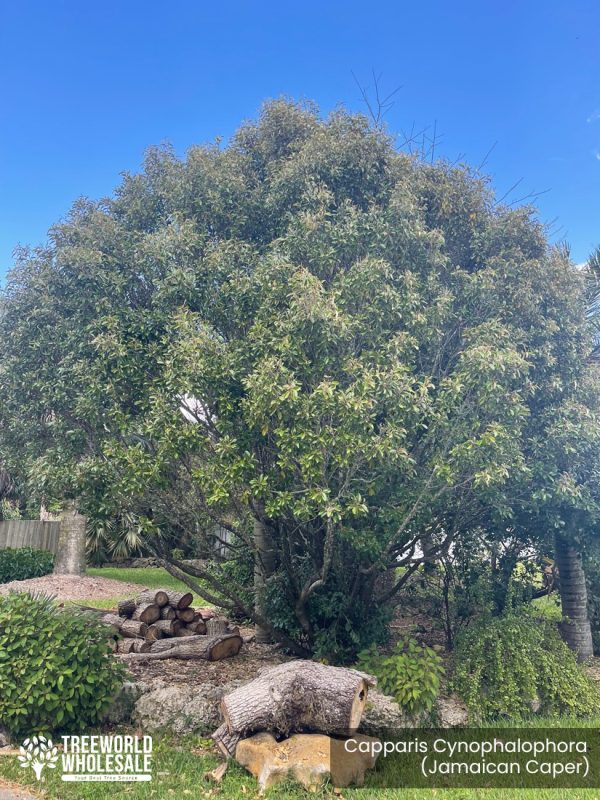
Capparis Cynophallophora (Jamaican Caper tree) is a Florida Native small to medium-sized tree, and one of approximately 300 species in the Capparis genus. Although it grows wild in Florida’s dry coastal scrubs and hammocks, the Jamaican Caper tree is classified as endangered in its natural habitat — making cultivated specimens a meaningful choice for native Florida landscapes (see what Jamaican Caper looks like).
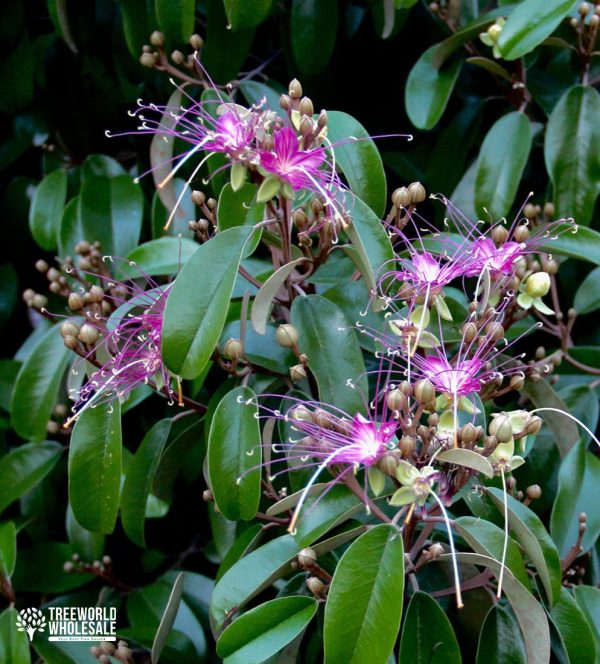
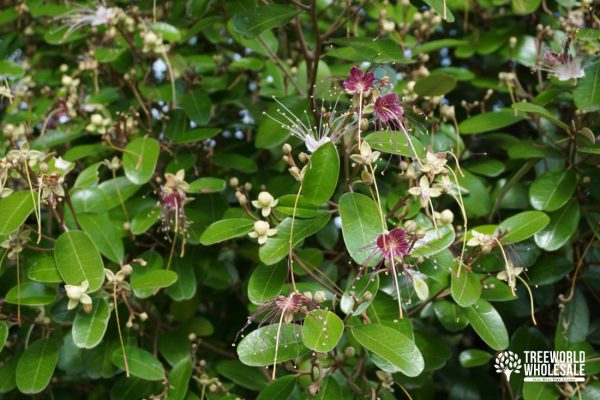
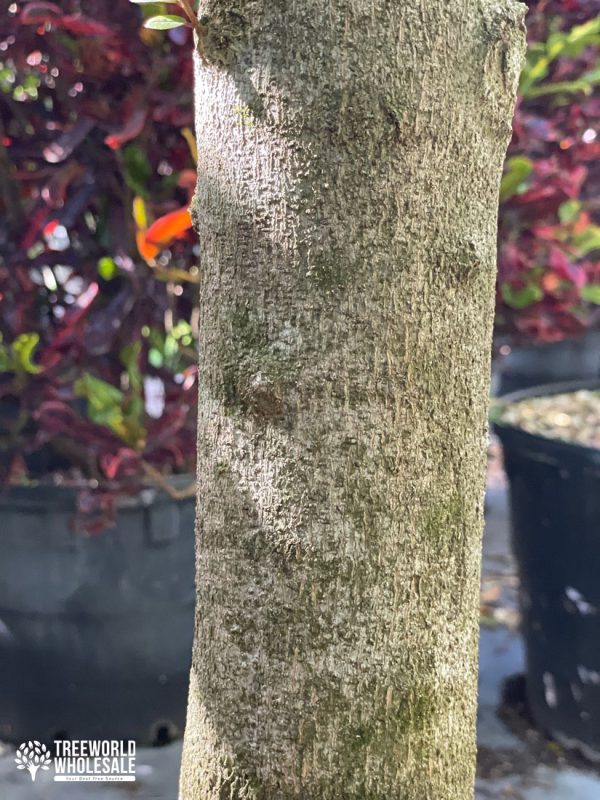
In its tree form, it reaches 8 to 15 feet in height, with a compact, upright, oval to triangular crown and thin smooth bark that is dark gray or brown, becoming fissured with age. The small leathery leaves are oblong to elliptical, alternate, evergreen, measuring 2 to 4 by ¾ to 1¼ inches, with a distinctive tan, scaly underside.
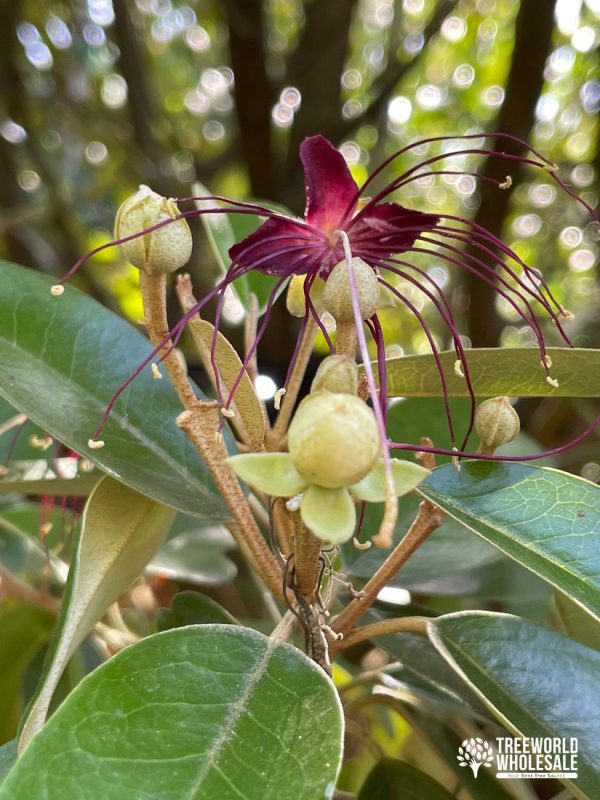
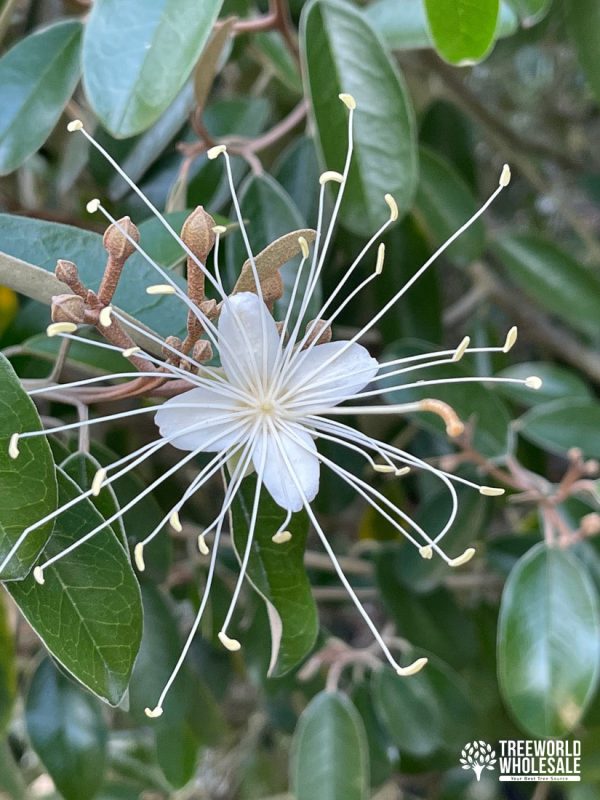
Aromatic flowers are borne on twig ends, opening white then transitioning to pink and violet, with distinctive protruding stamens up to 1.5 inches long — attracting honey bees, moths, and hummingbirds. Notably, the Jamaican Caper is the larval host plant for the Florida White butterfly (Appias drusilla), adding significant ecological value to any planting. Fruits are elongated pods, 4 to 12 inches long, with small brownish seeds that attract birds.
Capparis Cynophallophora – Landscape Use & Cultivation
The Jamaican Caper tree is considered low maintenance in well-drained, alkaline soils and has no serious pest or disease problems. Its compact form and upright habit make it well suited to patios, parking lot islands, roadway medians, and street tree applications. It also grows well in containers and performs as an effective specimen tree in residential and commercial landscapes.
Its open, airy branching structure introduces lightness and texture to rewilded and native tropical landscapes, where it functions as a breathable mid-layer that lets light pass through without disrupting the overall composition.
Looking for the denser bush form for hedging and screening? See our Jamaican Caper Hedge.
Also known as: Black Caper, Haematocephala, Portoricensis
🌳 Other popular and beautiful plants: Limber Caper