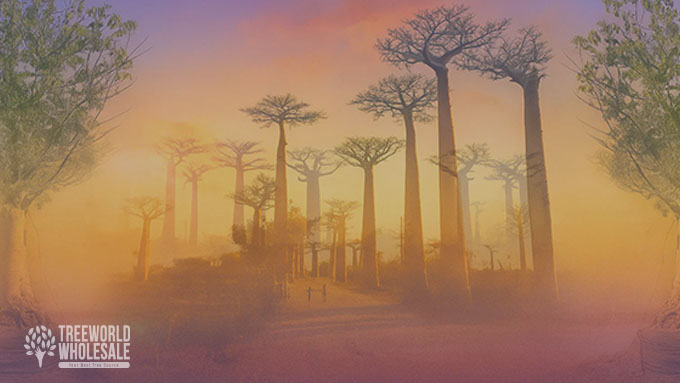
African savanna trees, a tale to be told. Just imagine: as the sun lowers over the Serengeti, the horizon stretches endlessly in gold and shadow. The air is alive with stillness, broken only by the silhouettes of trees standing solitary and proud. Their forms rise like guardians of the land—anchors of strength in an ocean of grass.
Each tree of the Serengeti carries more than shade or shelter. They hold stories, whispered through centuries of wind. To stand beneath these African trees may make you feel small, yet deeply connected. There is no question that in their presence, the savanna is not just a place—it is a feeling. Vast, timeless, unforgettable.
A journey from Africa to Florida
Fortunately, here in Florida, the spirit of the Serengeti is closer than you think. At our TreeWorld farms in Homestead, we cultivate iconic trees of the African savanna—resilient, graceful, and timeless. Thriving beneath Florida’s sun and skies, they stand as living sculptures, bringing the essence of distant horizons into our landscapes and reminding us that nature’s beauty knows no borders.
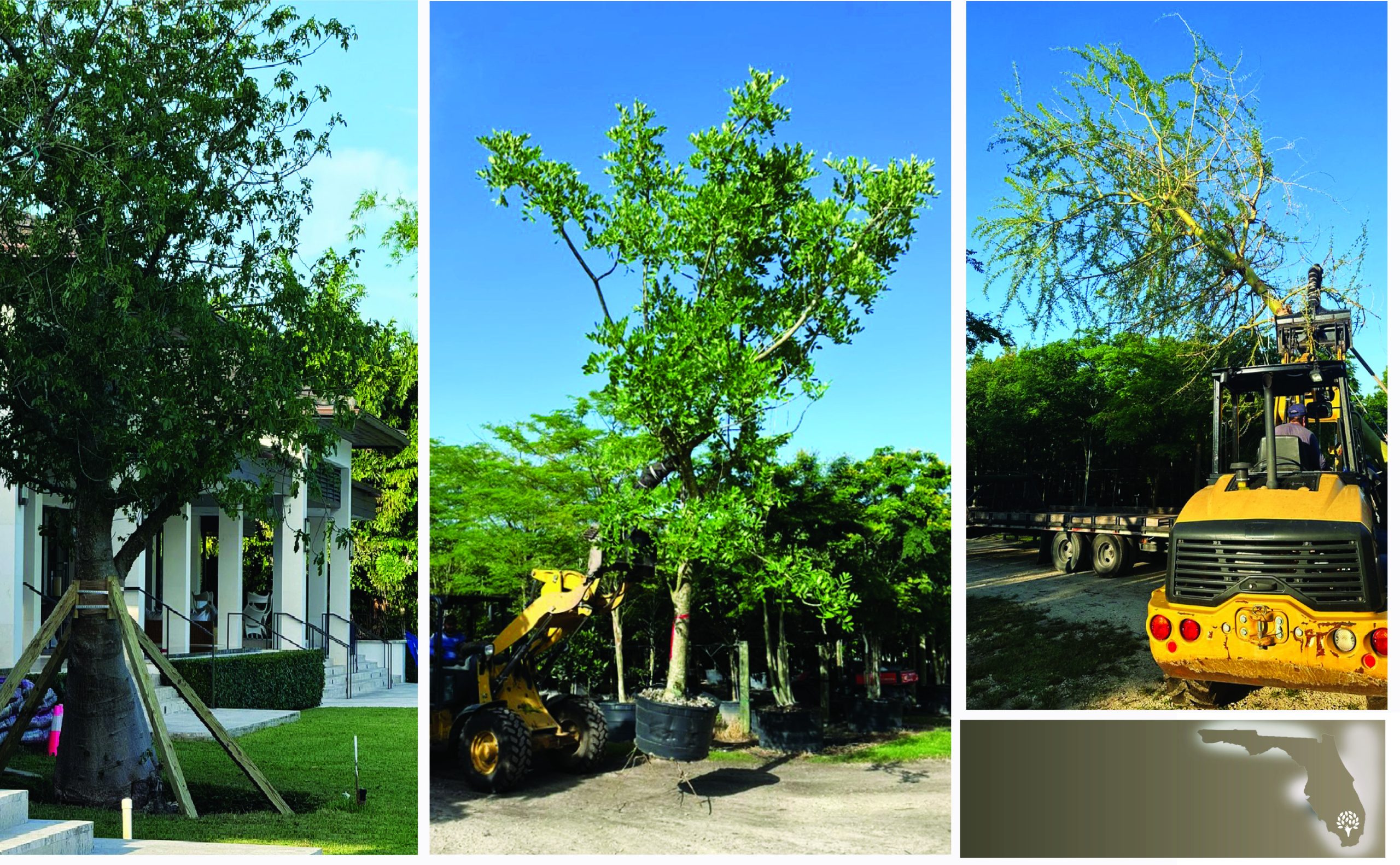
More than exotic trees, they are storytellers. So, we ask you: Which of these extraordinary African savanna trees speaks to you? Here is our take on the Serengeti trees.
The Best African Tree Species
The Baobab – Adansonia digitata
In the vast openness of the Serengeti, one tree stands above all others—not in height, but in presence. The baobab, known as the Tree of Life, rises like a monument carved by time itself. Its massive trunk anchors the horizon with an authority that cannot be ignored. Some appear as though planted upside down, their branches stretching skyward like roots grasping for the heavens.
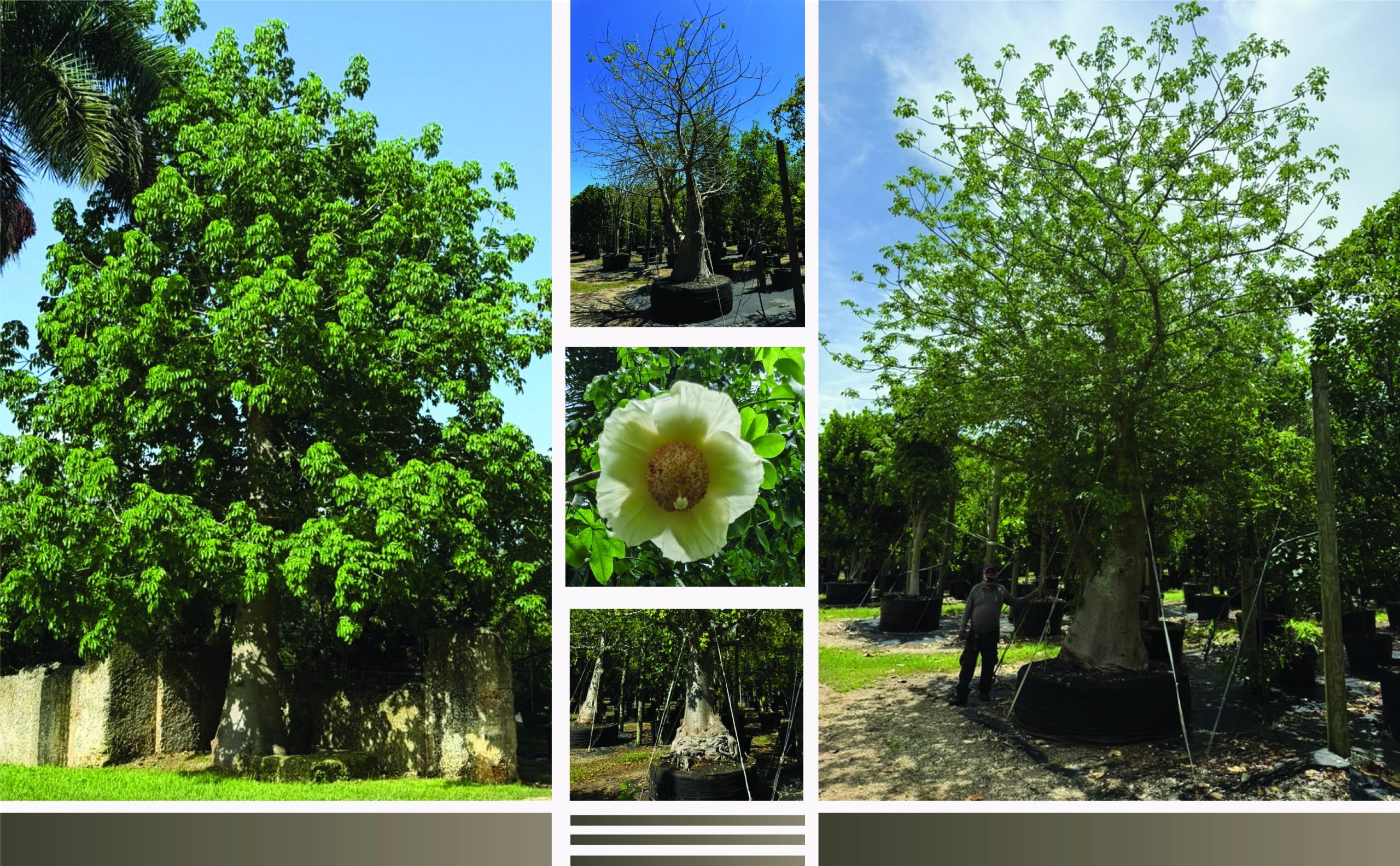
For centuries, people have gathered beneath baobabs. Their hollow trunks once served as shelters, their bark woven into rope, their fruit prized for nourishment. In African folklore, they are sacred—symbols of wisdom, resilience, and eternity.
But the African baobab (Adansonia digitata) is more than a legend. It is a living sculpture. Each trunk is unique—gnarled, twisted, or swollen, shaped by decades of sun, drought, and rain. No two baobabs are alike, yet every one tells a story in form.
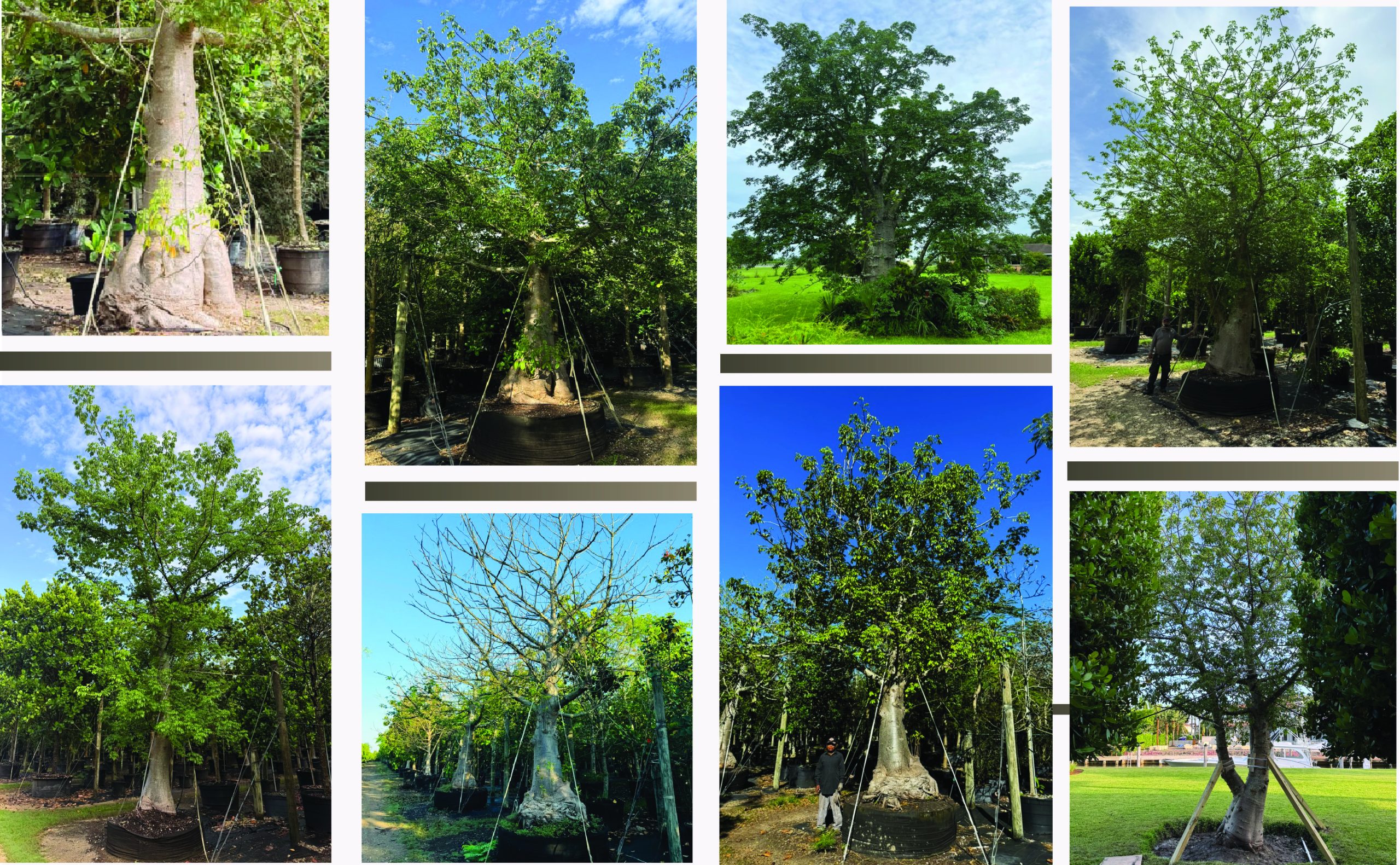
In Florida, when a baobab takes root in a landscape, it does more than fill space. It becomes a focal point, a landmark, a living reminder of the spirit of Africa’s savannas.
The Sausage Tree – Kigelia pinnata
The Sausage Tree is a sight both strange and enticing. In the soft dusk of the savanna, as the air cools, the Sausage Tree (Kigelia pinnata) begins its transformation. As darkness deepens, its crimson flowers open—not for the day, but for the night. Suspended like velvet trumpets, they release a subtle fragrance that calls to bats, their pollinators.
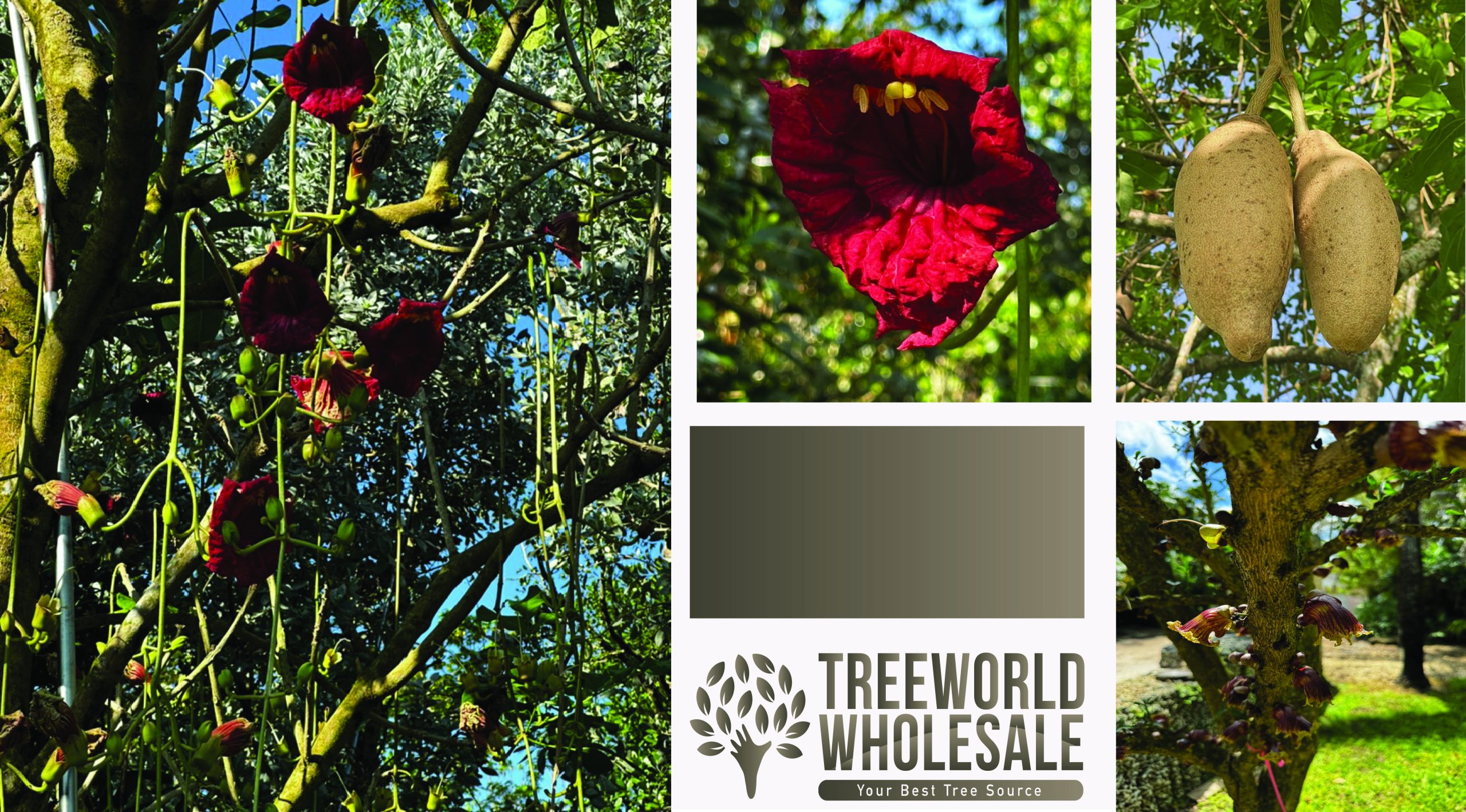
By daylight, this African tree species tells a different story. Its long, heavy fruits dangle from rope-like stems—bold, mysterious, and lantern-shaped. Growing over two feet long, they demand attention and spark curiosity. No wonder this tree inspired myths and legends, often tied to fertility and abundance.
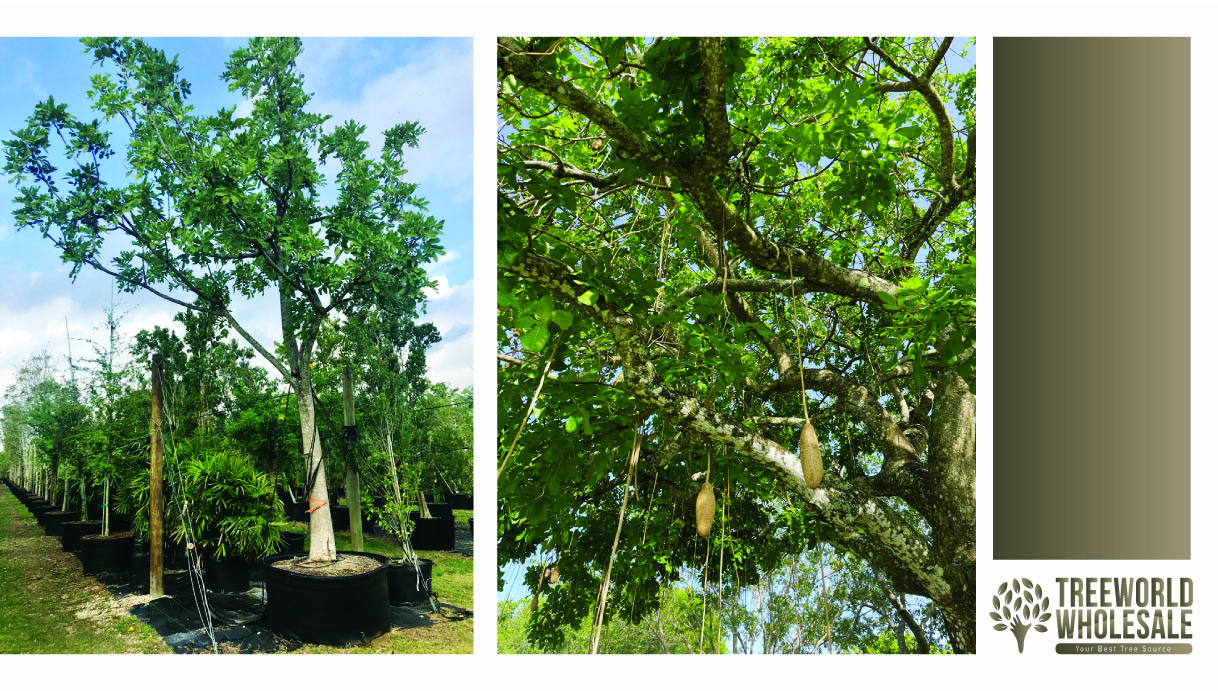
Planted in Florida, Kigelia pinnata becomes a conversation piece. It transforms landscapes into places of wonder, embodying an experience in itself. This African tree brings with it the magic of night blossoms and the boldness of its fruit, whispering stories of nocturnal life on the Serengeti.
The Fever Tree – Acacia xanthophloea
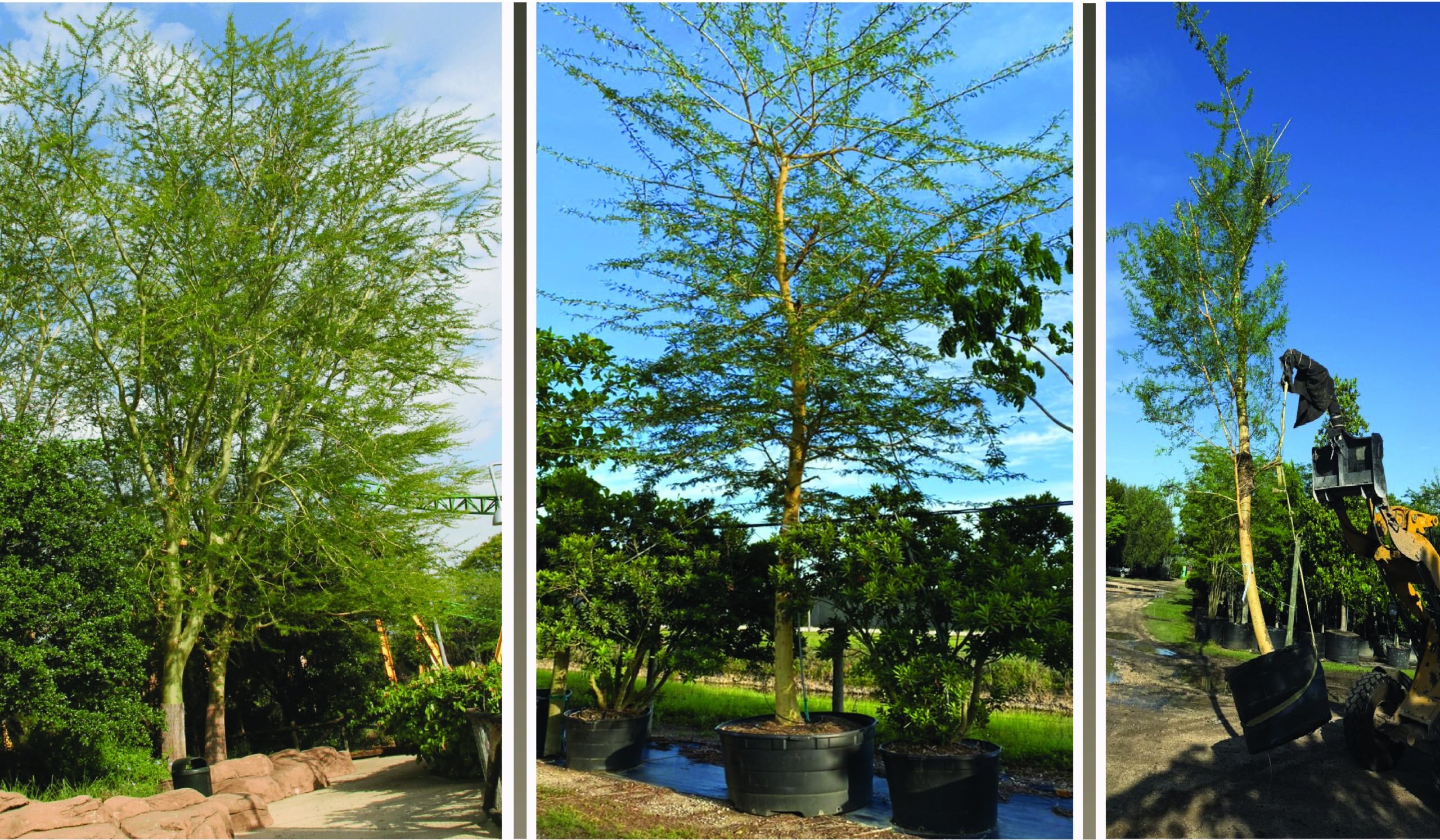
At sunset on the savanna, the flat-topped crowns of different types of acacia trees stretch across the horizon. Among them rises the Fever Tree (Acacia xanthophloea), its yellow-green bark glowing in the fading light. Even from afar, it is unmistakable—a timeless symbol of the African landscape.
Its beauty carries strength. White thorns guard its branches, yet giraffes and elephants still seek it out, weaving the Fever Tree into the rhythm of the plains.
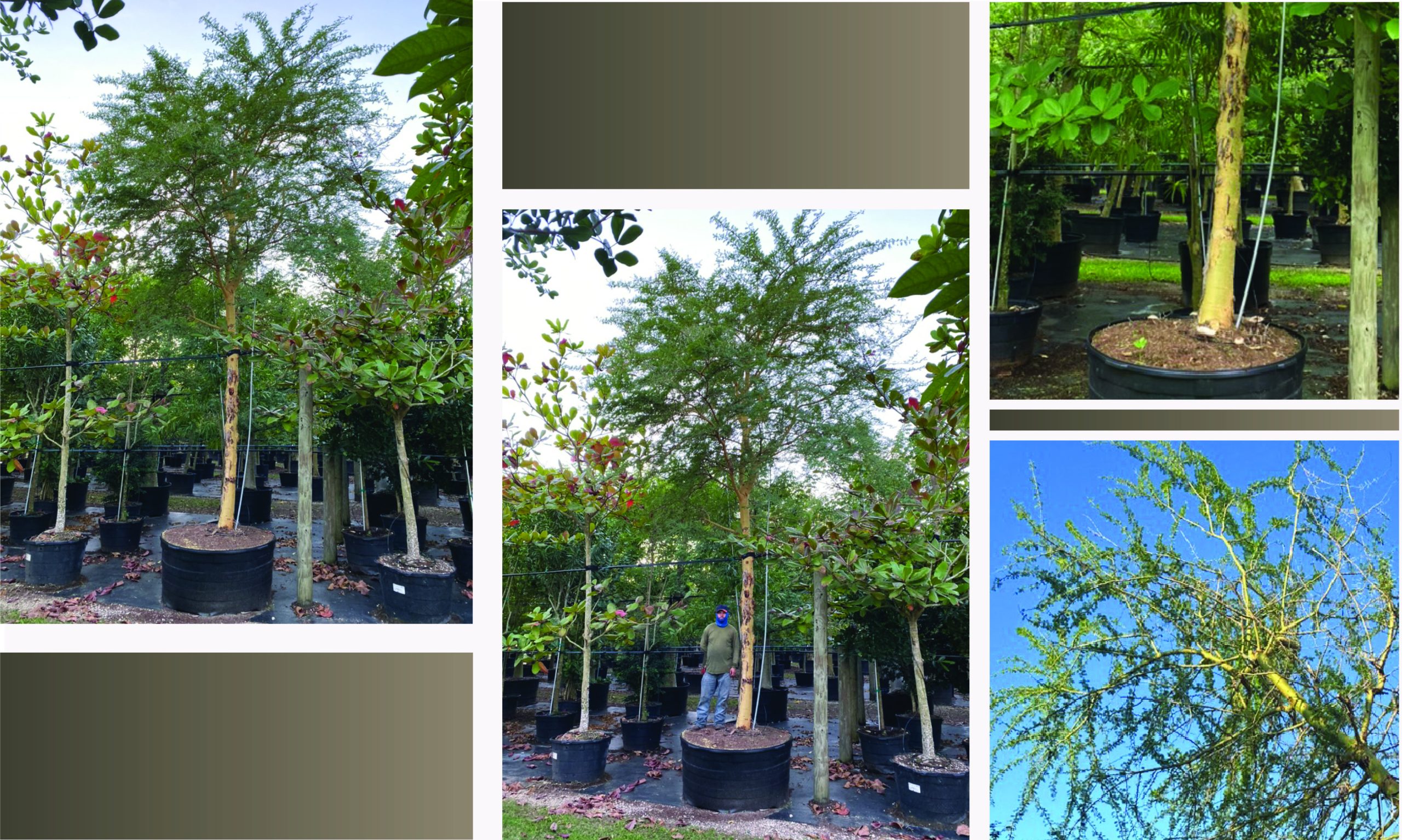
This African tree is often found along rivers and swamps. It is recognized by its papery bark and rounded leaves. Beneath its wide crown, one feels sheltered yet alert, aware of its balance of grace and strength. Early settlers once believed it caused fevers—hence the name—not realizing mosquitoes were really to blame.
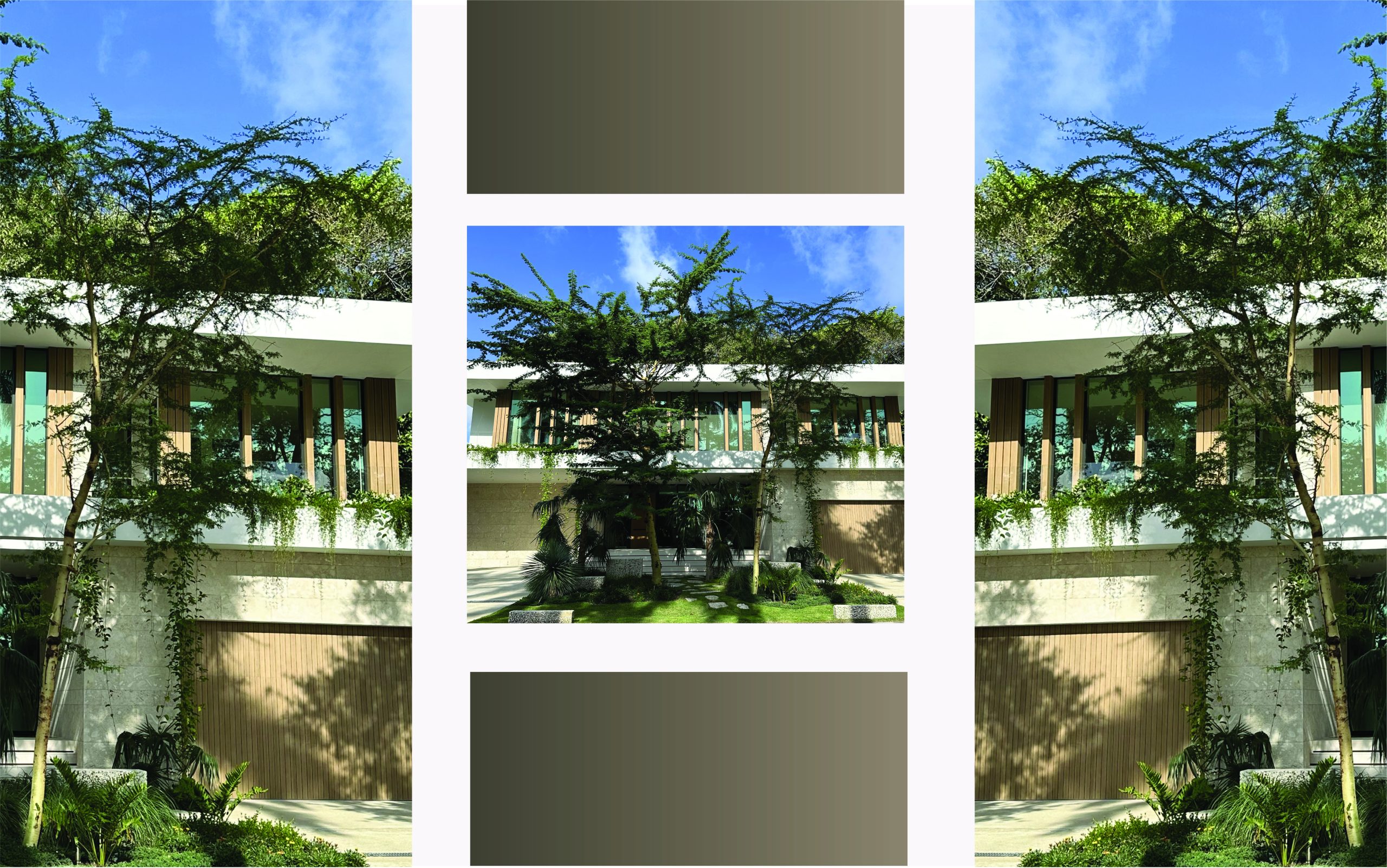
Here in Florida, the Fever Tree adapts with ease. It becomes more than a shade tree—it is a living statement, casting dappled shade while bringing character and a touch of the faraway savanna to us.
Red Acacia – Acacia seyal
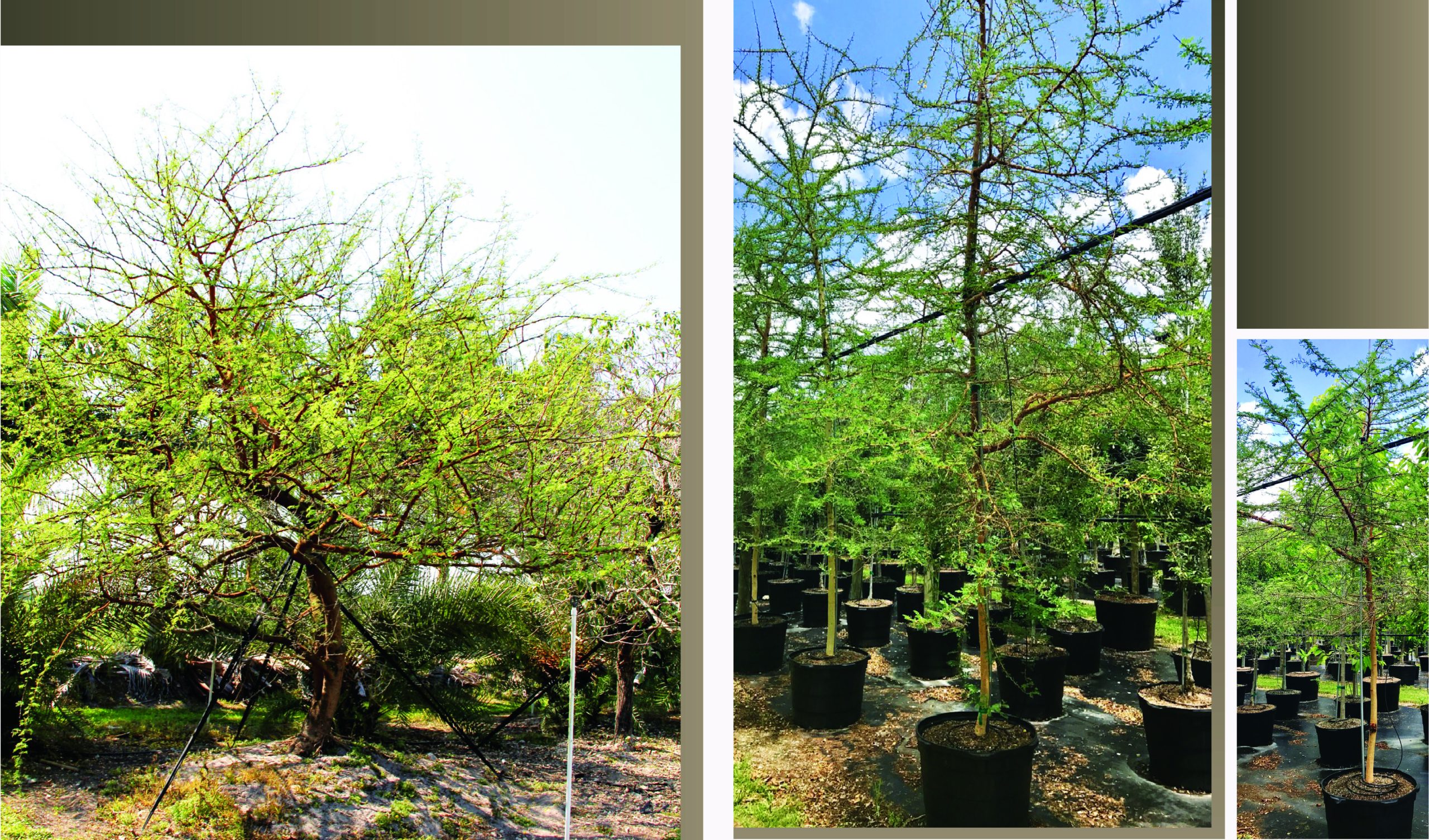
Among the silhouettes of the African savanna, the Red Acacia (Acacia seyal) stands apart with quiet strength. Its bark shifts from pale green to reddish-brown, as if the earth itself pressed colors into its trunk. Rising 20 to 30 feet, its airy crown is defined as much by thorns as by leaves. From the base of each feathery leaflet, two straight gray spines stretch outward, sometimes nearly eight inches long—a natural defense, and part of its unmistakable silhouette.
Then its strength softens: clusters of bright yellow blossoms emerge, glowing like sparks against its branches. Beauty woven into resilience.
For centuries, this famous African tree has been more than a presence on the plains. Its pods and leaves sustain giraffes and antelope; its resin, gum arabic, has been valued across cultures for food, medicine, and art. To stand before a Red Acacia is to see both toughness and generosity, a balance that has allowed it to endure the harshest landscapes.
In Florida, this essence carries forward. Thorned yet graceful, the Red Acacia tells a story of survival on the savanna.
Sweet Acacia – Acacia farnesiana
Not all acacias of the savanna impress with towering height. Some, like the Sweet Acacia (Acacia farnesiana), are soft-spoken yet powerful. Its irregular crown, textured by gray-brown bark and thorns, is softened by feathery bluish-green leaves.
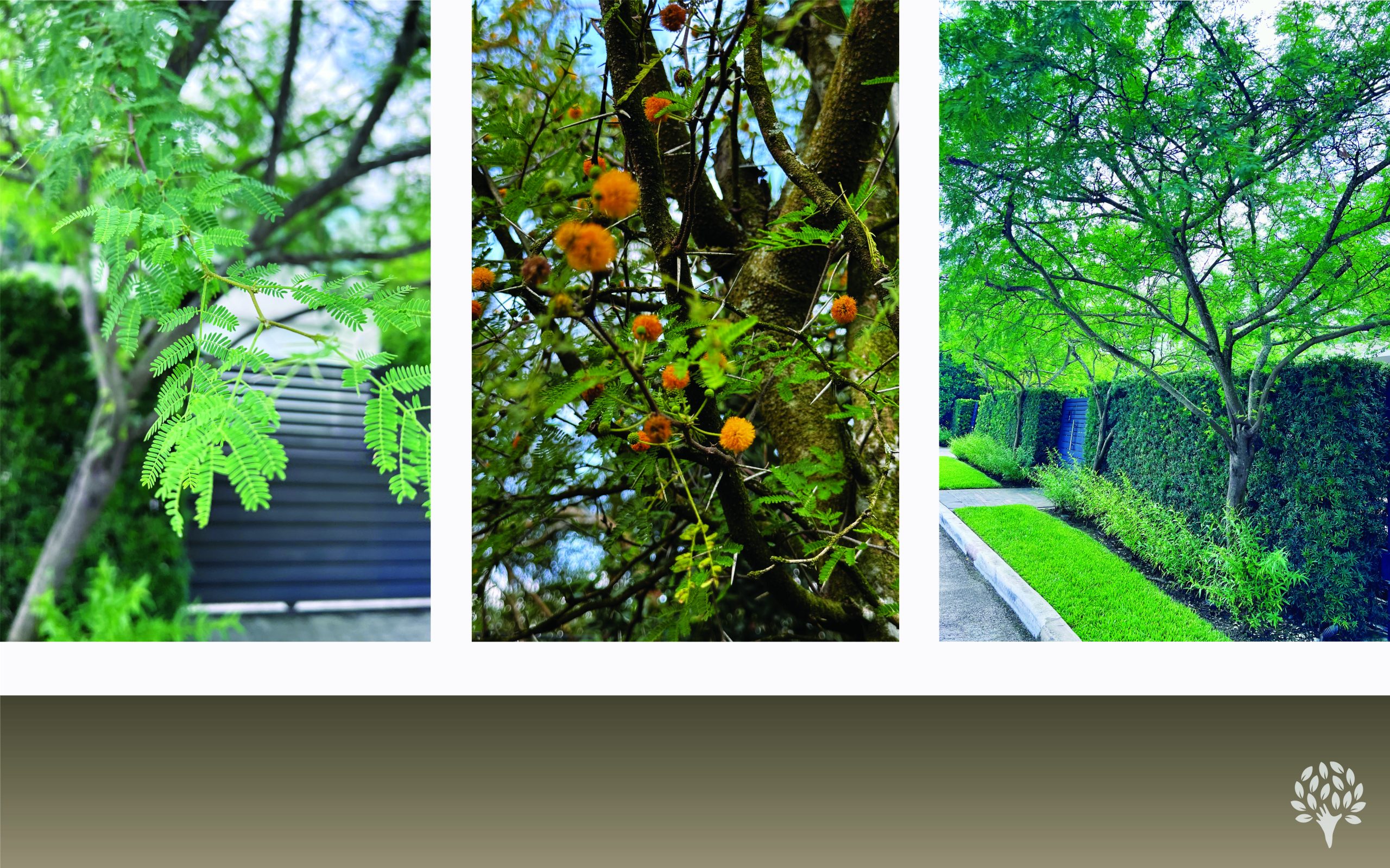
From late winter into spring, small golden puff-like blossoms appear, filling the air with a honey-like fragrance. Hardy and drought-tolerant tree, it thrives in well-drained soils and endures even in dry seasons.
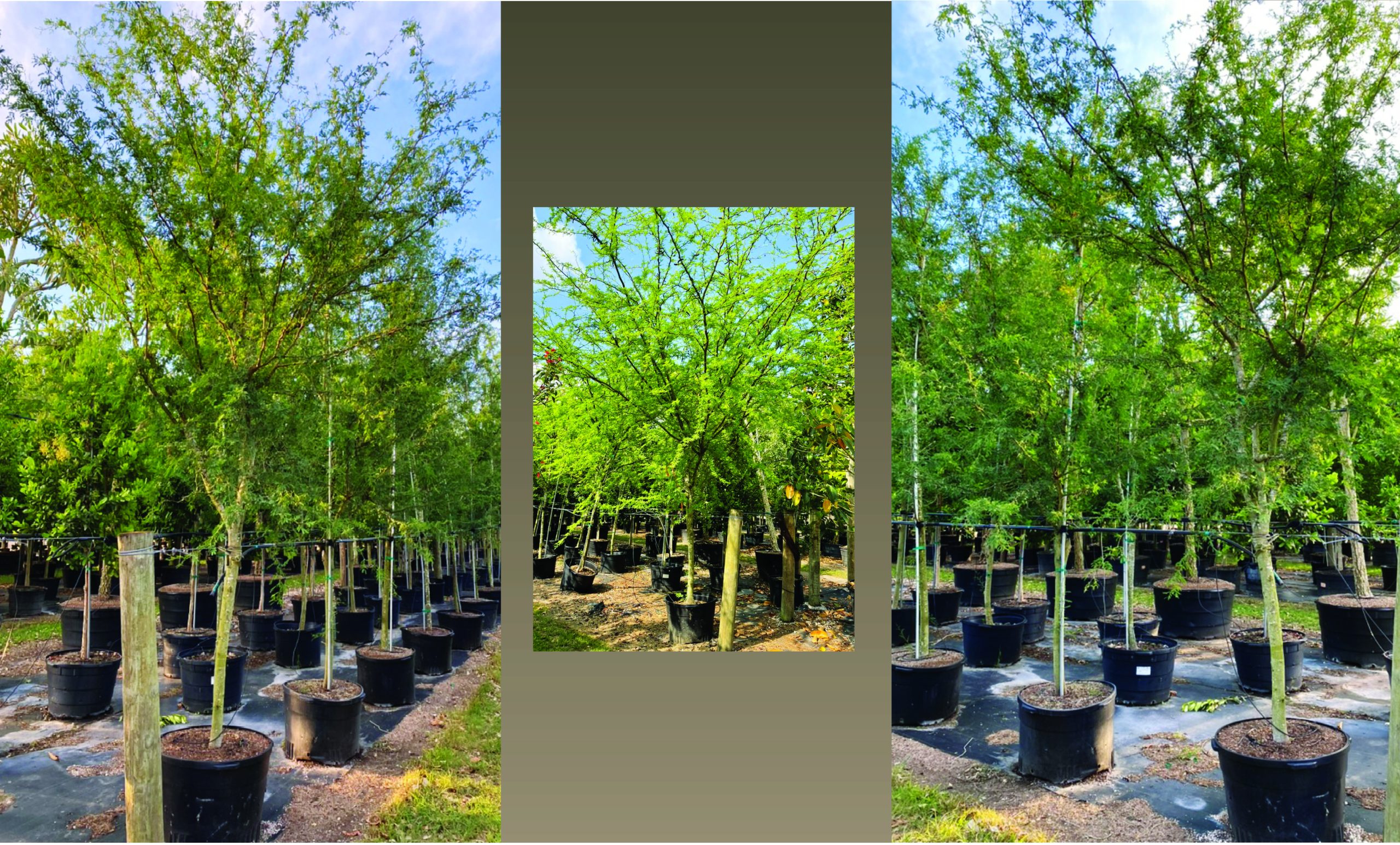
In Florida, the Sweet Acacia offers more than ornament. It thrives as a barrier or specimen tree—even along the seaside. With its fragrance, resilience, and silhouette, it brings a touch of the savanna into our landscapes.
Bringing the Savanna Home Thanks to Exotic Trees
At TreeWorld, we are proud to root these icons of resilience and grace into Florida’s soil—where distant horizons meet local landscapes. Whether you seek shade, fragrance, or a sculptural centerpiece, these famous African trees offer more than presence; they offer connection.
📞 Call us today at 305-245-6886 or contact us to explore the spirit of the African savanna into your next landscape.