


The Black Calabash is a distinctive tropical tree. It is valued for its adaptability, durability, and versatility in landscape design. Its botanical name is Amphitecnia latifolia. It grows as a small tree or large shrub, depending on site conditions and maintenance.
The tree features gray, rough, furrowed bark and a dense evergreen canopy. This combination makes it both functional and visually appealing in designed landscapes.
The term “calabash” traditionally refers to hard-shelled gourds used as containers, tools, and crafts throughout tropical regions. While closely related to Crescentia species, the Black Calabash stands out for its strong landscape performance and overall resilience, particularly in coastal settings.
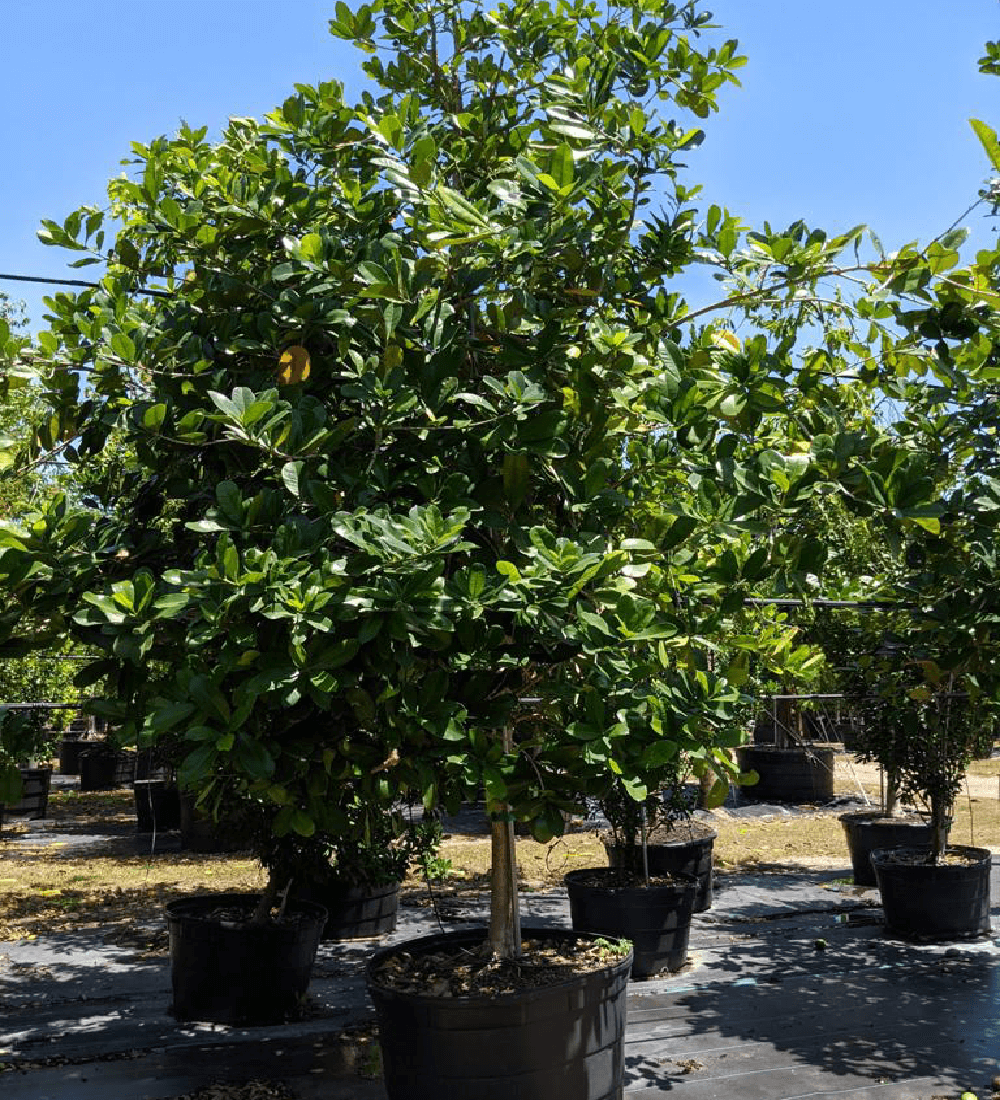
Black Calabash: A Coastal Reference
Black Calabash thrives in warm, tropical climates. It adapts well to challenging conditions where many other species struggle. Its evergreen canopy provides year-round structure, making it ideal for properties that require consistent coverage and visual continuity.
In landscape design, Black Calabash is commonly used as:
- A natural windbreak in coastal areas
- A privacy hedge or screening tree
- A buffer for parking lots and open spaces
- A durable option for seaside gardens
While it benefits from protection in extreme conditions, its tolerance to coastal environments makes it a valuable choice for Florida and Caribbean landscapes.
Black Calabash Tree Uses and Benefits
Agroforestry & Land Use
Black Calabash works well in agricultural and large landscape settings. It is often used as a shade tree for livestock, a living fence, or a natural boundary. Its dense growth and upright form make it a reliable option for rural areas and open spaces that need structure and durability.
Ecological Value
Moreover, on of the Black Calabash tree uses is in restoration projects. It helps stabilize dunes, protect coastal and estuarine areas, and support soil health. Its root system helps reduce erosion and supports long-term landscape stability.
Industrial & Craft Uses
The Black Calabash produces dense, durable wood that works well for small construction projects and tool handles. Artisans use its hard-shelled fruits to make crafts and musical instruments such as maracas. The pulp is edible, and people roast and grind the seeds to prepare a drink similar to chocolate.
Traditional & Medicinal Uses
In traditional medicine, Amphitecnia latifolia is valued for its natural healing properties. It offers anti-inflammatory and soothing effects. Communities use it to help relieve headaches, reduce fever, and support fluid balance. These traditional uses are most common in tropical and coastal regions where the tree grows naturally.
A Resilient Choice for Tropical Landscapes
With its ability to thrive in coastal conditions, tolerate wind and salt, and provide functional beauty year-round, the Black Calabash stands out as a reliable option for tropical and seaside landscapes. Its versatility makes it equally suitable for residential gardens, commercial projects, and ecological restoration efforts.
Looking to incorporate durable, climate-adapted trees into your next project? 📞 Contact us at 305-245-6886 — TreeWorld Wholesale is ready to help you



Post a comment