

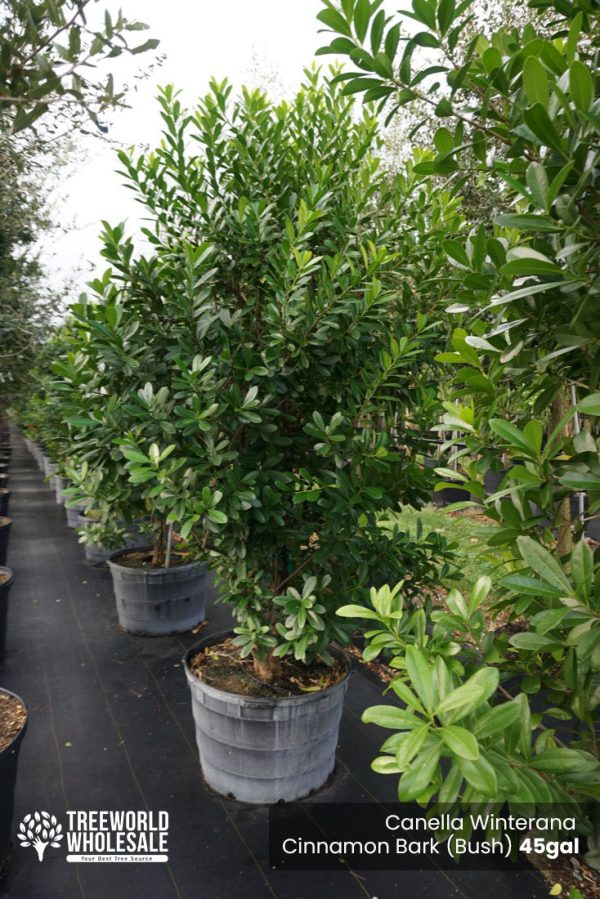
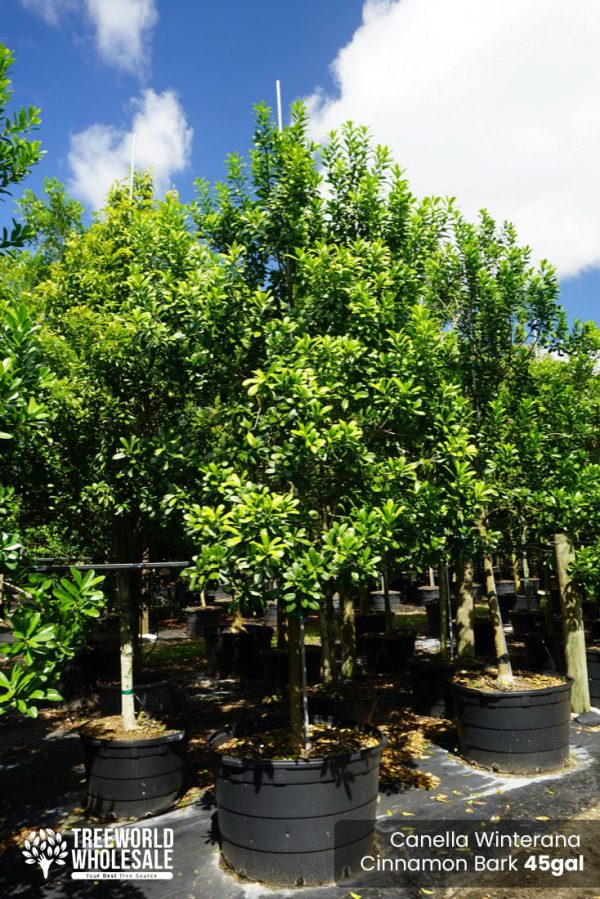
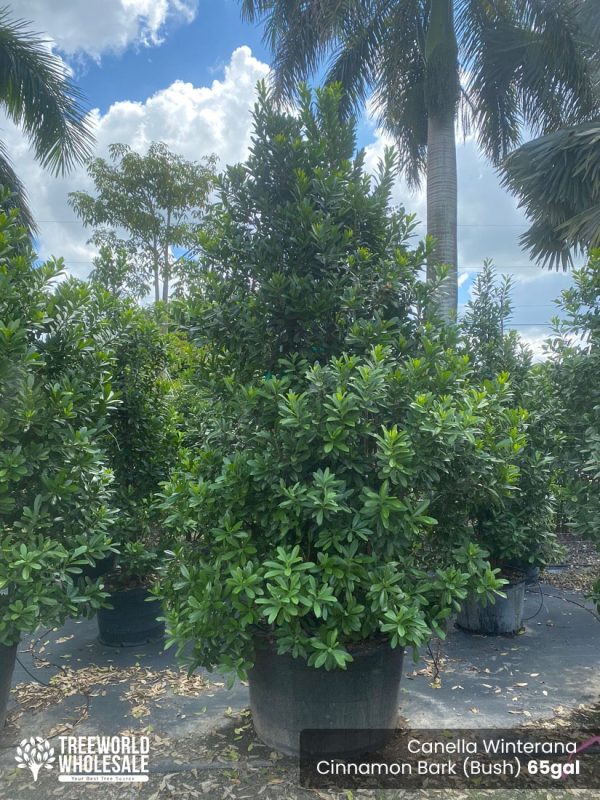
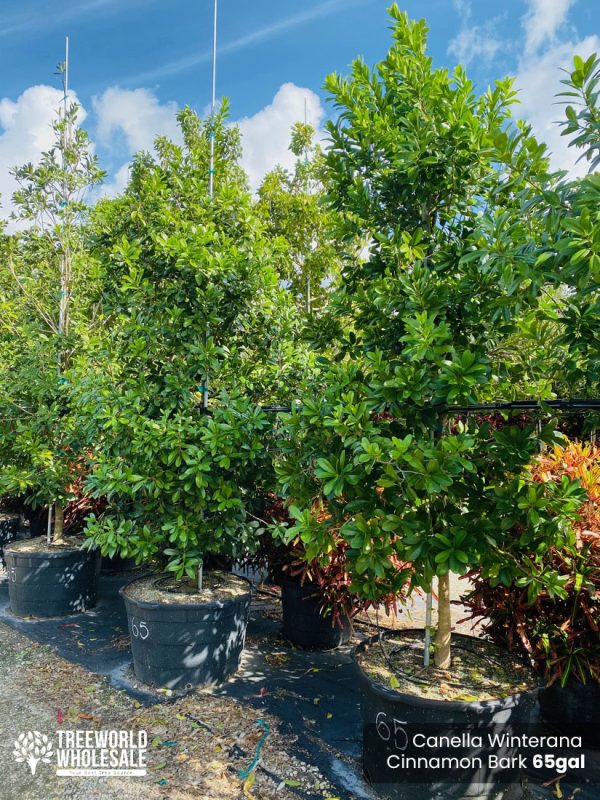
Description
Cinnamon Bark Bush Description
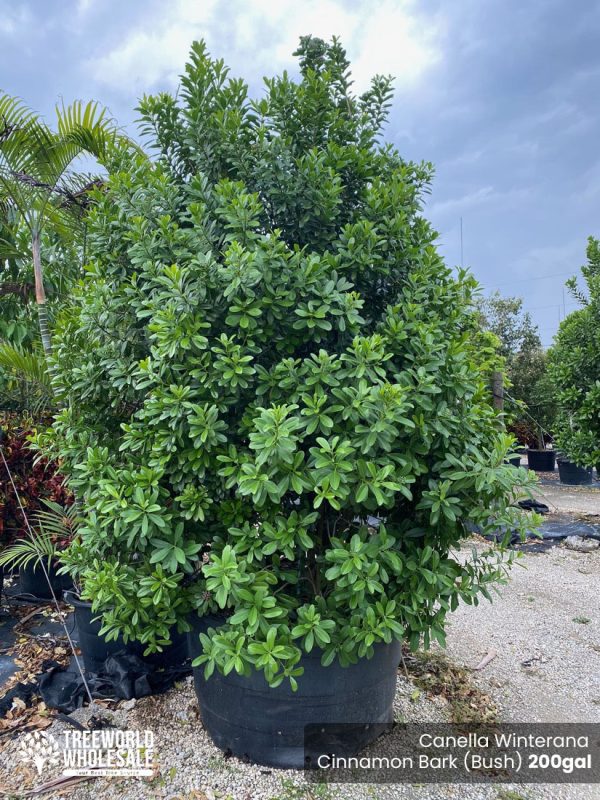
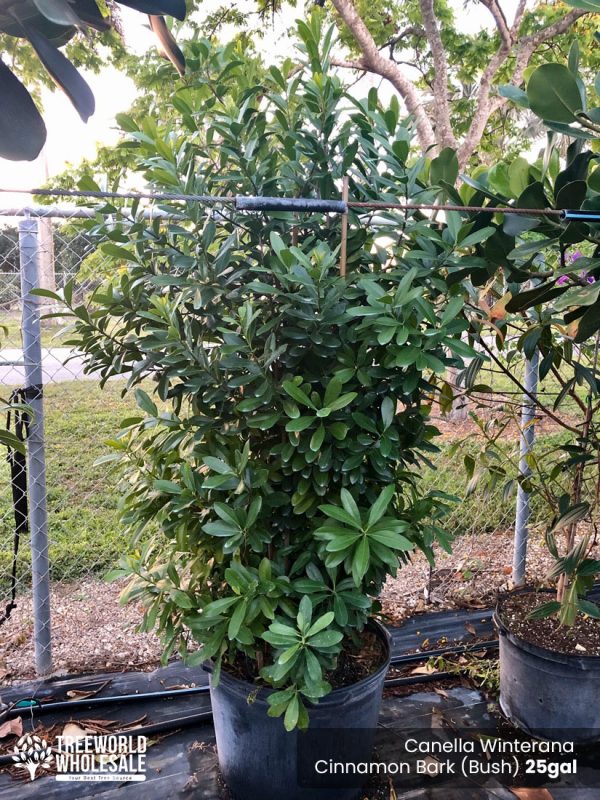
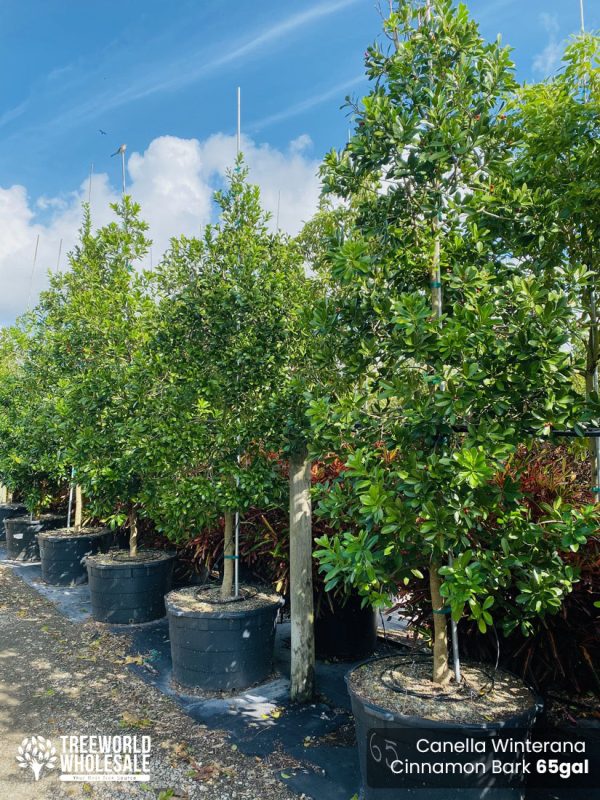
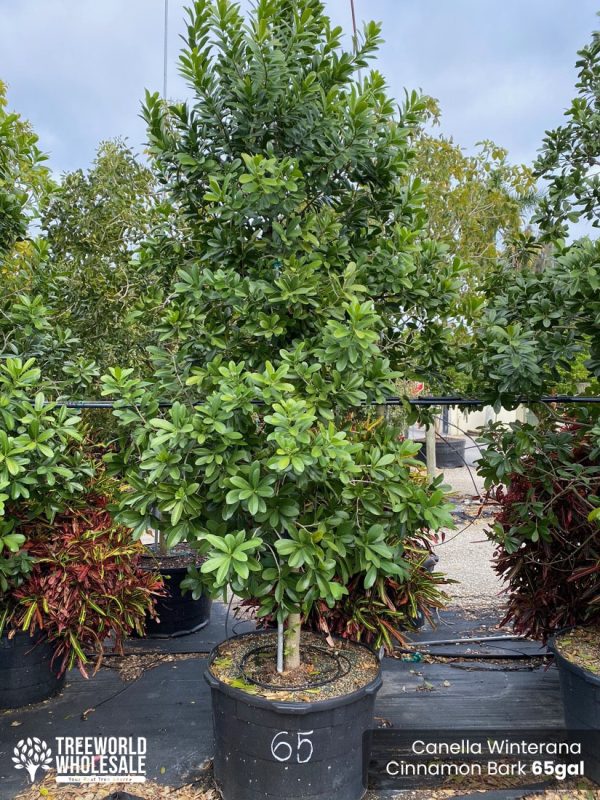
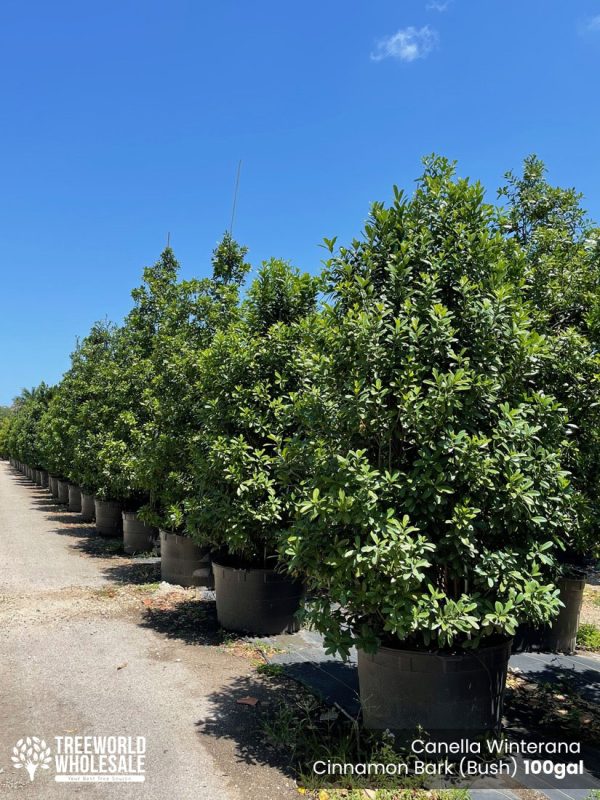
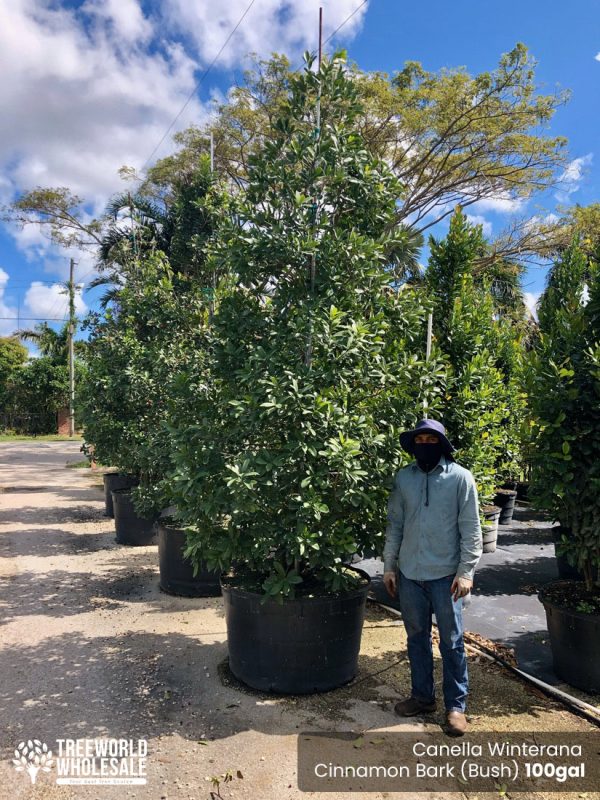
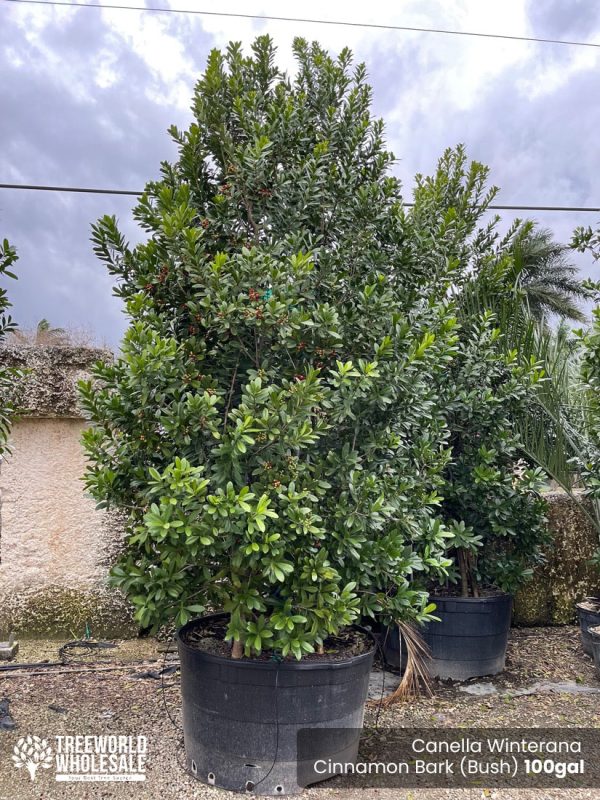
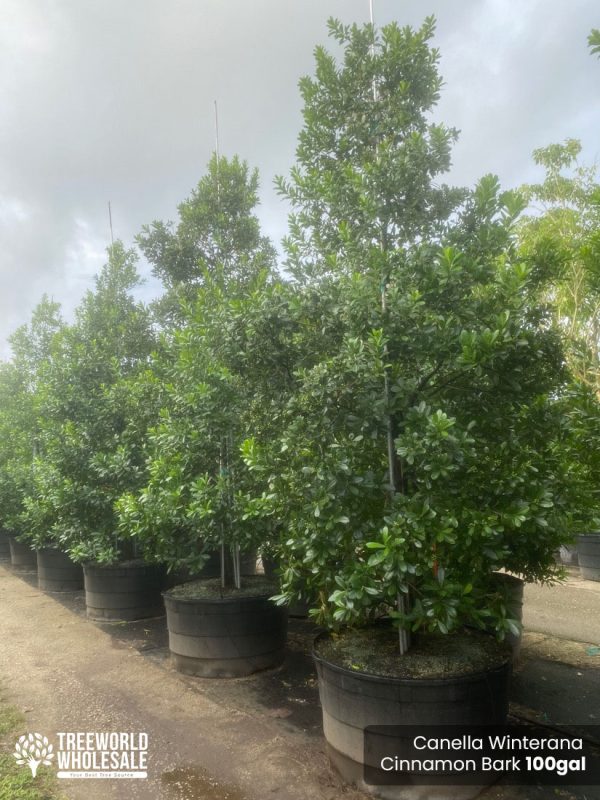
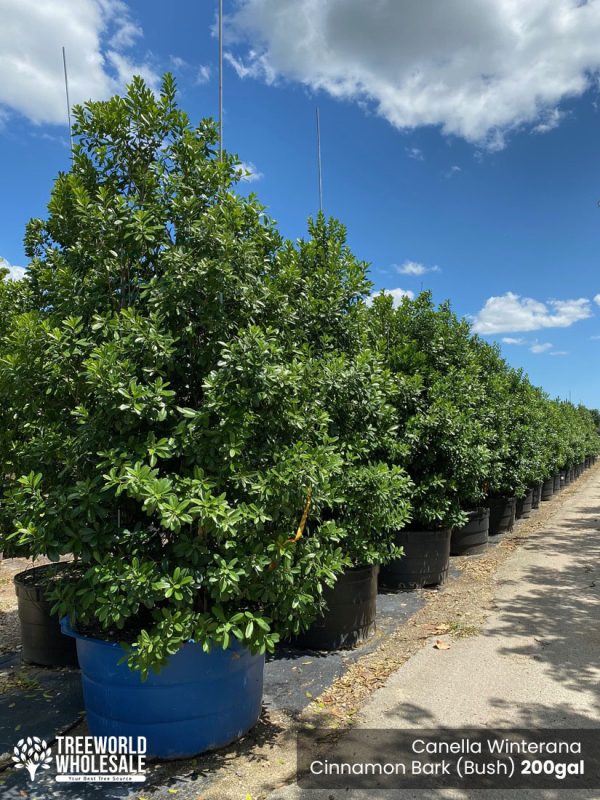
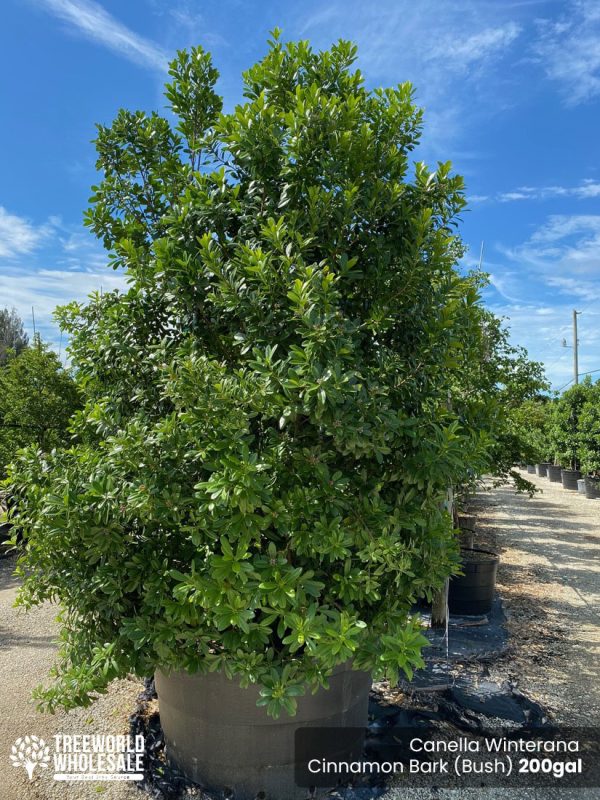
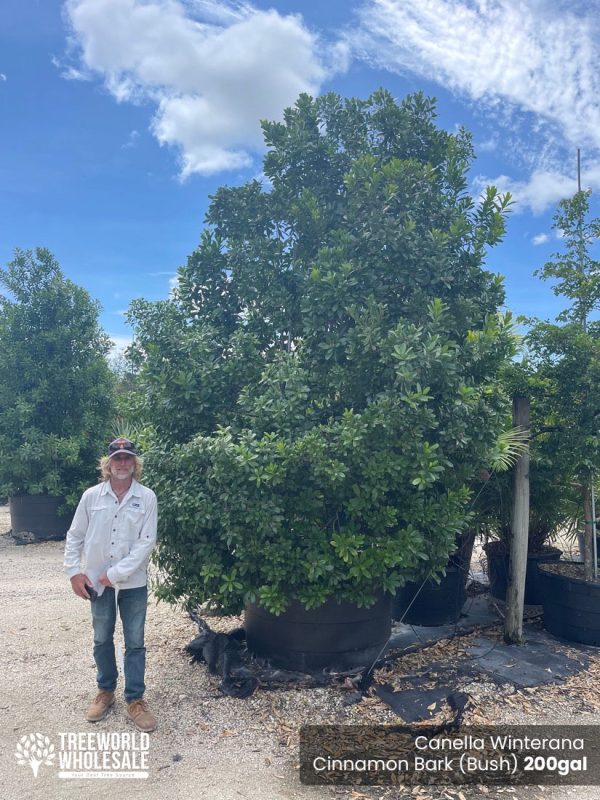
Canella Winterana Bush (Cinnamon Bark) is a Florida Native shrub that takes its name from the spicy fragrance of its crushed leaves. In its natural bush form, it develops multiple stems from the base, creating a denser, fuller habit than the single-trunk tree — making it a popular choice for screening, hedging, and wholesale landscape projects across South Florida.
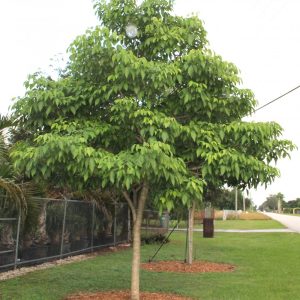
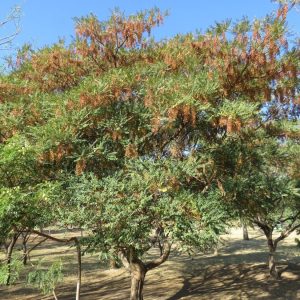
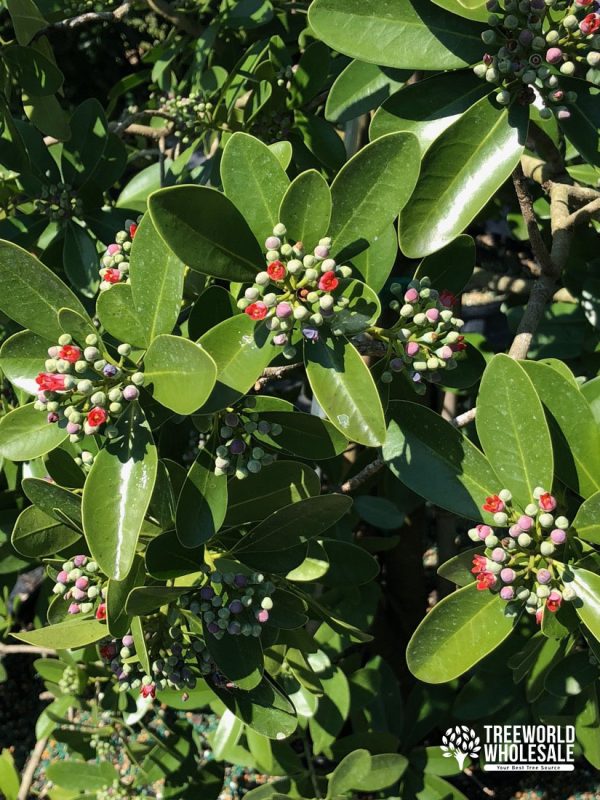
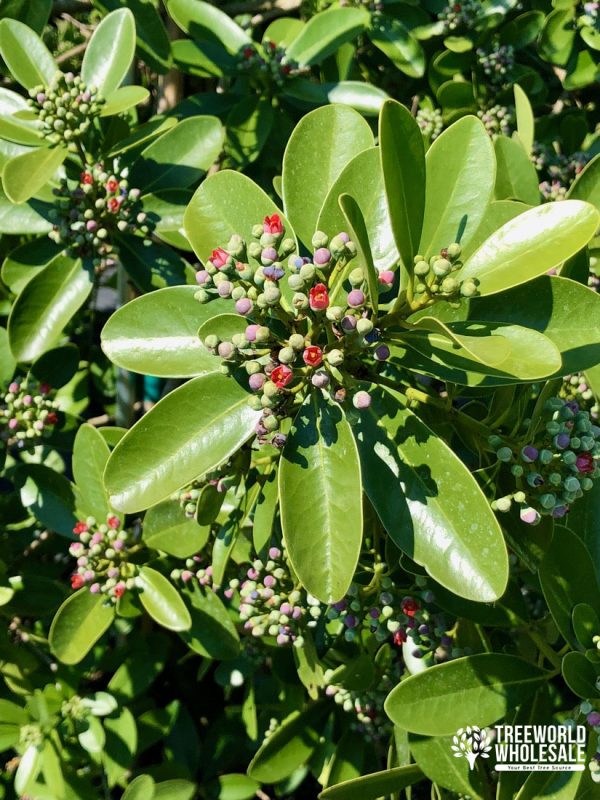
The Cinnamon Bark bush reaches up to 15 feet (4.57 m) in height, with light gray fissured bark and dark green leathery leaves, obovate with smooth margins, borne alternately or clustered toward the branch tips and measuring about 4 by 1.5 inches. The flowers are arranged in small inflorescences — mildly fragrant, about 0.5 inch wide, with red petals and yellow anthers, rich in nectar and attractive to pollinators including bees and wasps.
Fruits are about 3/8 inch in diameter, turning purple-red at maturity with black seeds used for propagation. They attract birds, and the bark, fruits, and leaves have a history of use in herbal medicine.
Canella Winterana Bush Cultivation
The Cinnamon Bark bush thrives in well-drained, alkaline soils and requires minimal pruning to maintain its shape. The only notable pest reported is thrips. Its attractive foliage, flowers, and fruit make it a handsome ornamental suited to gardens, patios, seaside plantings, and street applications throughout Florida.
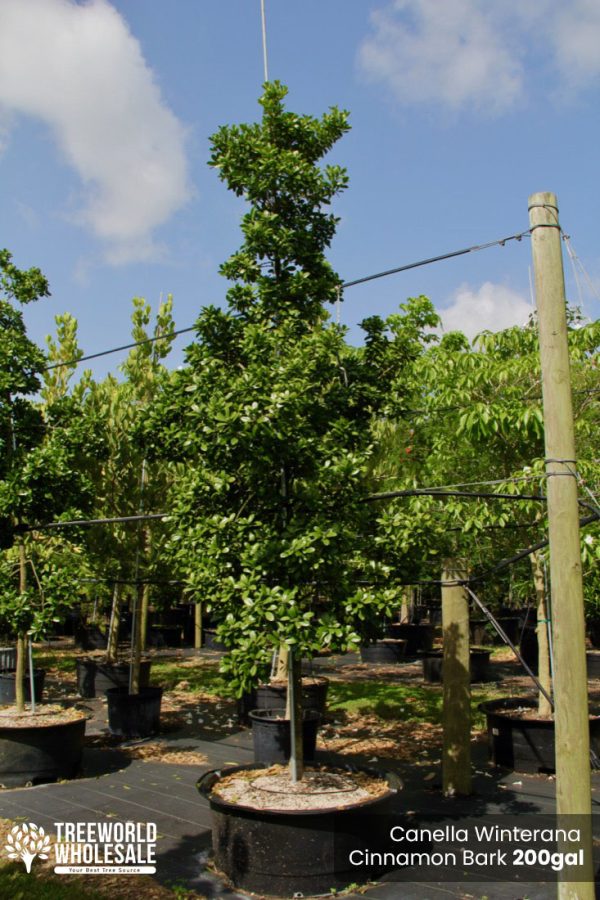
Looking for a single-trunk tree form instead? See our Cinnamon Bark Tree.
Other common names: Pepper Cinnamon, Palo Malambo.
Canella Winterana Bush – Quick Reference
| Common Name | Cinnamon Bark, Pepper Cinnamon, Palo Malambo |
| Florida Native | Yes |
| Growth Form | Multi-stem bush |
| Height | Up to 15 ft (4.57 m) |
| Flower Color | Red with yellow anthers |
| Flowering Season | Spring – Summer |
| Salt Tolerance | High |
| Drought Tolerance | Moderate |
| Soil | Well-drained, alkaline |
| Light | Full Sun to Partial Shade |
| Uses | Hedges, screening, gardens, patios, seaside, wholesale projects |
🌳 More popular and beautiful plants: Delonix Regia