


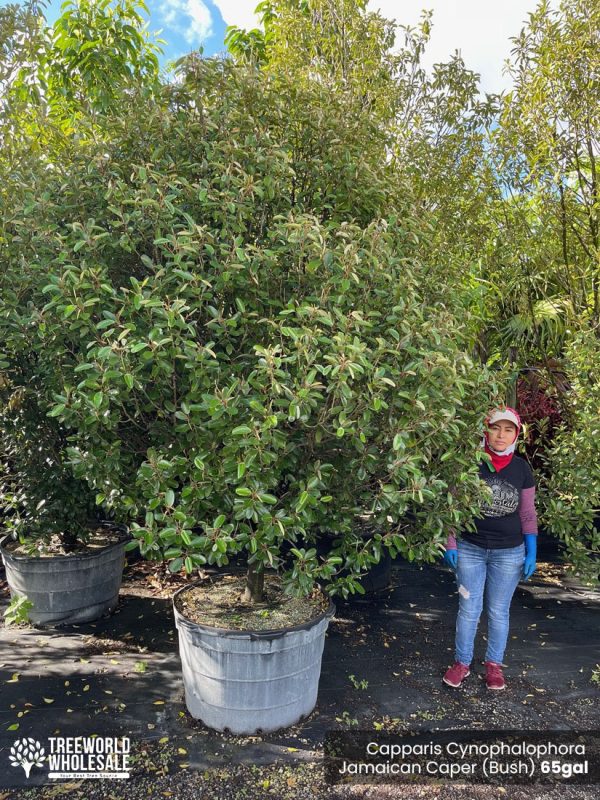
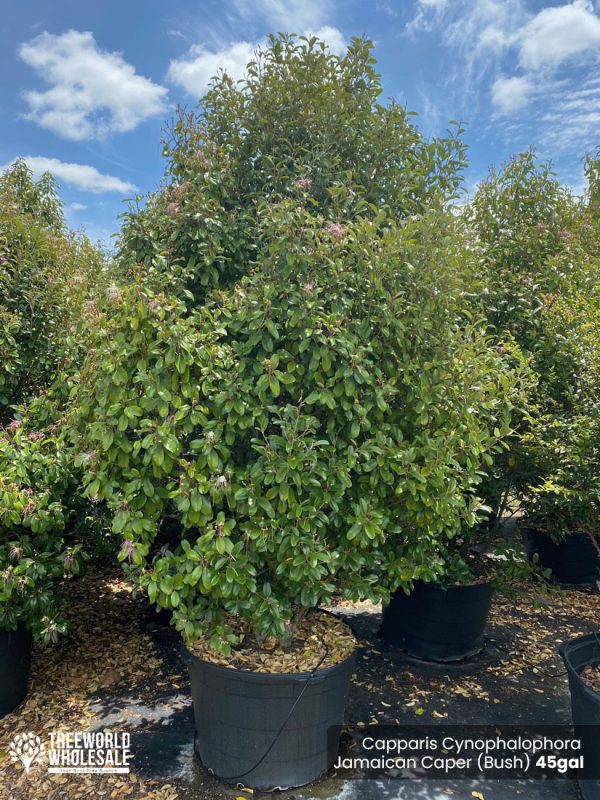
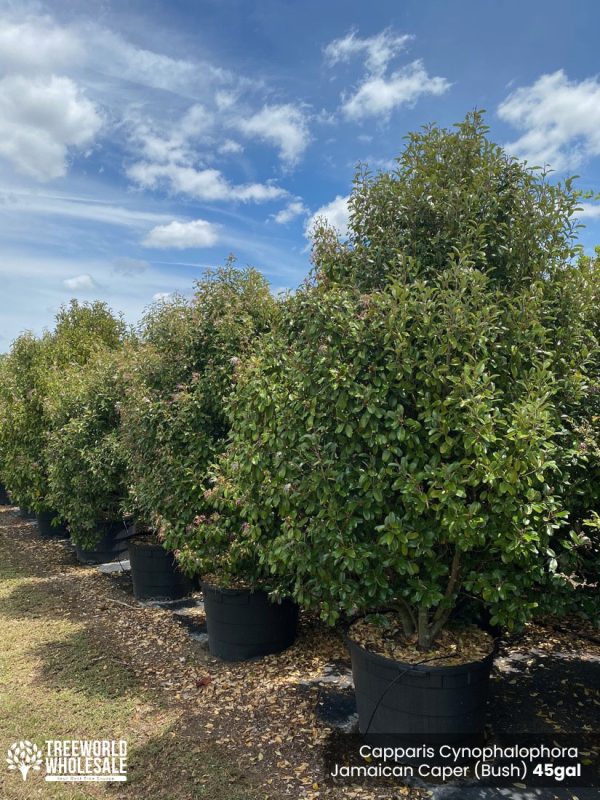
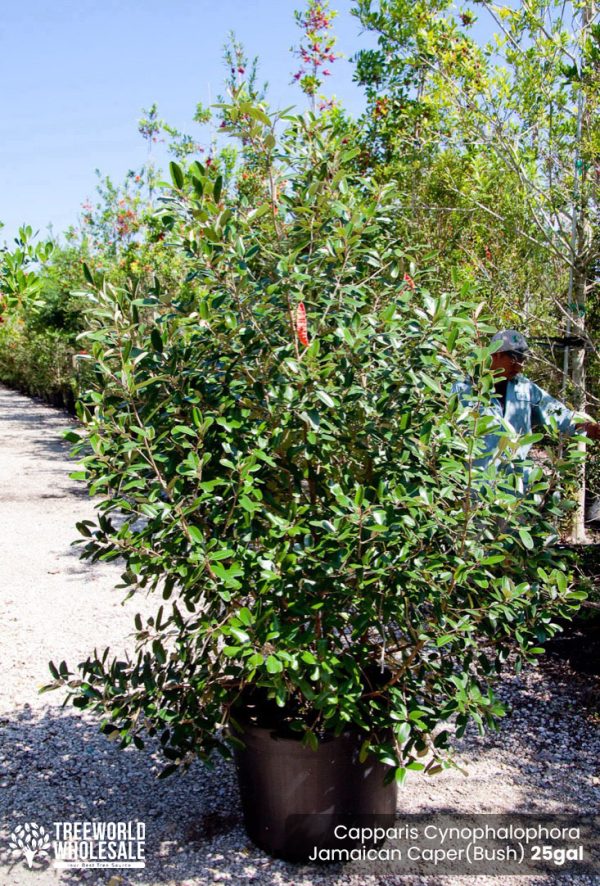
Description
Jamaican Caper Hedge – Plant Description
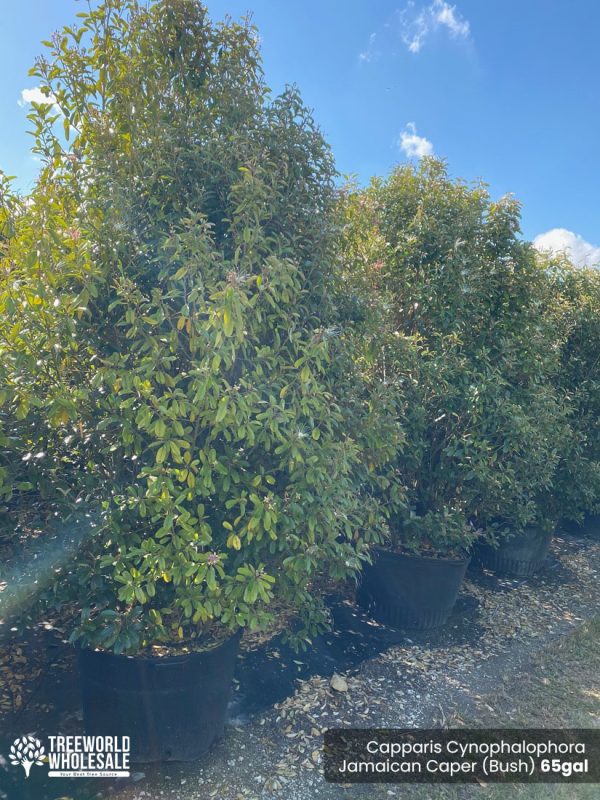
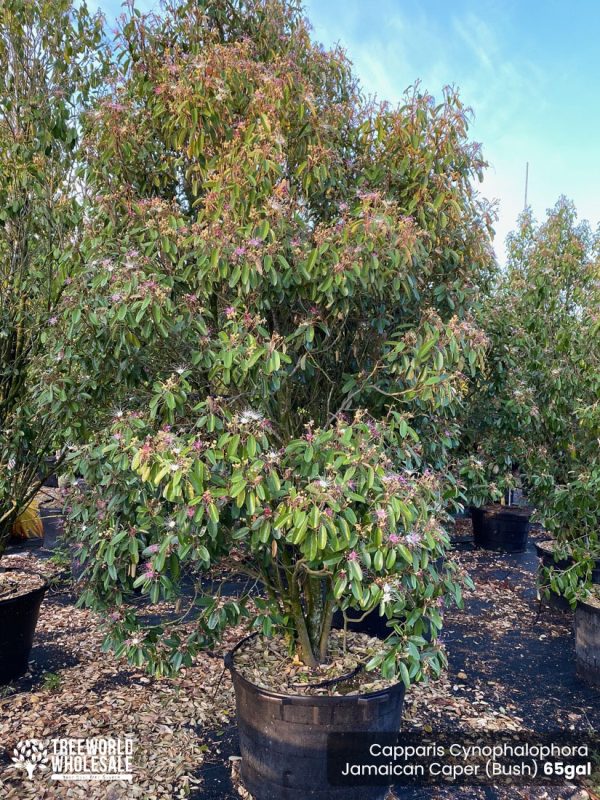
Capparis Cynophallophora (Jamaican Caper) is a Florida Native small to medium-sized shrub or tree, and one of approximately 300 species in the Capparis genus. It grows wild in Florida’s dry coastal scrubs and hammocks, though Jamaican Caper is considered endangered in its natural habitat — making cultivated specimens a meaningful contribution to regional biodiversity.
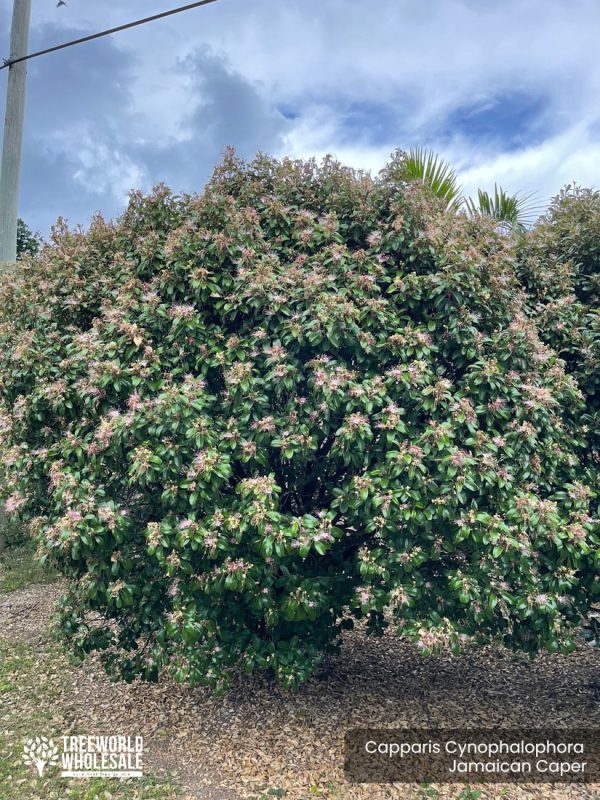
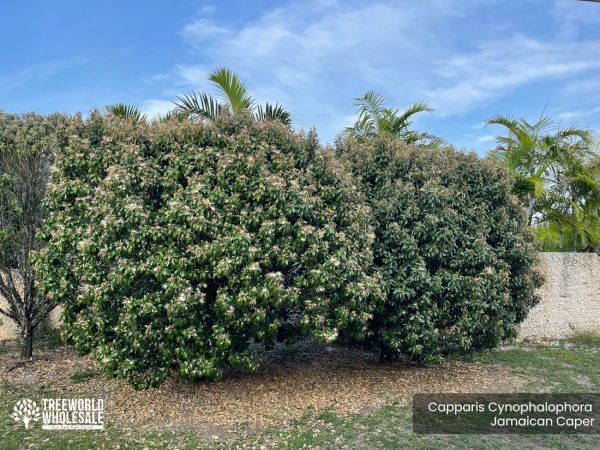
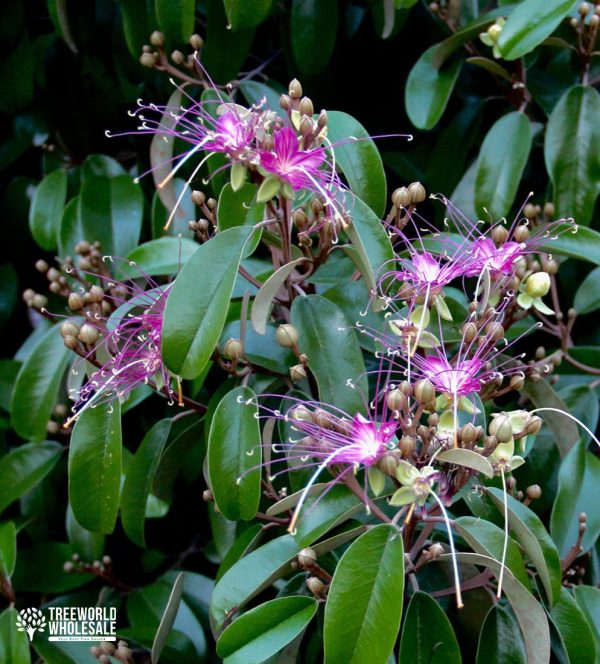
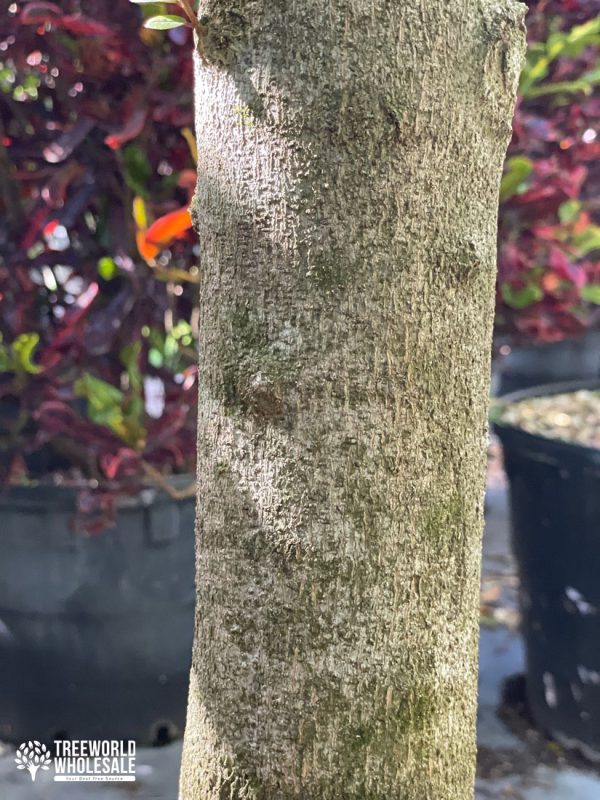
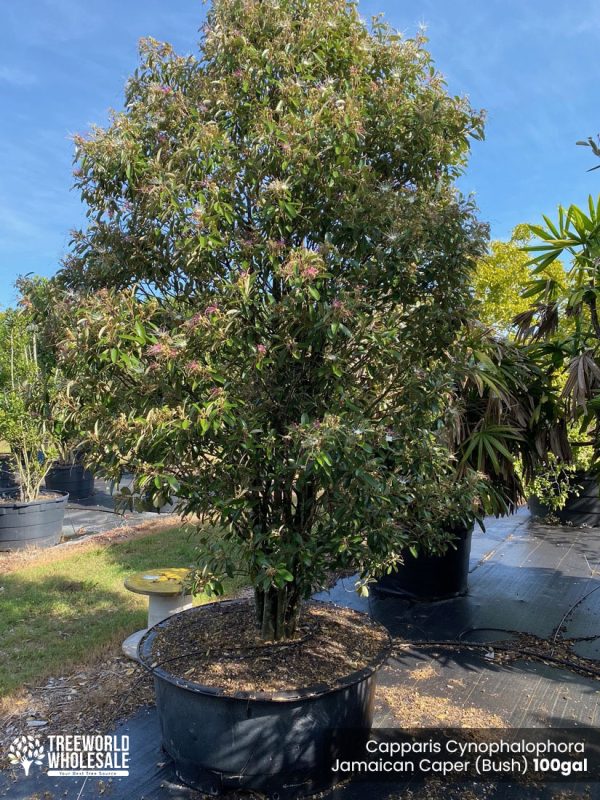
In its bush form, the Jamaican Caper hedge is compact, upright, and oval to triangular in shape, reaching 8 to 15 feet in height. Its thin smooth bark is dark gray or brown, becoming fissured with age. The small leathery leaves are oblong to elliptical, alternate, evergreen, measuring 2 to 4 by ¾ to 1¼ inches, with a distinctive tan, scaly underside.
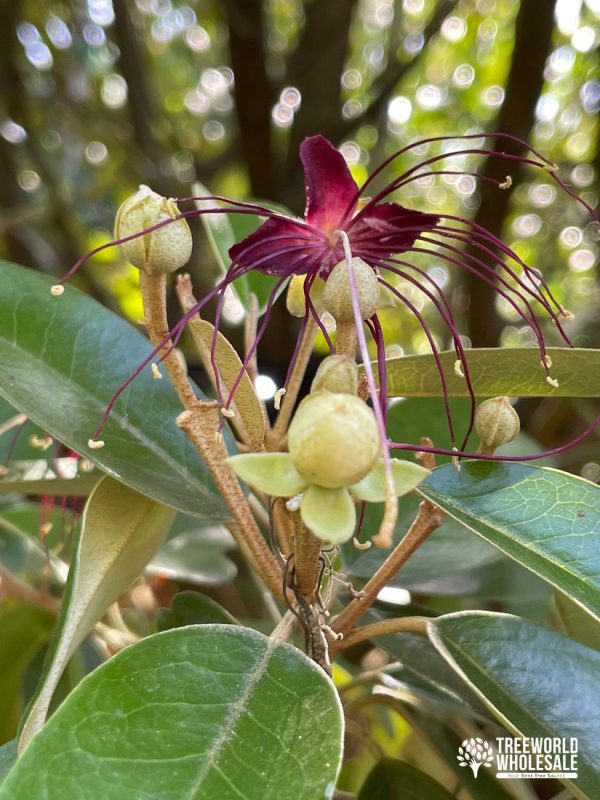
Aromatic flowers are borne on twig ends, opening white then transitioning to pink and violet, with distinctive protruding stamens up to 1.5 inches (3.81 cm) long — highly attractive to honey bees and other pollinators. Fruits are elongated pods, 4 to 12 inches long, with small brownish seeds that attract birds. Spontaneous seedlings often appear beneath established plants.
Jamaican Caper Bush – Landscape Use & Cultivation
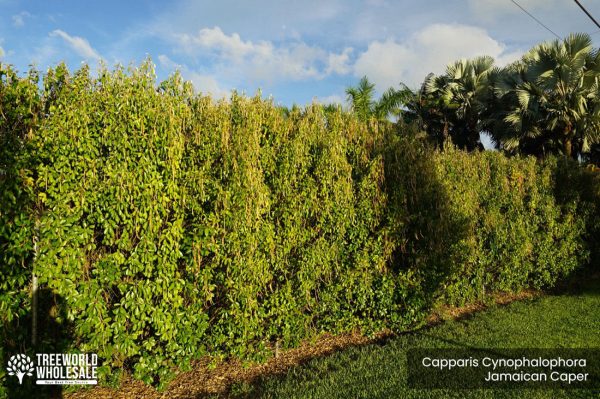
The Jamaican Caper bush is one of South Florida’s most versatile native shrubs. In cultivation, it requires low maintenance in well-drained, alkaline soils and has no serious pest or disease problems. Its naturally dense, compact growth habit makes it an excellent Jamaican Caper hedge plant for privacy screening, property boundaries, and coastal landscapes.
Beyond hedging, it performs well as a specimen plant on patios, in parking lot islands, and along roadway medians. It also grows well in containers, making it a flexible option for both residential gardens and larger wholesale landscape projects throughout Florida.
Other names: Black Caper
🌳 More popular and beautiful plants: Jamaican Caper Tree