Key points:
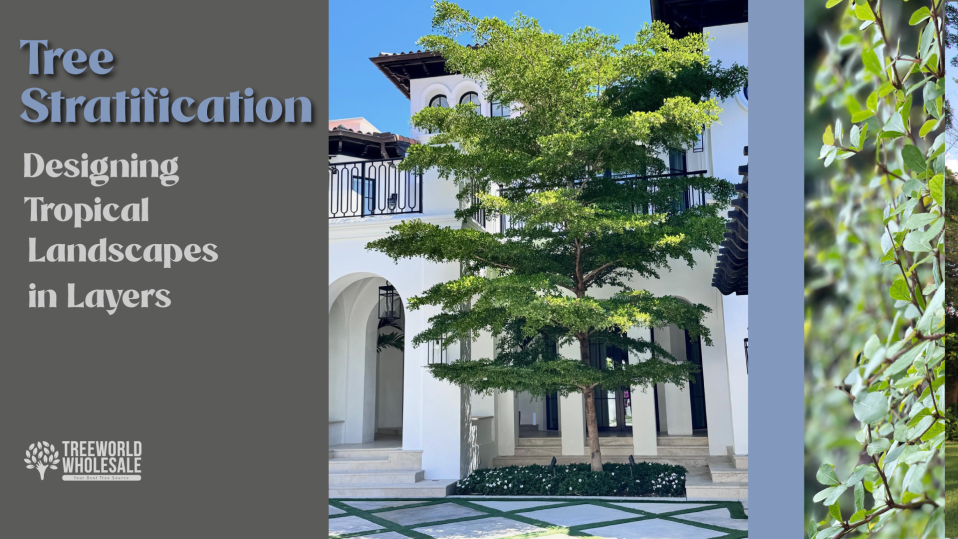
- Tree stratification is a deliberate vertical organization of the canopy to manage the rapid, aggressive growth typical of tropical species.
- Layered design functions as a practical tool to regulate intense sunlight, improve airflow, and reduce ground-level heat.
- By dividing landscapes into the upper canopy, mid-story, and lower levels, designers create depth and rhythm that guide the eye and define boundaries.
What is tree stratification? Why does it matter in tropical and subtropical landscapes?
In these environments, planting design is never flat. The intensity of sunlight, rapid growth rates, and the natural strength of tropical species demand a strategic approach to landscape planning. Tropical trees grow large, fast, and wide, and without careful consideration, their scale can quickly overpower a site or distort the overall spatial design.
Tree stratification refers to the intentional arrangement of trees and plant material by height, canopy spread, and density. Rather than treating the landscape as a single plane, designers work in vertical layers including the upper canopy, mid-story, and lower levels to shape how space, light, and movement are experienced.
Without a layered strategy, landscapes often feel either overplanted and chaotic or exposed and unfinished. Stratification allows designers to anticipate growth and provide structure as the landscape matures.
For landscape architects, designing in layers functions as both a practical tool and a design language. Stratification regulates light, improves airflow, and moderates heat at ground level, creating more comfortable outdoor environments. It also introduces depth, rhythm, and hierarchy, guiding the eye through the landscape while defining spatial boundaries without relying on hard structures.
What Landscape Architects Mean by “Stratification of Trees”?
Tree stratification is not simply a planting technique; it is a spatial strategy. When landscape architects refer to a stratification tree approach, they are describing the intentional organization of trees into vertical layers that work together to shape the landscape as a cohesive system.
Rather than treating trees as individual elements, stratification considers how their combined height, canopy density, and growth habit interact to define space, control scale, and support long-term performance.
At its core, the stratification of trees divides the landscape into distinct yet interconnected layers, each with a specific role:
Landscape design in layers
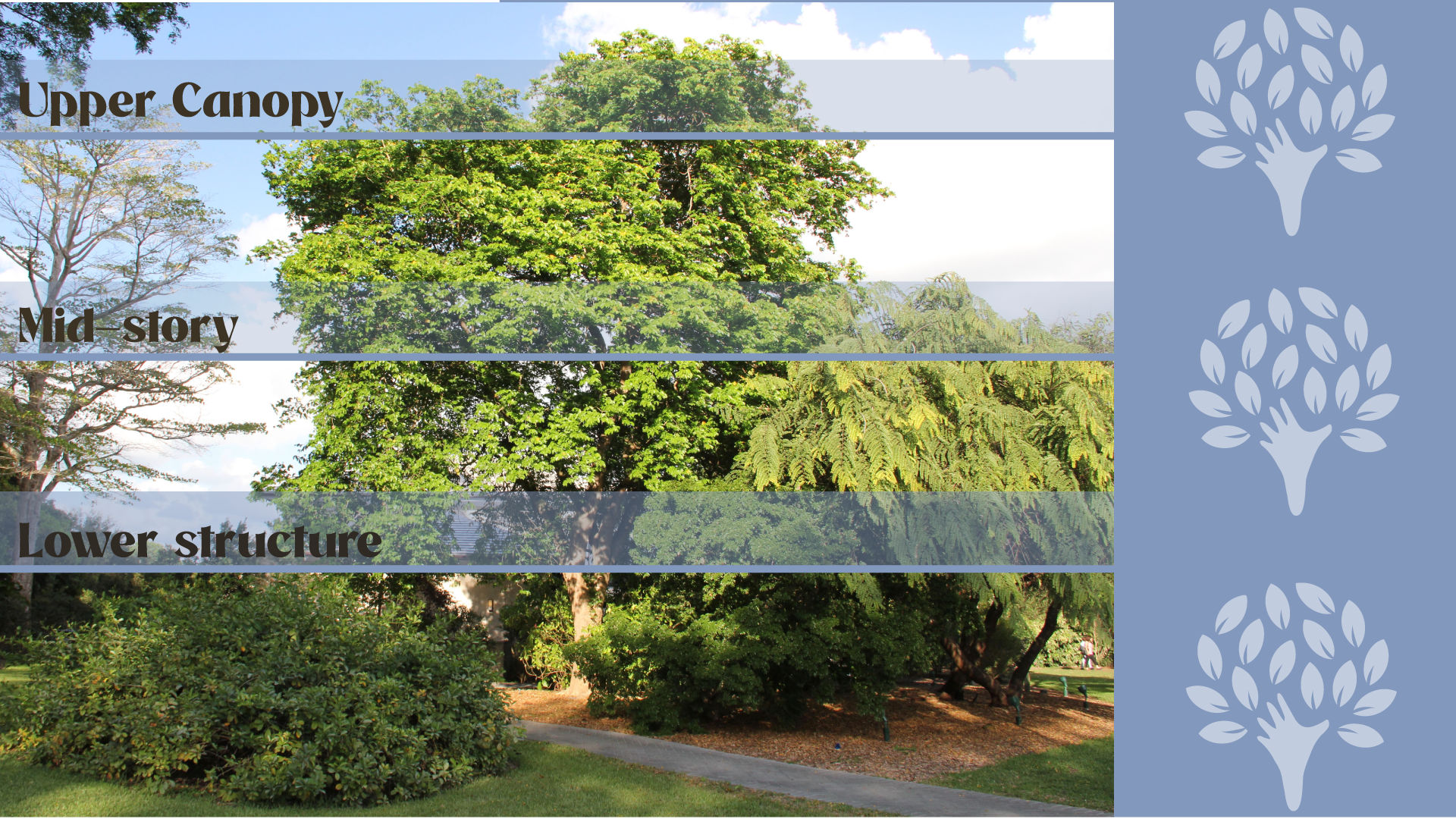
Upper Canopy: Structure, Shade, and Skyline
The upper canopy establishes the primary framework of the landscape. These taller trees define the skyline, provide broad shade, and anchor the site visually. In tropical settings, this layer plays a critical role in moderating sunlight and regulating heat and shade, while also giving the landscape a sense of permanence and scale.
Mid-Story: Enclosure and Visual Rhythm
Beneath the upper canopy, the mid-story layer shapes how space is perceived and experienced. Trees in this layer help create enclosure without fully closing off views, introducing rhythm and continuity throughout the site. This is often where designers manage transitions. Softening edges, linking spaces, and guiding the eye horizontally across the landscape.
Lower Layer and Understory: Texture and Human Scale
The lower layer brings the landscape down to a human level. This is where texture, detail, and intimacy emerge. Smaller trees and understory plantings help bridge the gap between open canopy spaces and ground-level experience, making large landscapes feel approachable rather than overwhelming.
Trees That Naturally Express Stratification
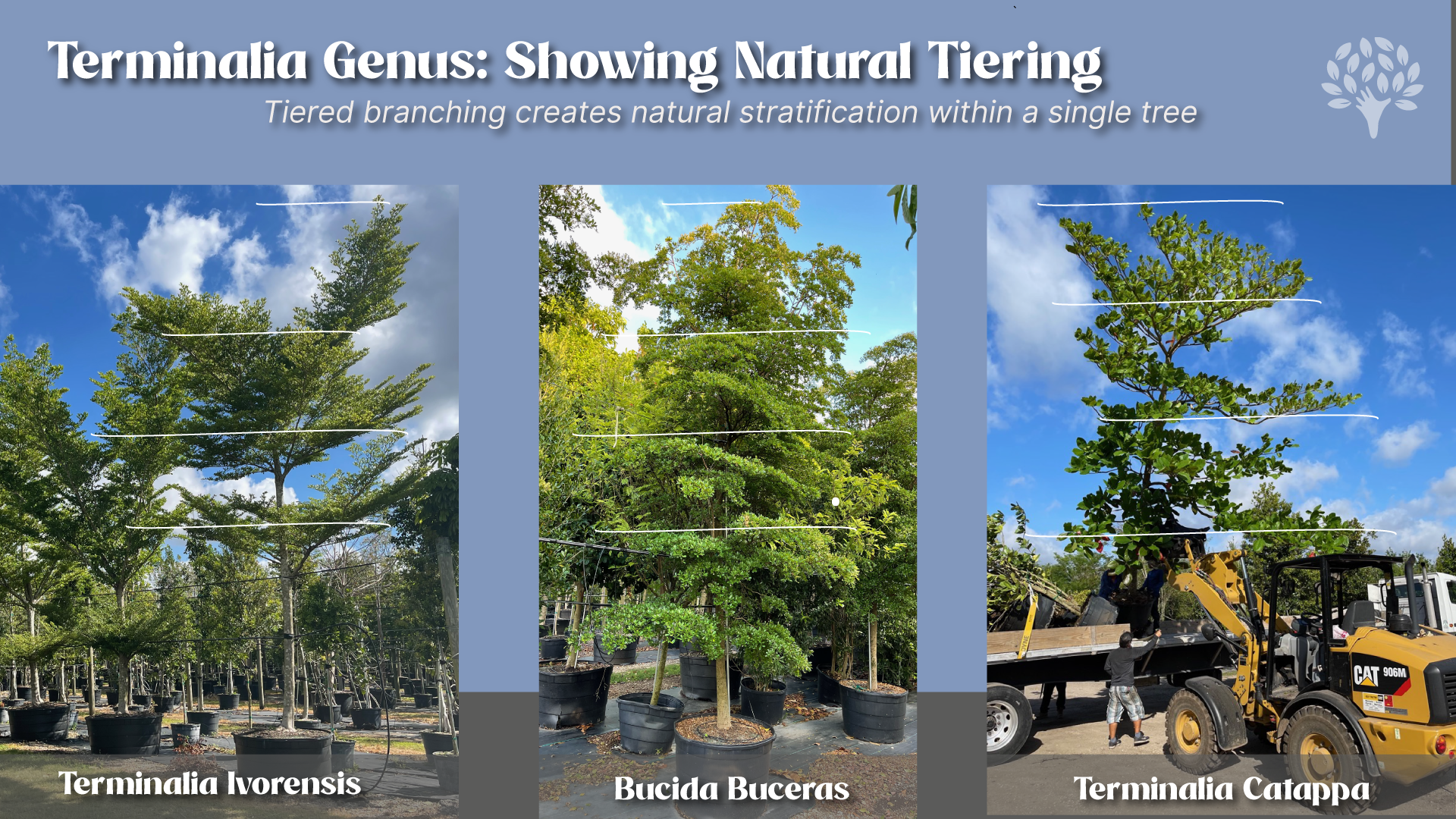
Terminalia ivorensis: A Vertical Expression of Natural Stratification
Terminalia ivorensis, commonly referred to as Black afara, stands out for its clear, disciplined expression of vertical structure. Often reaching significant height at maturity, this species develops an upright trunk with horizontally arranged branches that naturally organize into tiers. In a stratified design, it provides structure while allowing layered planting to thrive.
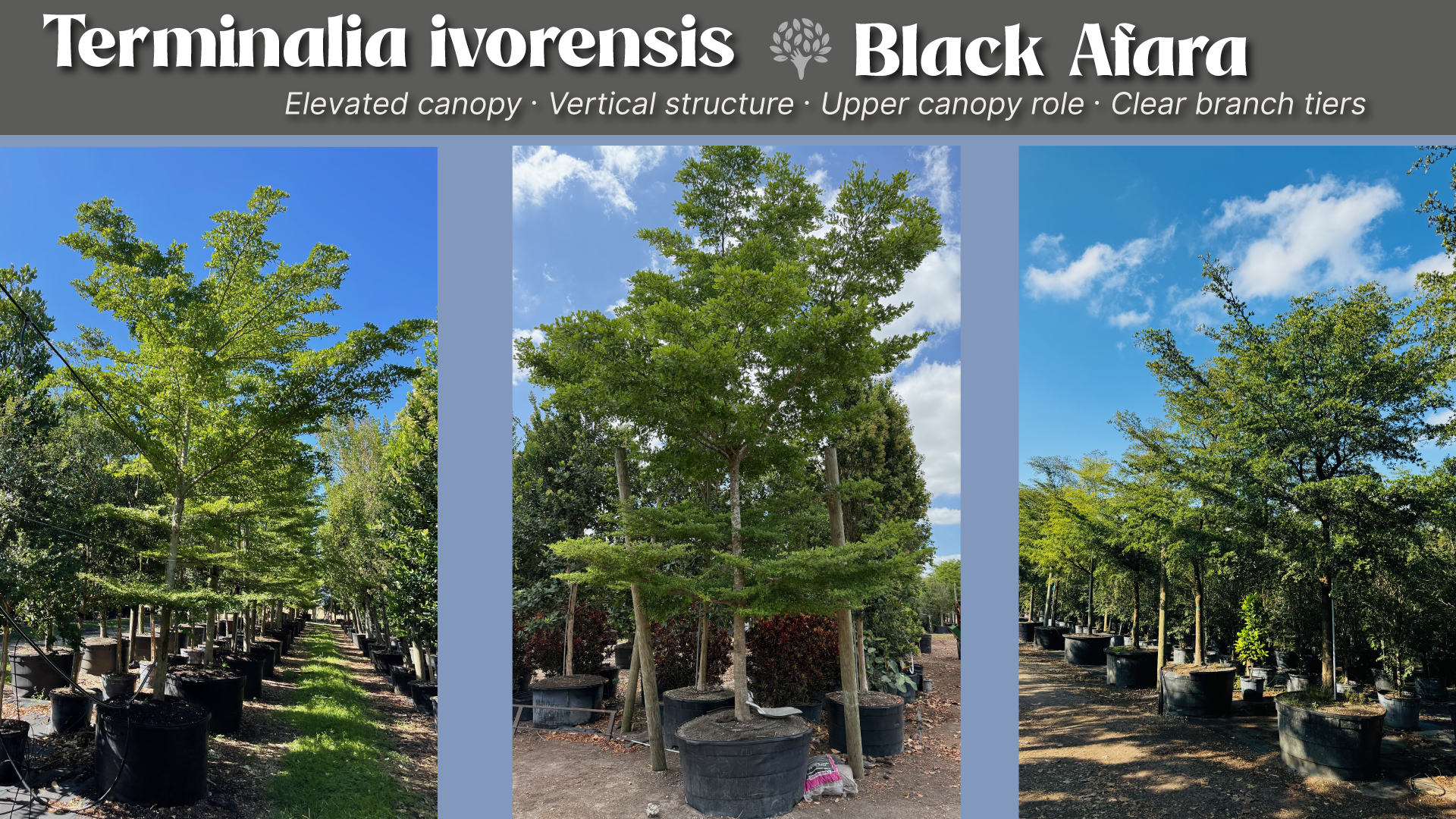
Black afara is especially effective at entrances and front yards, where its tall, clean form creates presence without blocking views. It adds scale, shade, and architectural clarity in both residential and commercial settings.
When used along avenues and streetscapes, it delivers consistent shade, clear sightlines, and a strong sense of rhythm.
Terminalia catappa: A Horizontal Expression of Stratification
While Terminalia ivorensis expresses stratification vertically, Terminalia catappa, commonly known as Tropical Almond, expresses it horizontally. Broad, layered branches extend outward, forming strong horizontal planes within the canopy.
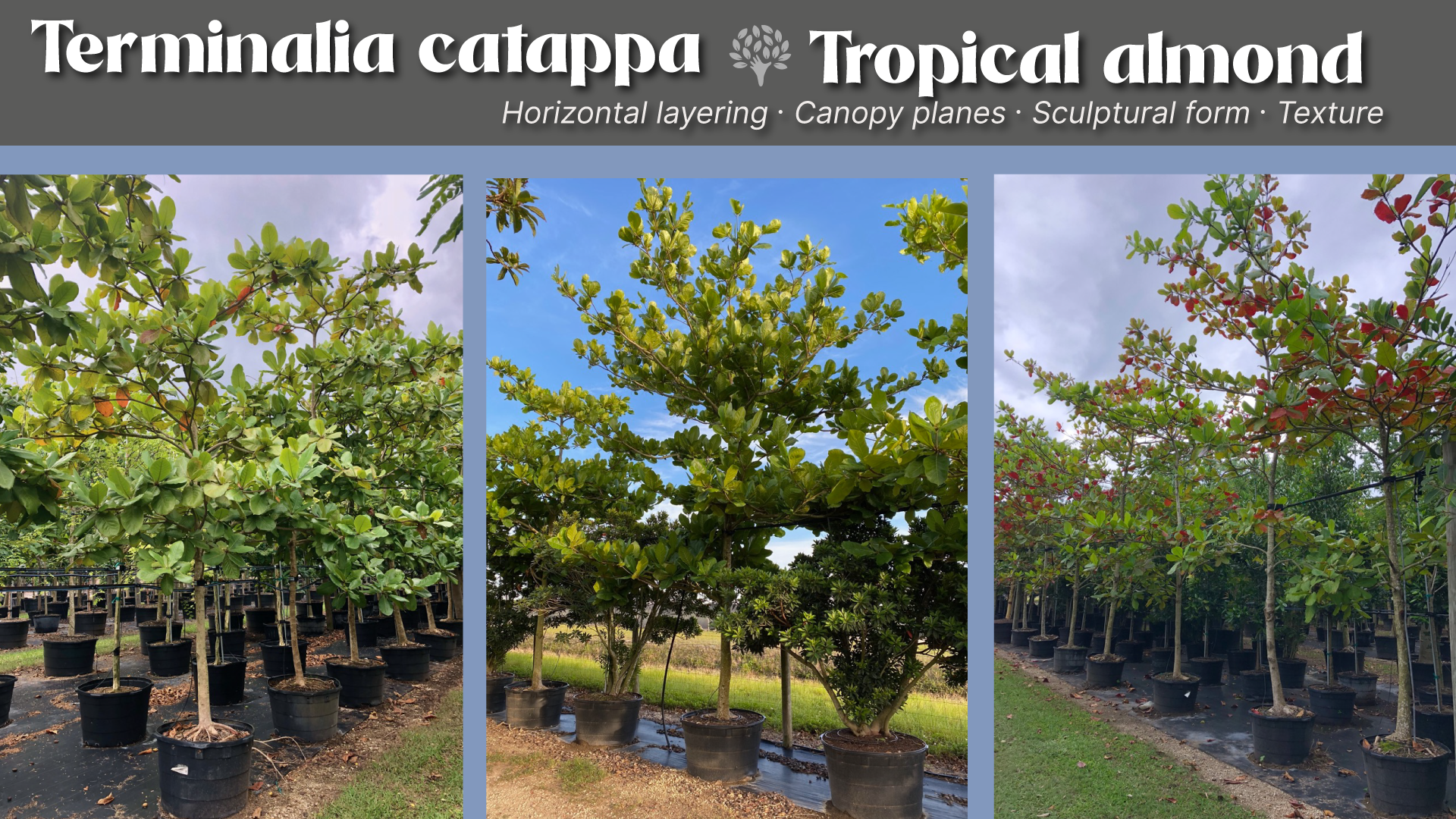
This tiered structure establishes clear visual order and shapes shade and space in a calm, deliberate way.
In landscape design, Tropical Almond works best where designers need horizontal emphasis. Like entrances, along waterfronts, or in open lawns where the canopy can fully express its form. Within stratified landscapes, Terminalia catappa counterbalances more upright canopy trees.
Bucida buceras: Connecting the dots
If Terminalia ivorensis defines the upper canopy and Terminalia catappa emphasizes horizontal layering, Bucida buceras brings stratification down to the human scale. Its dense branching structure and refined form make it especially effective as a mid-story tree.
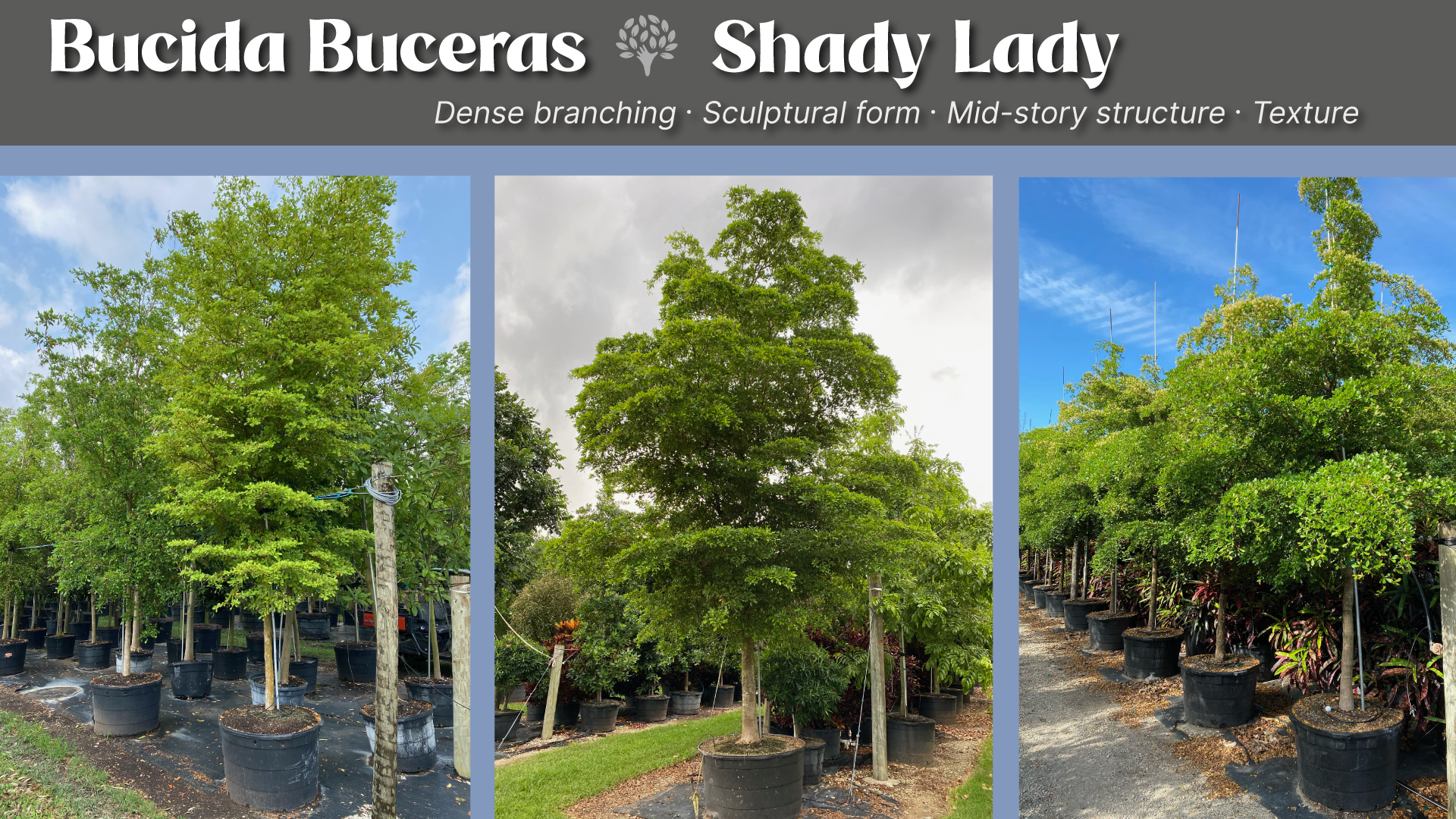
This relationship is no coincidence. Bucida buceras was formerly classified as Terminalia buceras and, although later reclassified, it remains within the same family, Combretaceae. That shared lineage explains its similar architectural clarity and layered growth habit.
Commonly known as Shady Lady, Bucida buceras develops a compact, well-structured canopy that provides shade and enclosure without closing space. Designers use it to shape plazas, courtyards, and pedestrian areas where definition matters as much as openness. Its form adds texture and rhythm to the landscape.
It performs an important connective role, linking upper canopies to lower planting layers and allowing landscapes to transition smoothly from large-scale structure to human experience.
Designing with Depth: Mastering Tree Stratification
Tree stratification is not about adding more trees. It is about selecting the right trees to define space, manage scale, and guide how landscapes grow over time. When designers work with trees that naturally express vertical and horizontal layering, stratification becomes intuitive, resilient, and long-lasting.
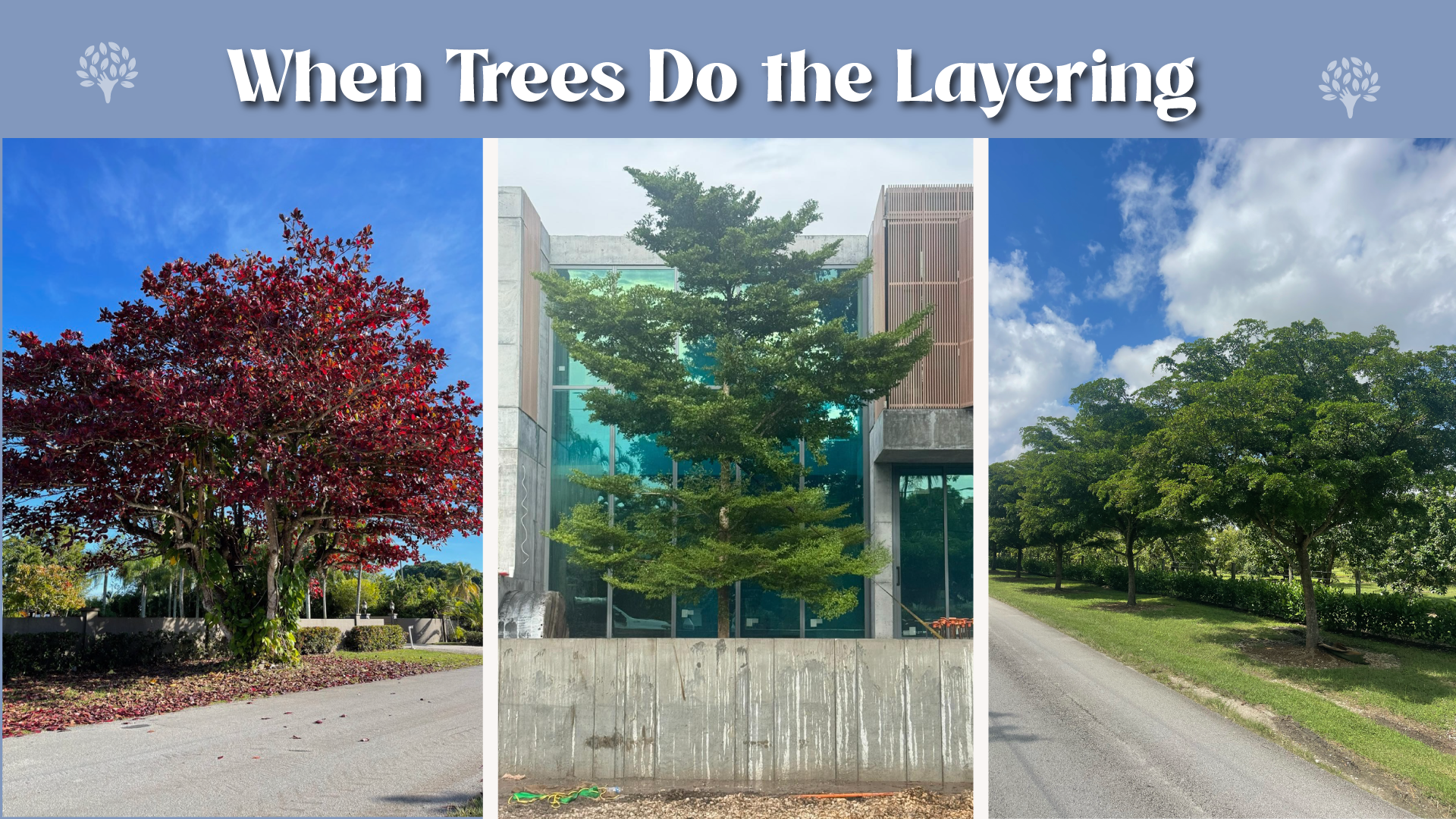
At TreeWorld Wholesale, Inc., we support landscape architects, designers, and developers in sourcing trees that align with layered design strategies from the start. Our focus is on trees for sale that help organize space and support thoughtful composition as projects mature.
If you are planning a landscape where structure and hierarchy matter, our team can help you select the right trees for your design.
Contact TreeWorld to discuss availability and begin designing in layers.
TreeWorld Wholesale, Inc. · Homestead, Florida · 305-245-6886