
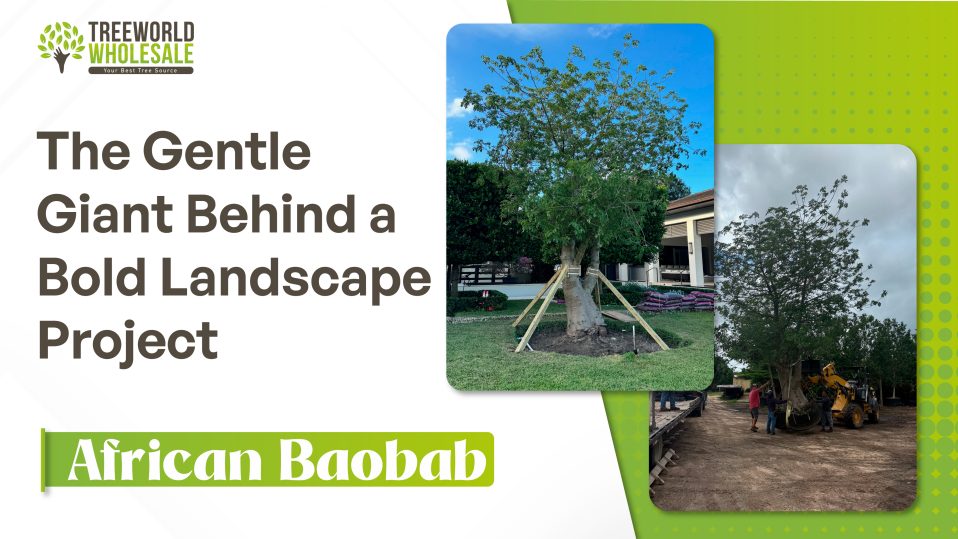
In the world of landscape architecture projects, there are trees that make a lasting impression. We call them statement or accent trees. And we can all agree that there is no bigger statement than an African Baobab: a gentle giant.
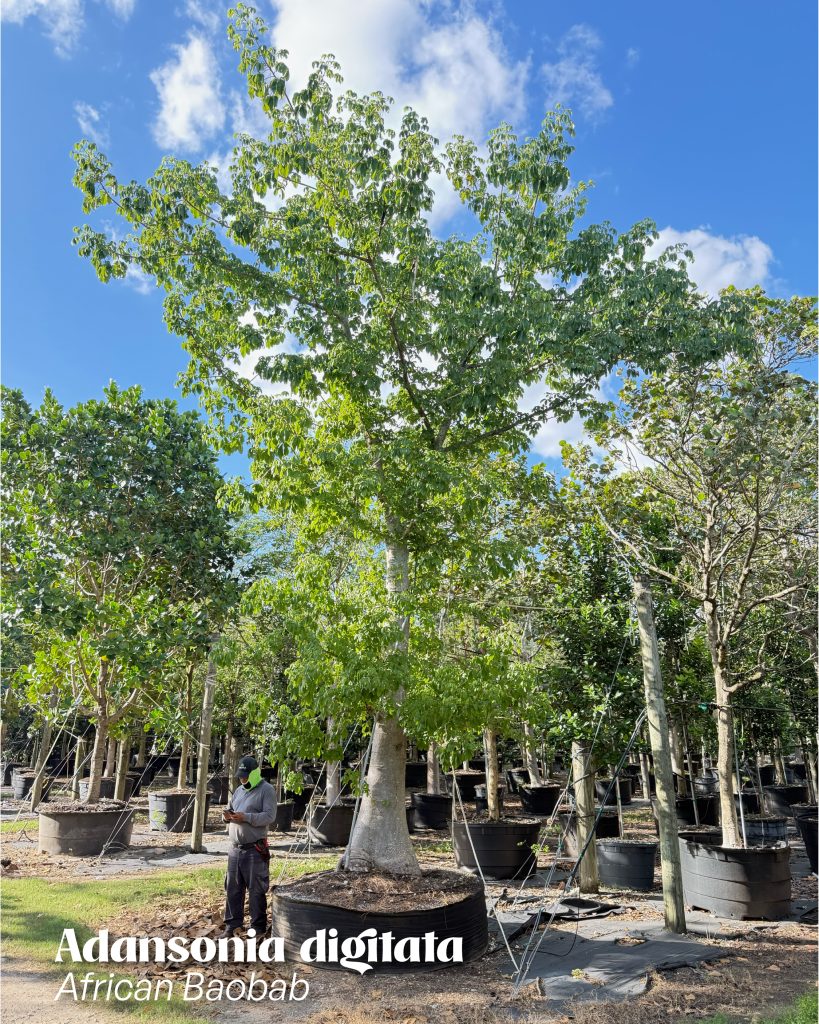
At a recent landscape project in Florida, TreeWorld delivered a 600-gallon Adansonia digitata. A rare and majestic specimen that’s changing the conversation around landscaping projects in the region.
This wasn’t just about planting a tree. It was about crafting a sense of place and belonging.
African Baobab in our latest Landscape Project
A Vision for Bold Design
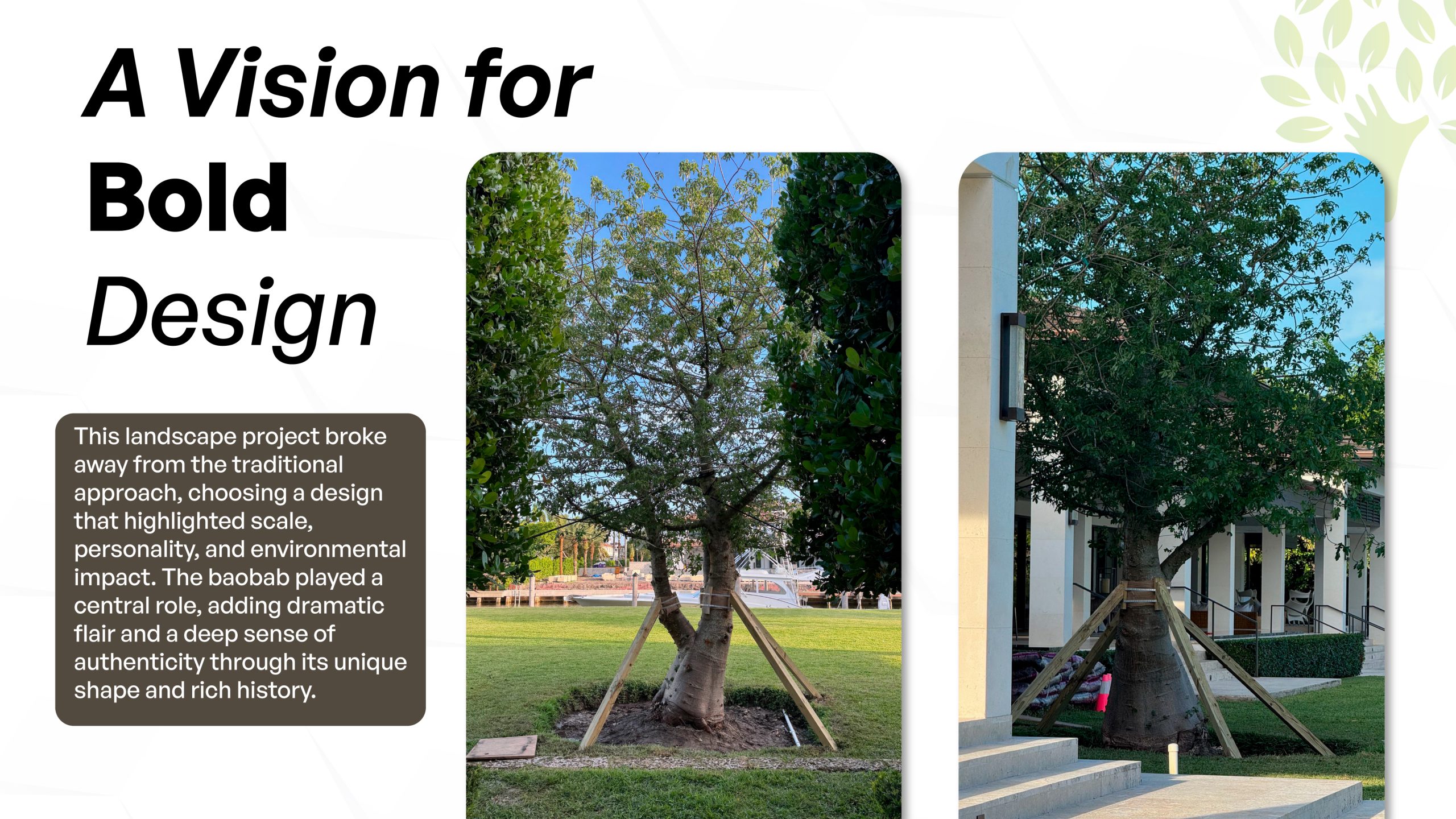
This landscape project aimed to push beyond the conventional, opting for a design narrative that embraced scale, character, and ecological presence. That’s where the baobab came in. With its sculptural form and storied history, it brought both drama and rooted authenticity to every landscape project.
The One and Only African Baobab (Adansonia digitata)
Native to the African savannas, the baobab is one of the most iconic and awe-inspiring trees for sale in the world—often called the “Tree of Life.” Its massive trunk can store thousands of gallons of water, a feature that allows it to survive extreme drought. The canopy spreads like an umbrella, offering generous shade and a commanding silhouette that transforms any setting.
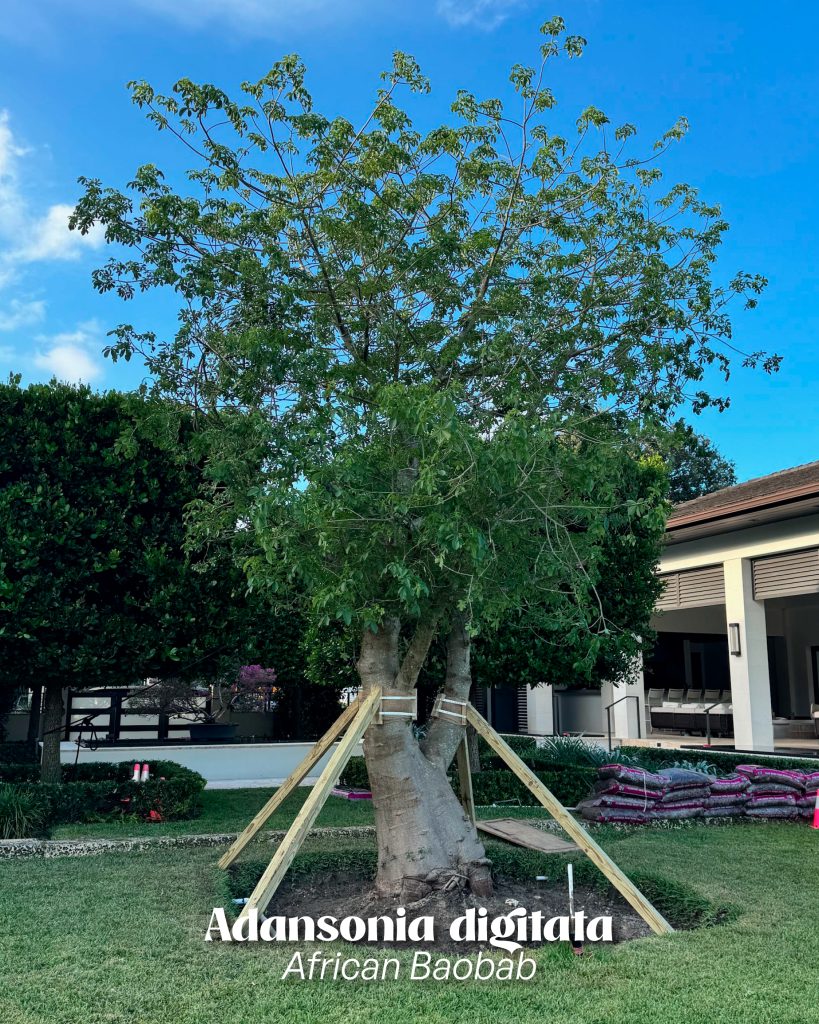
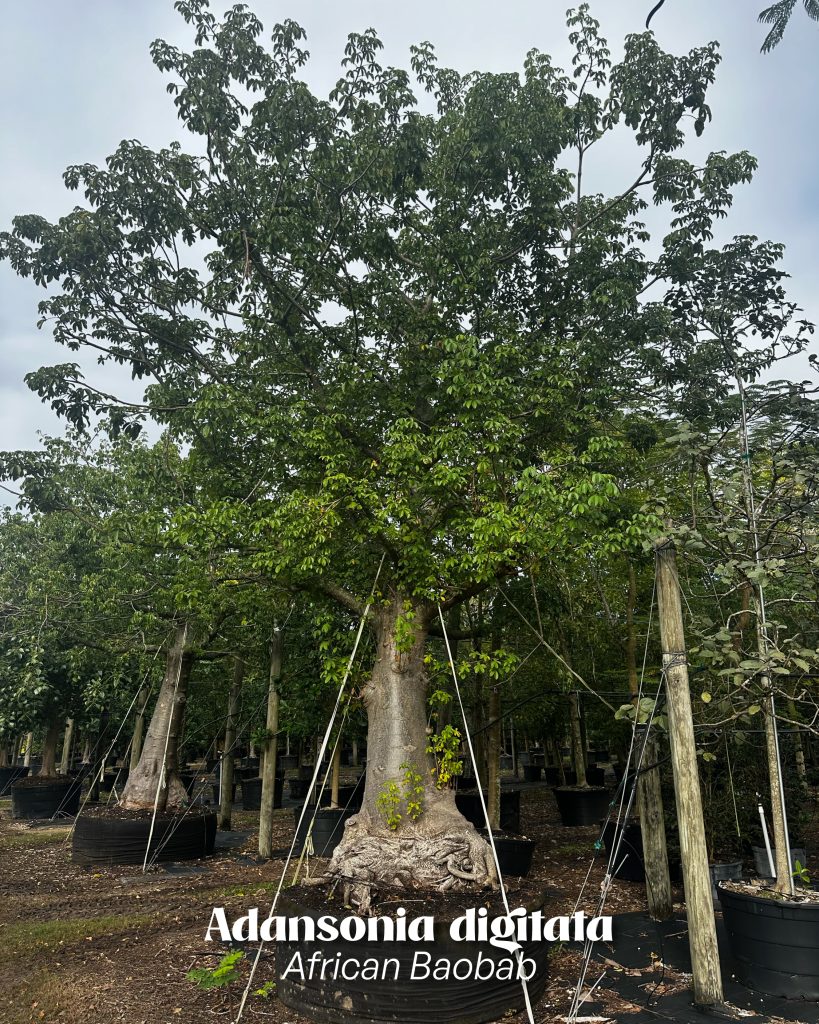
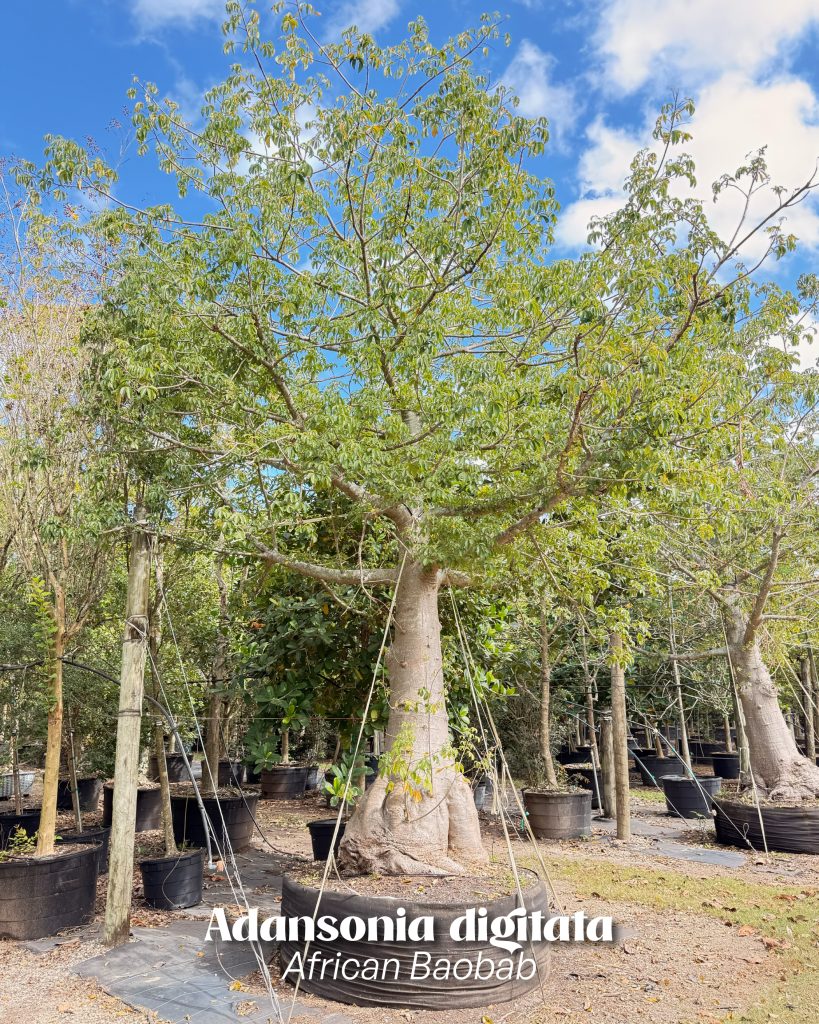
The specimen delivered for this project stands out for its unique form, aged bark texture, and wide presence. Exactly the kind of visual statement large-scale landscape projects seek. At 600 gallons, this baobab required expert handling and transport, underscoring the logistical scale involved in incorporating large and exotic trees into design plans.
The Gentle Giant
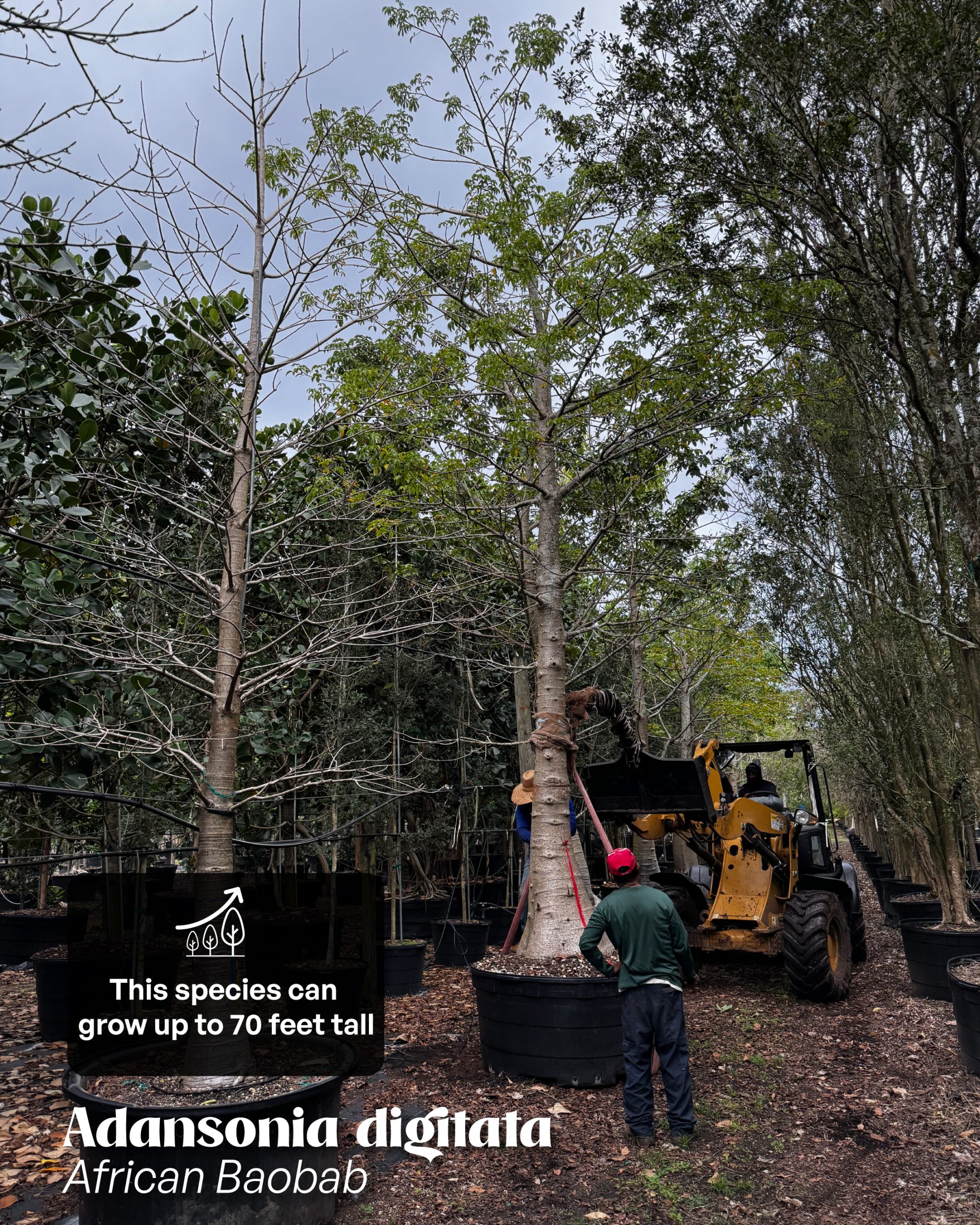
The Adansonia digitata is instantly recognizable by its thick, bottle-shaped trunk and umbrella-like canopy. This species can grow up to 70 feet tall, with trunks that store thousands of gallons of water—making it a remarkably drought-tolerant tree and well-suited for warm climates like Florida’s.
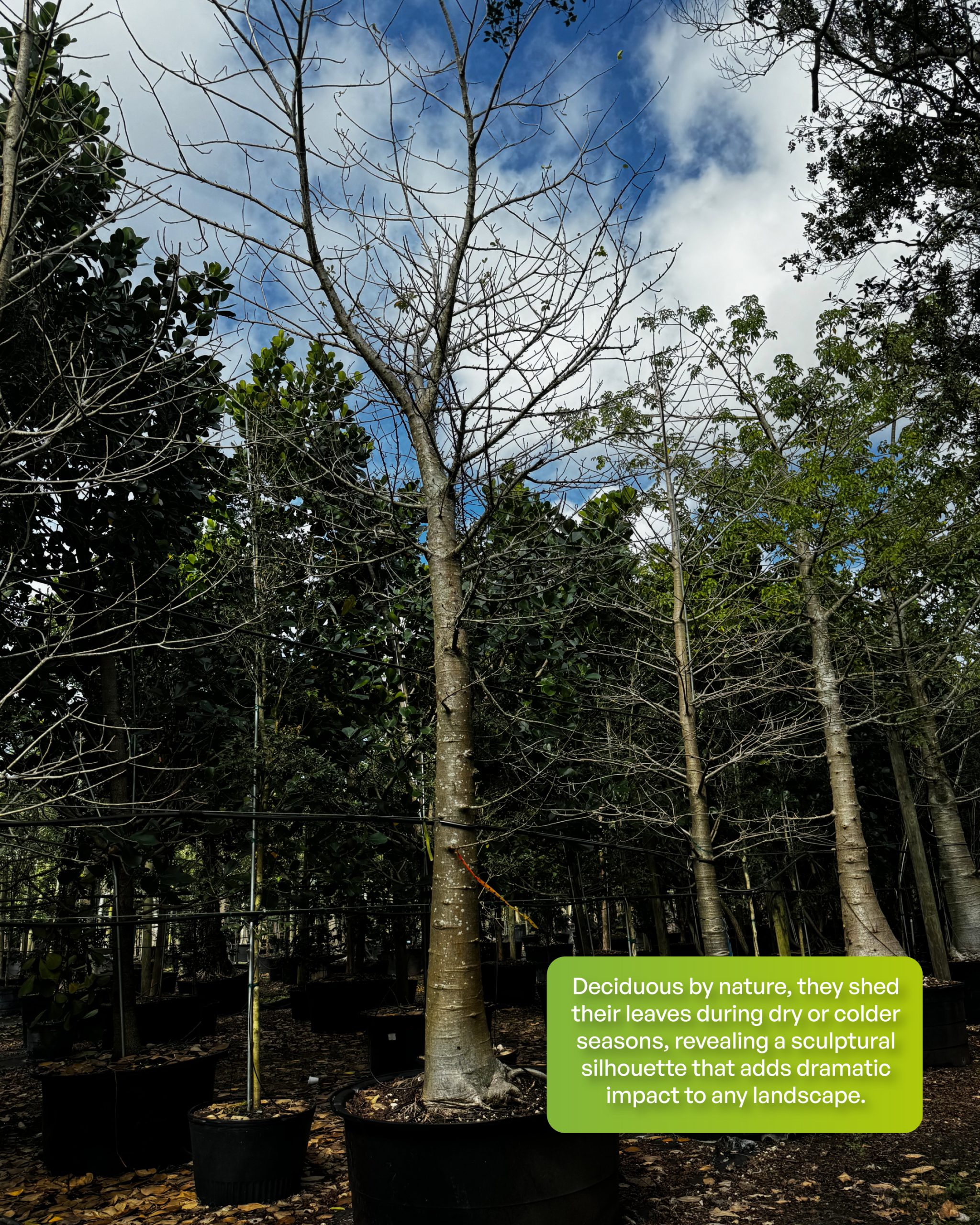
Baobabs are incredibly long-lived, often surviving for hundreds or even thousands of years. Their smooth, fibrous gray bark is resistant to fire and damage. Deciduous by nature, they shed their leaves during dry or colder seasons, revealing a sculptural silhouette that adds dramatic impact to any landscape project. And during spring, the African baobab produces bright green compound leaves and large, white, night-blooming flowers that attract pollinators like bats.
Beyond their visual presence, baobabs have ecological and cultural value. Their fruit is rich in vitamin C and antioxidants, and parts of the tree have been used in traditional medicine across Africa.
Combining resilience, rarity, and visual impact, the baobab is a living monument that elevates any landscape architecture project.
The Story Behind the Tree
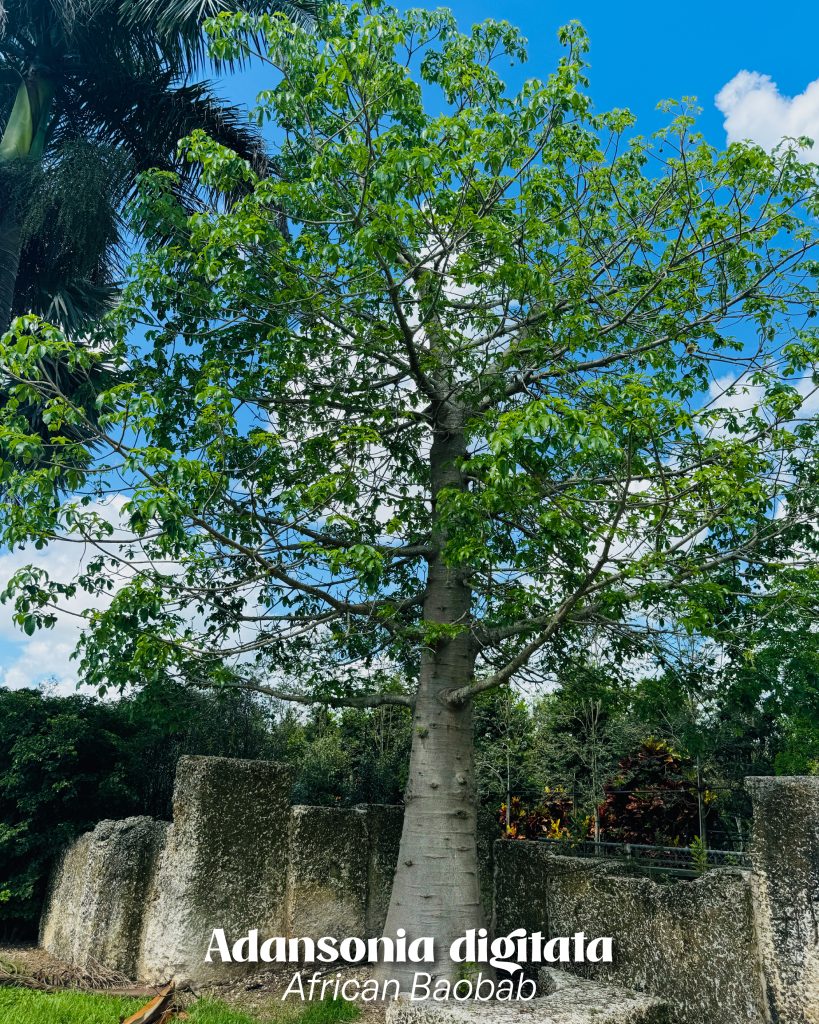
Legend has it that the baobab was planted upside down by the gods. Its roots, they say, stretch toward the sky while its branches reach deep into the earth. A playful myth that perfectly matches the tree’s bold and extravagant shape. But beyond the myth, the African baobab holds a deep and beautiful legacy.
As mentioned before, in Africa it is known as the “Tree of Life,” as the baobab has long been a symbol of resilience, community, and generosity across the continent.
Some trees are believed to be over 2,000 years old, silently witnessing the passing of time and generations. In many villages, baobabs serve as more than trees. They’ve been gathering spots, story circles, shelters, and even natural chapels. Hollowed trunks have been used to store grain, collect water, and host sacred ceremonies.