
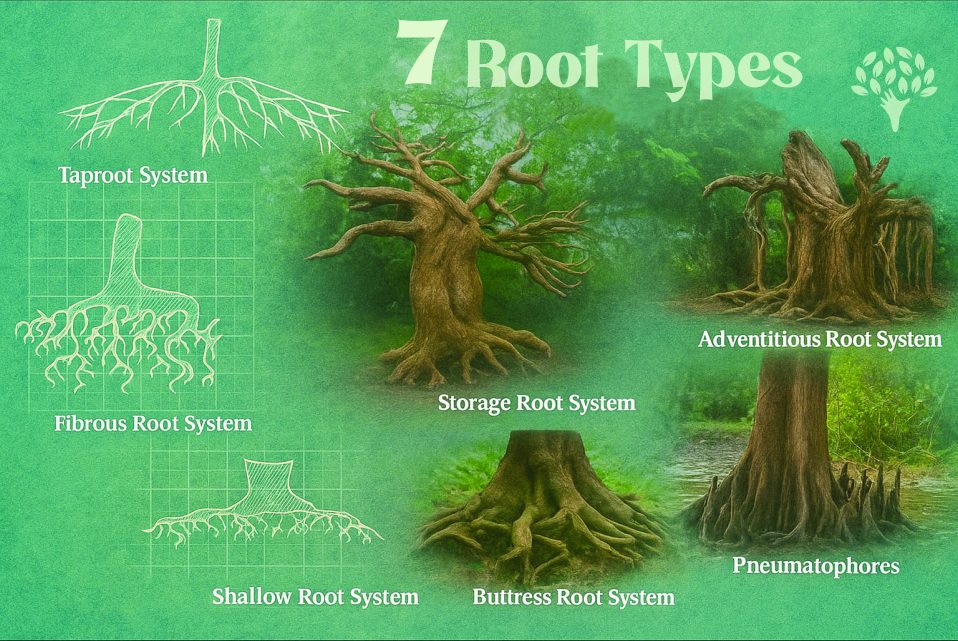
In our previous blog, Beneath the Surface: Understanding Tree Root Systems for Smarter Landscapes, we explored how roots function as the unseen framework of every tree—stabilizing, nourishing, and shaping the life above ground. In this follow-up, we take a closer look at the different root types in trees, breaking down how each one behaves and what that means for your landscape. From taproots that dig deep for strength, to fibrous roots that hold soil together, and buttress roots that make a bold visual statement, every root type offers unique advantages. Knowing how to match the right tree to the right space is what turns a good design into a lasting one.
The Main Root Types in Trees
Not all roots are the same. Just as every tree carries its own character above ground, its roots reveal a different kind of story beneath the soil. And as always with nature, the wisdom is remarkable. There is nothing more resilient, beautiful, and perfectly complex than the way trees adapt through their root systems. To better understand how these hidden structures influence design, stability, and growth, we’ve broken down the main root types in trees, with examples of how each can be used to shape smarter landscapes.
Taproot Systems: Strength Below the Surface
The taproot is a dominant central root that grows deep into the soil, often much longer than the tree’s lateral roots. This structure acts like a subterranean anchor, providing excellent stability against storms and winds, while also allowing the tree to access deep groundwater reserves. For this reason, taprooted trees are often more drought-tolerant.
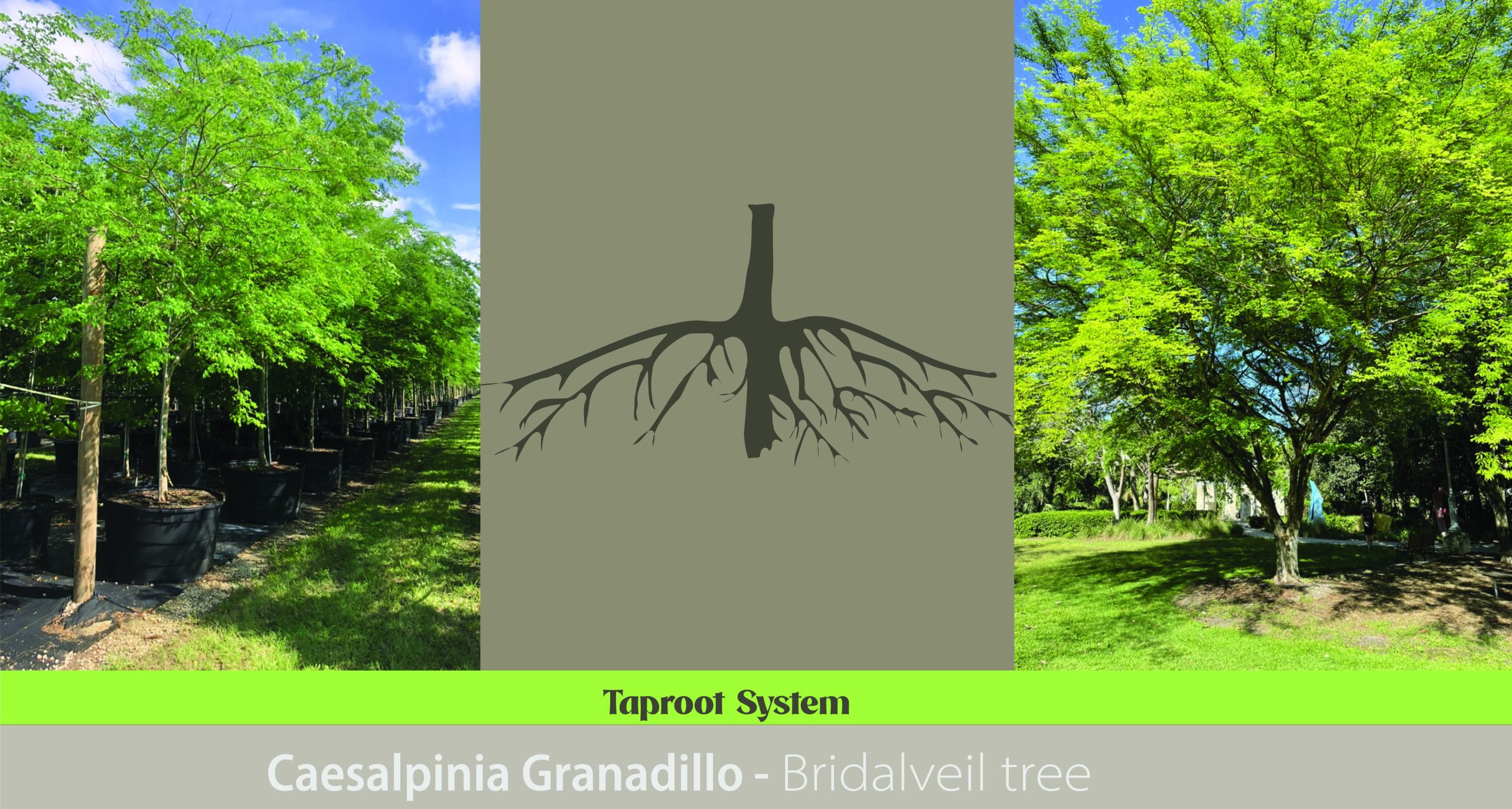
Landscape Advantages of Taprooted Trees:
- Hurricane resilience – deep anchoring makes these trees more wind-resistant.
- Drought resistance – taproots reach underground water reserves, helping them withstand extended dry seasons.
- Soil improvement – deep roots break through compact layers, enhancing drainage and soil health.
Trees with strong taproots bring both beauty and resilience to landscapes. Mahogany (Swietenia mahagoni) stands out as an iconic shade tree for Florida, wind-resistant and elegant. Calophyllum (Calophyllum brasiliense) is highly adaptable and durable, thriving in varied soils with ease. Caesalpinia granadillo offers hardiness and drought tolerance, making it ideal for low-maintenance designs.
Fibrous Roots: The Hidden Web of Stability
Fibrous root systems form a dense network of fine roots concentrated near the soil surface. This structure allows trees to absorb water and nutrients quickly, making them highly efficient in challenging or sandy soils. These types of roots also knit the soil together, playing a vital role in erosion control — an invaluable trait for coastal or sloped landscapes where soil stability is a concern. From a design perspective, fibrous-rooted species are often more hardscape-friendly, as their shallow and compact systems reduce the risk of damaging sidewalks, driveways, or underground infrastructure.
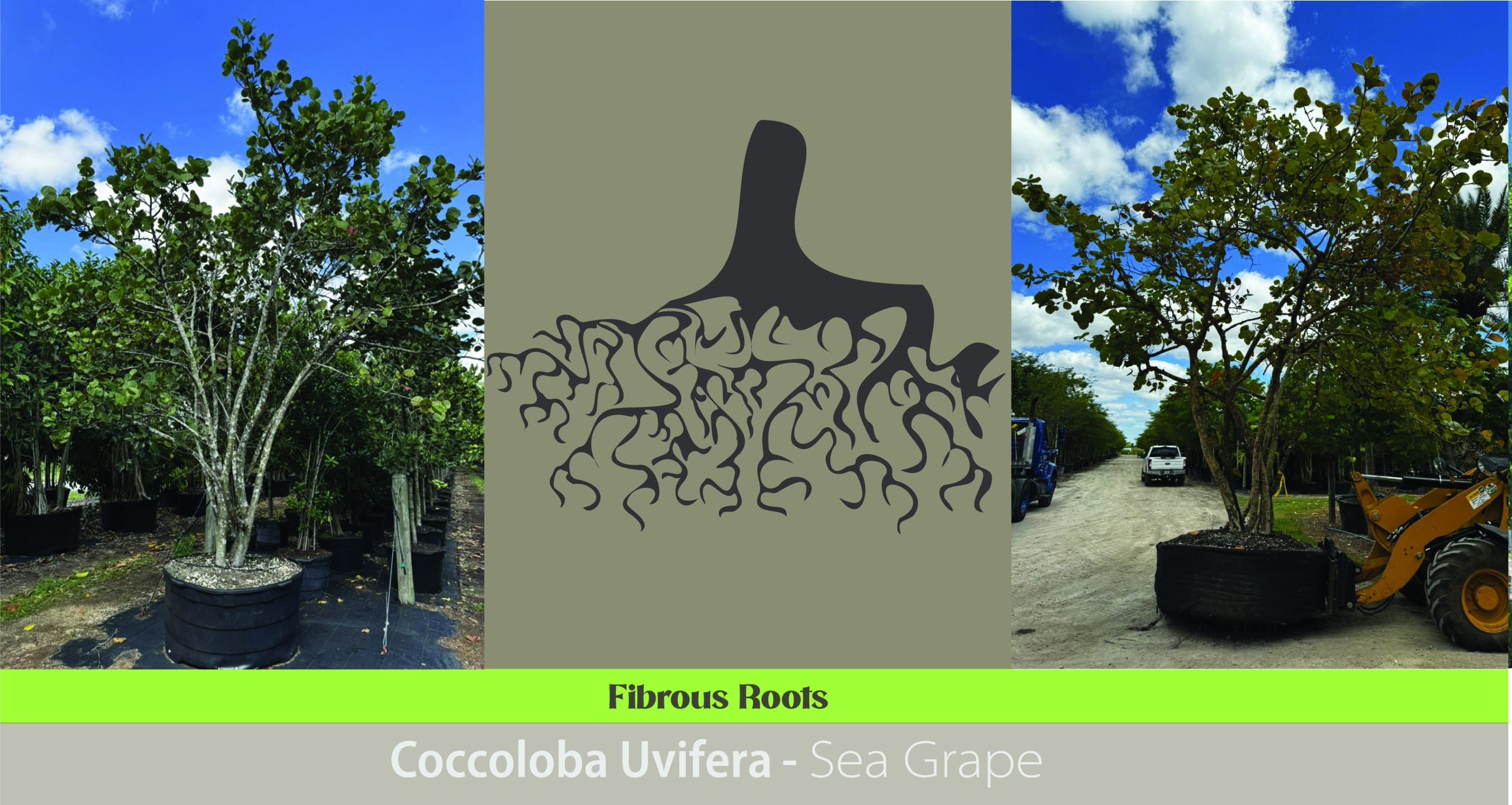
Landscape Advantages of Fibrous Root Trees:
- Erosion control – dense, shallow roots knit the soil together, making them ideal for slopes, sandy sites, and coastal landscapes.
- Urban compatibility – roots spread more horizontally than vertically, reducing the risk of damaging pipes or foundations and making them friendlier to built environments.
- Quick adaptation – their fine root networks establish rapidly after planting, allowing trees to thrive sooner in new sites.
Examples include the Sabal Palmetto, Florida’s state tree for sale, thriving in coastal conditions with unmatched resilience and elegance. Clusia (Clusia rosea) offers versatility, blending beauty with practicality while coexisting effortlessly with pavements. Black Olive (Bucida buceras) delivers dense shade and refined form, its fibrous roots adapting well to different sites. And the Seagrape (Coccoloba uvifera), a coastal classic, anchors sandy soils and dunes, making it the go-to choice for erosion control in beachfront landscapes.
Shallow Roots: Wide Reach
Shallow or surface roots spread laterally just below the soil, efficiently capturing nutrients and moisture from the top layer. They allow trees to establish quickly and support lush, vigorous growth. While they can sometimes interfere with hardscape if unmanaged, shallow-rooted trees are often chosen for their ability to provide fast shade and dramatic landscape impact.
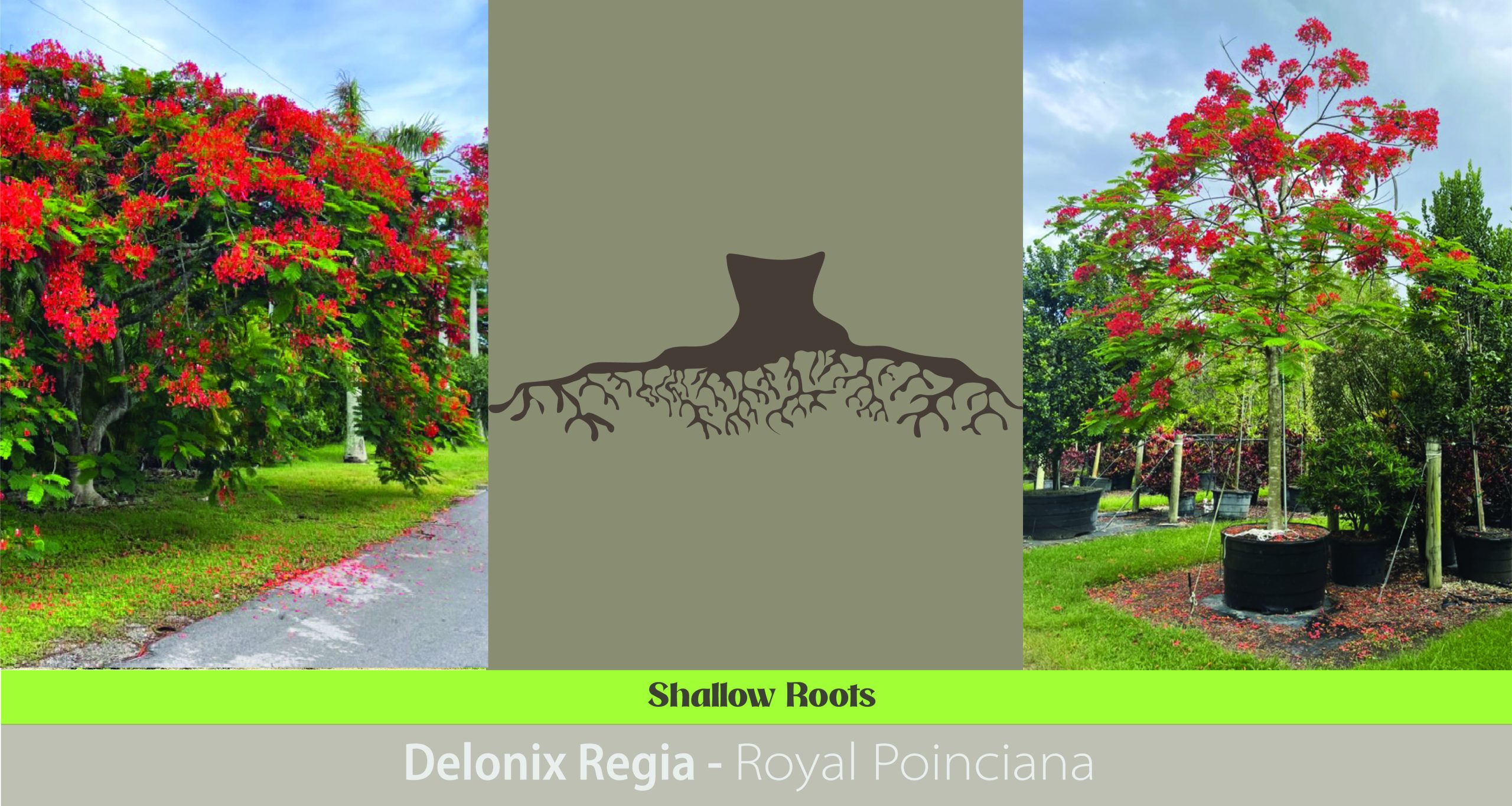
Landscape Advantages of Shallow-Rooted Trees:
- Rapid establishment – they settle quickly after planting.
- Fast canopy growth – ideal for projects needing quick shade.
- Broad anchoring – roots spread laterally, stabilizing large soil areas.
- Nutrient efficiency – thrive on rich organic matter in the topsoil, supporting lush foliage.
Among the most recognizable shallow-rooted trees are the Royal Poinciana (Delonix regia), admired for its fiery blooms and fast-spreading canopy that delivers instant shade and drama. The Gumbo Limbo (Bursera simaruba) stands out for its hurricane resilience. its broad lateral roots spread wide and grip the soil, while its flexible trunk and branches bend instead of breaking, allowing it to withstand high winds and bounce back quickly. The Indian Laurel Fig (Ficus nitida) is another shallow-rooted species. Offering dense evergreen cover and strong visual impact, though it requires management to prevent root interference with hardscape.
Buttress Roots: Nature’s Architectural Support
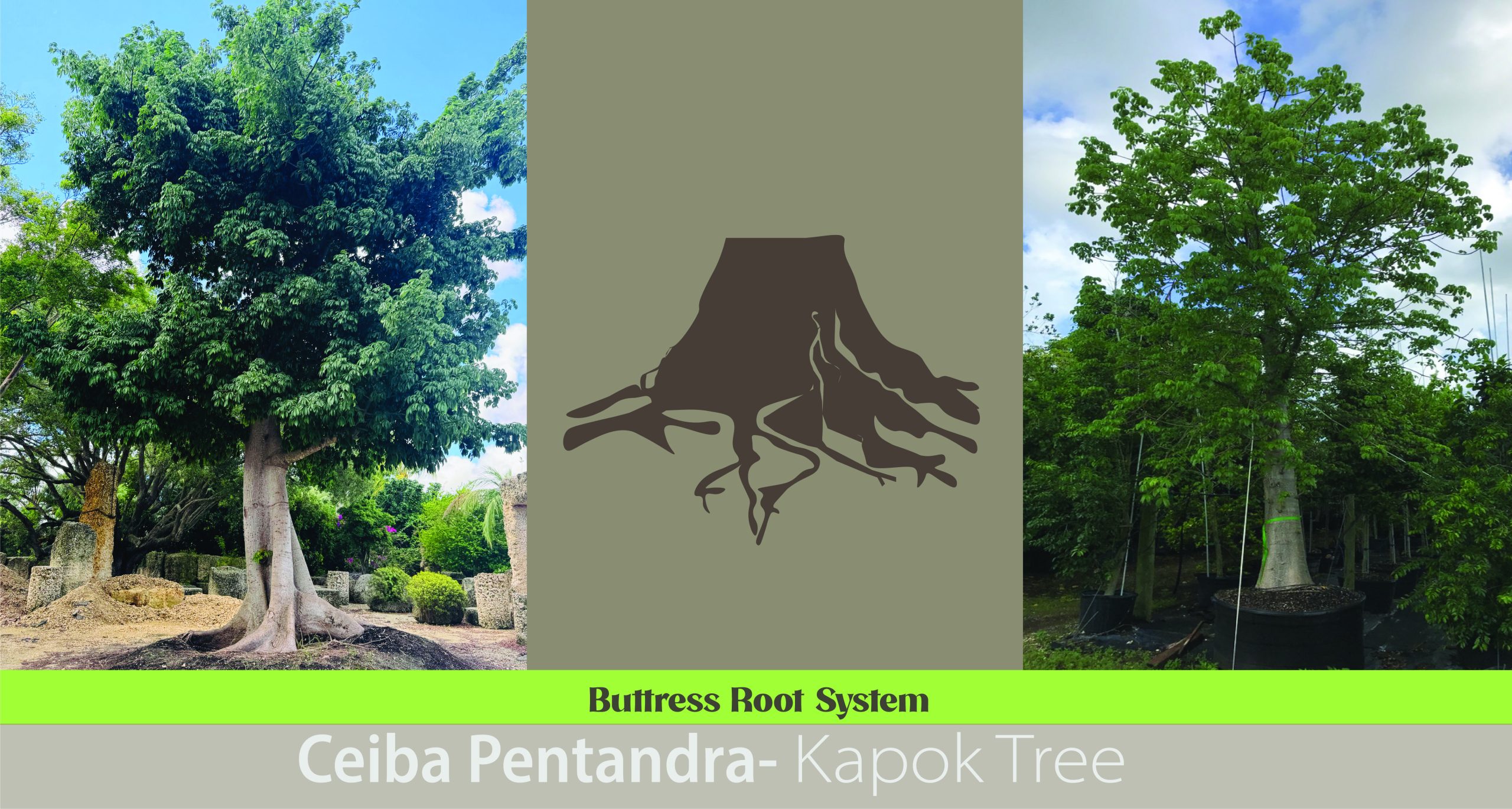
Buttress roots are large, flared extensions that radiate from the base of the trunk, often rising above the soil surface in dramatic, wall-like formations. This root type is most common in massive tropical trees and serve two key purposes: stability and nutrient access. By spreading wide at the base, buttress roots prevent tall, heavy trees from toppling in shallow or saturated soils. At the same time, their surface exposure allows them to absorb nutrients efficiently from the upper layers of soil.
Landscape Advantages of Buttress Roots
- Structural drama – visually striking roots that add character and make trees natural focal points.
- Powerful stability – wide flares anchor tall, heavy trees while also allowing them to thrive in sandy, nutrient-poor, or compacted soils.
- Undeniable shade & strong presence – large buttress-rooted trees provide cooling shade while bringing on the awe factor to the landscape.
- Erosion control – sprawling roots help secure topsoil, especially in tropical and coastal environments.
Buttress-rooted trees make a striking statement in the landscape. The Kapok (Ceiba pentandra) impresses with towering height and massive roots that stabilize in shallow soils while adding architectural drama. The Silk Floss Tree (Chorisia speciosa) pairs dazzling pink blooms with flared roots that enhance both beauty and resilience. Meanwhile, the Tropical Almond (Terminalia catappa) delivers undeniable shade and strong presence, its wide canopy supported by sturdy buttress roots, making it a favorite for coastal and park settings.
Pneumatophores: Roots That Breathe
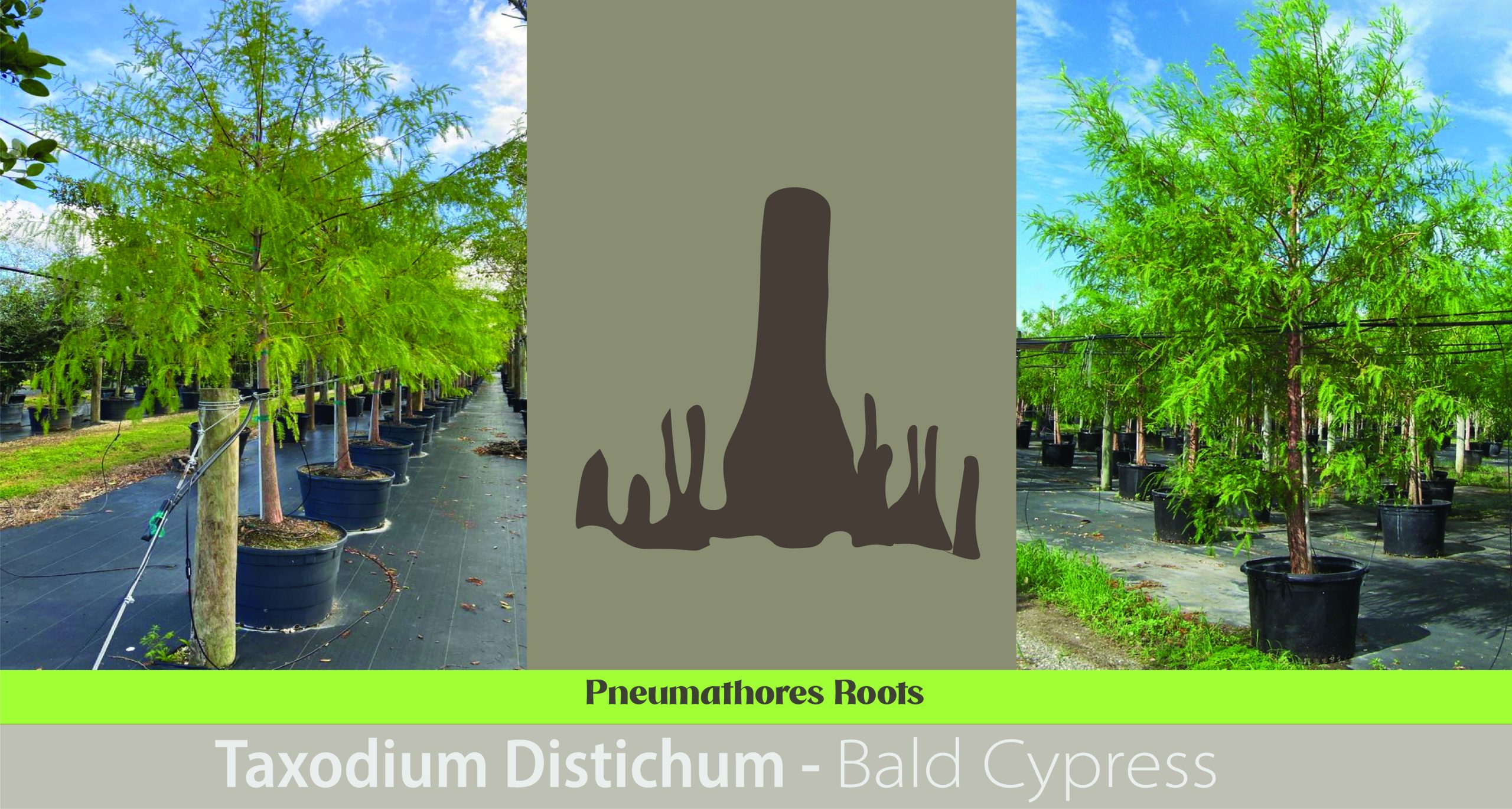
Pneumatophores are specialized “breathing roots” that grow upward from the soil or water surface, allowing trees to access oxygen in swampy, saline, or waterlogged environments where air circulation underground is limited. These vertical root extensions are a survival adaptation that enables trees to thrive in habitats most plants cannot tolerate.
Landscape Advantages of Pneumatophores:
- Wetland stabilization – their dense root networks anchor soil in tidal areas, reducing erosion.
- Flood tolerance – by adapting to waterlogged or saline soils, they thrive where most trees fail.
- Biodiversity support – creating microhabitats for fish, crabs, and birds, enriching coastal ecosystems.
- Waterfront resilience – ideal for shoreline and swamp landscapes, they buffer storm surges and protect built environments.
In landscaping, pneumatophores provide unique ecological benefits. One of the most famous examples is the Bald Cypress (Taxodium distichum), with its iconic “knees”—a symbol of resilience in wetlands that offers both flood tolerance and dramatic visual interest. Other pneumatophores include the Black Mangrove (Avicennia germinans) and White Mangrove (Laguncularia racemosa). True coastal protectors whose roots trap sediments and buffer shorelines from erosion. Together, these trees demonstrate how pneumatophores combine function and form. Supporting ecosystems while adding distinctive character to landscapes.
Adventitious – Prop Roots: Living Sculptures

Adventitious – Prop Roots (Aerial Roots) are roots that grow from a tree’s trunk or branches above the soil surface. Most common in tropical and humid environments, these types of roots help trees access water and nutrients where underground soil may be limiting. Unlike typical roots, they are highly visible—draping, twisting, or descending from the canopy to form secondary trunks. Over time, they create dramatic, living sculptures that provide structural support, extended canopy, and striking visual appeal.
Landscape Advantages of Adventitious / Prop Roots:
- Structural support – aerial roots act as natural braces, stabilizing wide-spreading or tall trees.
- Dramatic visual impact – prop roots create sculptural forms, adding character to the landscape.
- Adaptability – allow trees to thrive in challenging soils or open spaces where additional support is needed.
- Longevity and resilience – these roots help the tree maintain stability and recover from environmental stresses, like storms or soil erosion.
A classic example is the Banyan Tree (Ficus benghalensis), whose aerial roots descend from high branches and anchor into the ground, forming secondary trunks. Over time, these multiple trunks spread outward, and a single tree can appear like an entire grove, giving the impression of a small forest while still being one living organism. Similarly, the Florida Strangler Fig (Ficus aurea) and Indian Laurel Fig (Ficus nitida) produce aerial roots that provide structural support. While creating visually striking sculptural forms. making them favorites for tropical and subtropical landscapes.
Storage Roots: Nature’s Reservoirs
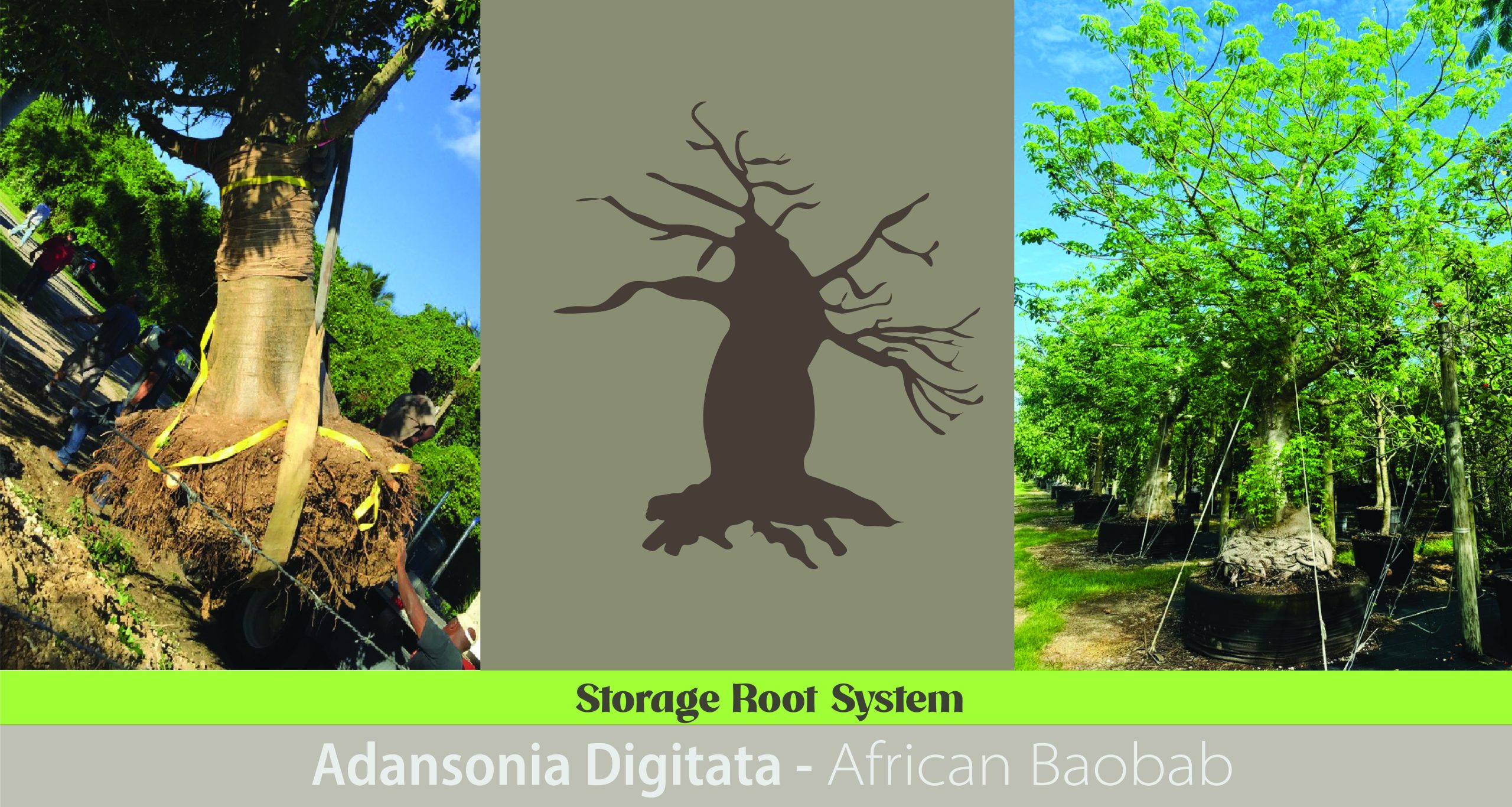
Storage roots are thickened roots that act as natural reservoirs, storing water, nutrients, and starch to help trees survive periods of drought or poor soil conditions. This adaptation allows plants to endure harsh climates, maintain growth during dry seasons, and recover quickly after stress. In landscaping, storage-rooted trees are prized not only for their resilience but also for their unique structural forms and low-maintenance requirements.
Landscape Advantages of Storage Roots:
- Drought resilience – thickened roots store water and nutrients, allowing trees to thrive in dry or challenging soils, making them ideal for tropical and subtropical landscapes.
- Longevity – the ability to store reserves helps trees survive adverse conditions, ensuring long-term stability and growth.
- Low maintenance – trees with storage roots recover quickly from stress.
- Visual impact – swollen roots and trunks create striking, sculptural forms.
Notable examples include the Baobab (Adansonia digitata), whose massive swollen trunk and roots store huge amounts of water, making it a desert icon. The Silk Floss Tree (Chorisia speciosa) develops thick roots that support its striking, spiny trunk and seasonal blooms. And the Pachira (Pachira aquatica) features a swollen root base that stores water, providing sculptural form, drought resilience, and adaptability in tropical landscapes.
Nature’s Engineering: Dynamic Root Strategies
Some trees change their strategy as they grow, showcasing nature’s ingenuity. Young roots may focus on storage or rapid growth, while mature roots provide stability, structural support, or water storage. Trees like the Silk Floss, Baobab, and Banyan illustrate these transformations. Thriving in challenging environments while creating dramatic forms that shape landscapes with both function and beauty.

Smart Roots, Smarter Landscapes
Just as no two landscapes are the same, no two root types serve the same purpose. Some dig deep for strength, others spread wide for stability. While a few rise above the ground in dramatic displays of nature’s design. By understanding how each root system works, you gain the tools to create landscapes that are not only beautiful but also resilient, sustainable, and built to thrive over time.
Choosing the right tree for the right space is more than a design choice, it’s the foundation of success. Whether you need taprooted strength for hurricane resistance, fibrous roots for erosion control, or sculptural prop roots to make a bold statement, nature provides the blueprint.
At TreeWorld, we cultivate a wide range of species with diverse root types. And we are ready to match your project’s vision and challenges. Explore our portfolio, and let’s grow landscapes that stand strong from the roots up. Call us today at (305) 245-6886 to find the perfect trees for your next project.