

A unique tropical fruit tree. Jackfruit trees bring a bold, exotic look to warm-climate gardens. Their large leaves and dense canopy create strong visual impact. Because of their size and growth habits, they work best in open spaces where they can fully develop.
In Florida and other frost-free regions, jackfruit remains a specialty fruit tree. And It is not commonly planted, which adds to its appeal among collectors and tropical fruit enthusiasts.
What Makes Jackfruit a Tropical Fruit Tree Different
Unlike many fruits, jackfruit grows directly from the trunk and main branches. This unusual growth pattern adds to its visual interest. Somewhat similar to the Jaboticaba (Myrciara Cauliflora)
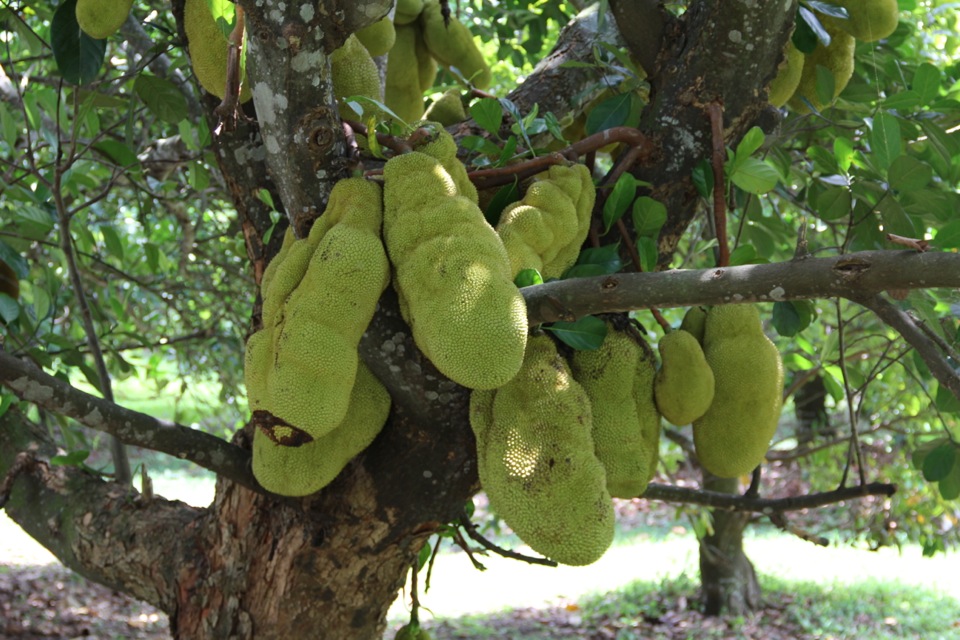
When the fruit is ripe, it realeases a strong aroma, resembling rotting onions. And once opened, however, it reveals sweet, the pulp resembles that of pineapple and banana.
There are two main types. Some varieties are soft and sweet. Others are firm and slightly crunchy, making them ideal for cooking.
In one, the fruits have small carpels, fibrous, soft, heavy, but very sweet; with a texture similar to raw oysters. And the other variety is crisp and almost crunchy, this form is the most important commercially and it’s tastier to the western hemisphere.
Jackfruit Uses
Jackfruit offers remarkable versatility. People enjoy it fresh when ripe or cooked when green. In savory dishes, young jackfruit works well as a plant-based meat alternative. The seeds are also edible and can be boiled or roasted, similar to chestnuts.
Because the fruit releases a sticky latex, it is best handled with lightly oiled tools and hands.
A Standout Tree for Tropical Settings
Beyond its fruit, jackfruit adds character to the landscape. Its bold form, large leaves, and impressive fruit make it a focal point in tropical gardens. While not widely planted, it remains a prized tree for those looking to grow something truly distinctive.
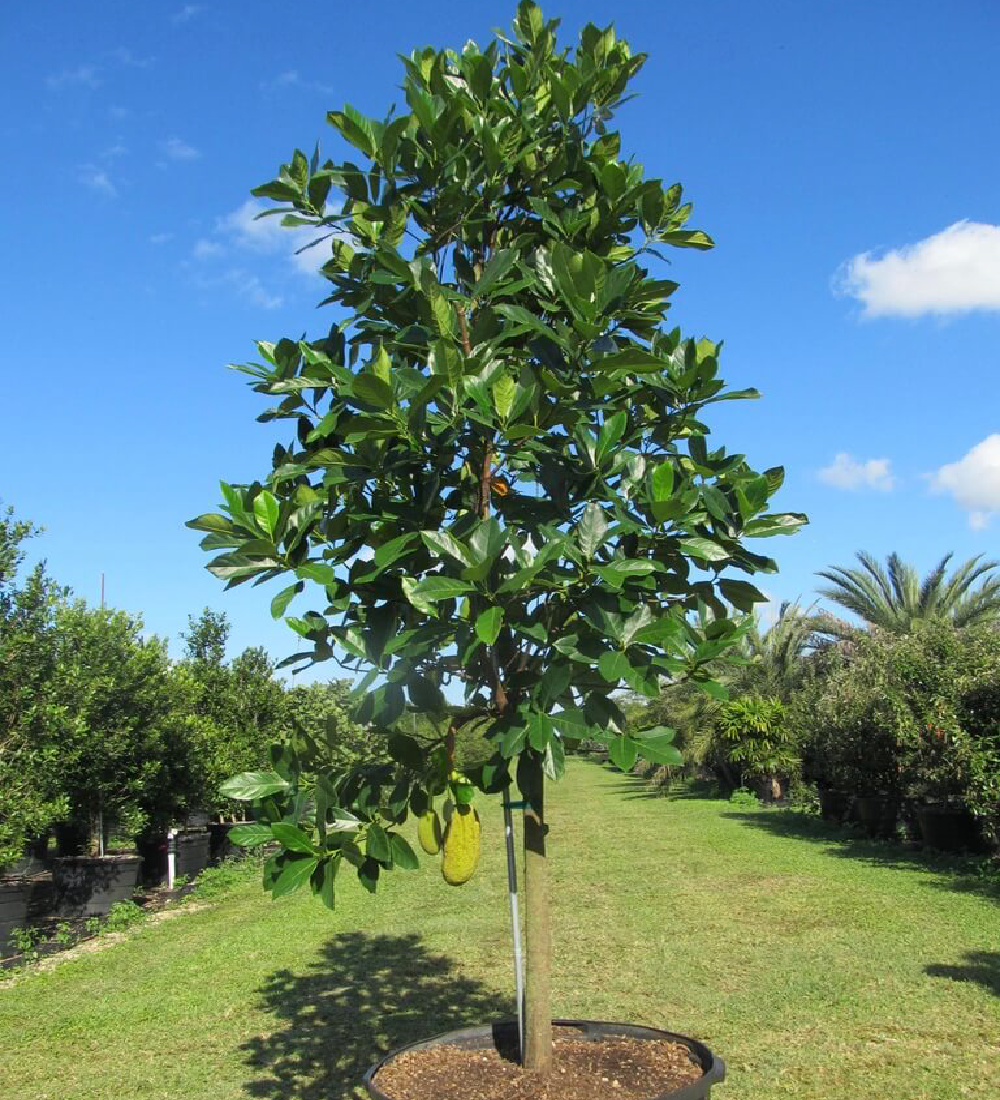
A Tree That Tells a Tropical Story
Jackfruit stands out not only for its impressive size, but for the story it tells as a tropical species. From its bold structure to its unusual fruit, it reflects the diversity and richness of warm-climate landscapes. Whether grown for curiosity, harvest, or visual impact, it remains a tree that captures attention and invites exploration.
At TreeWorld, we enjoy sharing knowledge about unique and underutilized trees like the jackfruit—species that add character, purpose, and biodiversity to the landscape.
For more information or to learn about tropical trees suited for South Florida and similar climates, feel free to reach out to us at 305-245-6886.



Post a comment