

You may be wondering what fruit trees are? They are living plants that produce edible fruit. Many of which we eat every day come from these trees, including fresh fruit and nutritious nuts.
Fruit trees grow in many forms. Some thrive in humid climates, while others prefer dry conditions. Because of this diversity, you can find them suited to almost any region or climate in the world.
Characteristics of Fruit Trees and Their Purpose
Grow primarily to produce food. Horticulture focuses on cultivating these to harvest fruit for personal use or commercial production.
Humans have grown fruit trees for centuries. Some of the most well-known species include apple trees, cherry trees, and pear trees. At TreeWorld, examples include the popular Annona glabra and Malpighia emarginata, both valued for their fruit and adaptability.
Fruit Tree Cultivation
Care depends on the species, climate, and growing conditions. However, they all share a few essential care requirements.
Key Factors & Care
Planting:
Choose the right variety for your climate and soil. Proper site selection plays a major role in long-term success.
Pruning: Regular pruning improves airflow, strengthens branches, and increases fruit production.
Grafting: Grafting allows growers to improve fruit quality and control specific traits.
Fertilizing: Using the right fertilizer supports healthy growth and better fruit quality. Soil health makes a major difference.
Harvesting: Proper care leads to higher-quality fruit and better yields at harvest time.
When Fruit Trees Become Landscape Features
These category of trees do more than produce food. They also serve as striking landscape features. At TreeWorld, even though our selection of fruit trees is limited, the species we offer stand out for their unique appearance and design value.
Take the Jaboticaba (Myrciara Cauliflora), for example. Its dark, glossy fruit grows directly from the trunk and main branches, creating a rare and visually striking effect that resembles clusters of grapes attached to the bark. This unusual growth habit makes it a conversation piece in any garden or landscape.

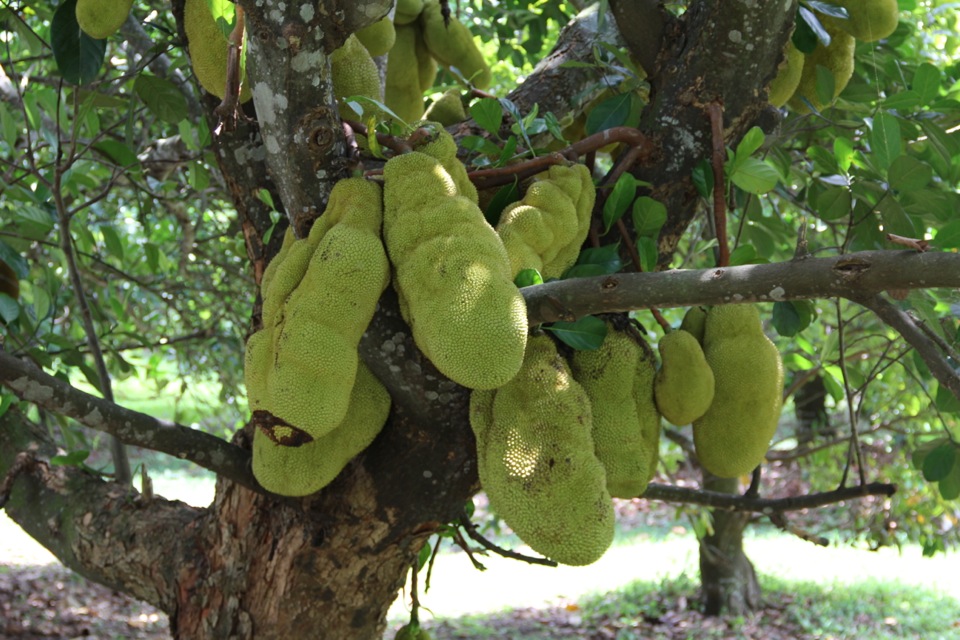
Another standout is the Jackfruit (Artocarpus heterophyllus). With its large, bold foliage and impressive fruit, it brings a strong tropical presence to any setting. Beyond its productivity, the jackfruit tree adds structure, shade, and dramatic visual appeal.
These trees show how fruit-bearing species can serve both functional and aesthetic purposes. When placed thoughtfully, they enhance the landscape while offering the added benefit of fresh, homegrown fruit.
🌿 Interested in unique fruit trees that combine beauty and function? Contact TreeWorld Wholesale
Also, check out the Best Spring Flowering Trees!