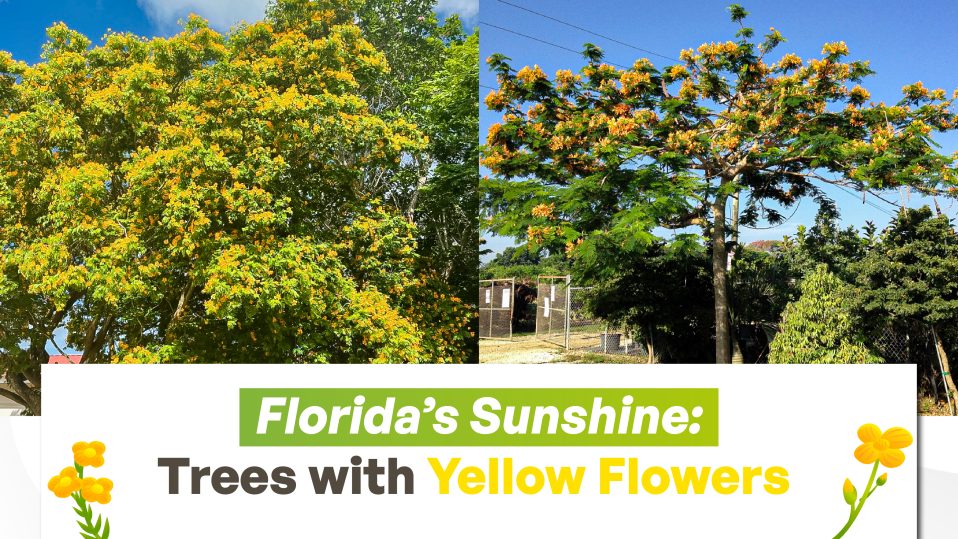
Looking for a tree with yellow flowers in Florida? Whether you’re designing a garden or brightening a streetscape, trees with yellow flowers can make all the difference. Yellow is considered a high-visibility color, naturally catching the viewer’s attention. In landscape design, yellow-flowering trees are often used as focal points to draw the eye or to create contrast against green or darker foliage. Many of these trees bloom during the dry season, offering vibrant color when it’s needed most. Keeping the landscape dynamic and visually appealing year-round.
Why Do Trees with Yellow Flowers Matter in Landscaping?
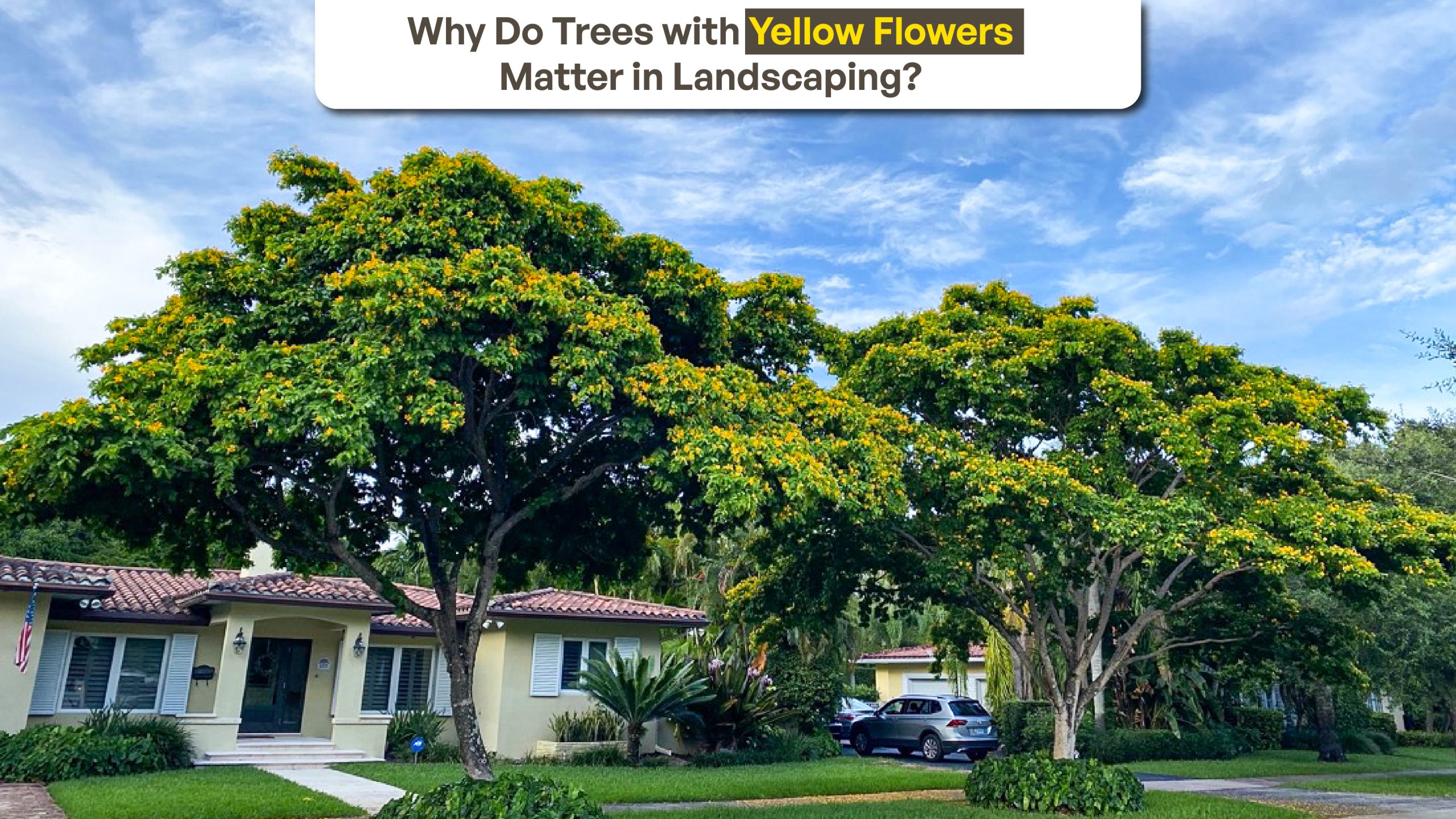
From a design perspective, yellow pairs beautifully with tropical tones like magenta, red, and purple. It adapts well to different styles, from formal layouts to more organic, free-flowing landscapes. Yellow tones reflect sunlight, creating a bright, open feeling in garden spaces—a quality that can make small areas feel larger and more welcoming. Landscape designers often use trees with yellow flowers to energize shaded or green-dominant spaces. It acts like a pop of sunlight, helping balance the composition and draw attention where it’s most needed.
TreeWorld’s Top Picks: Yellow-Flowering Trees for Florida Landscapes
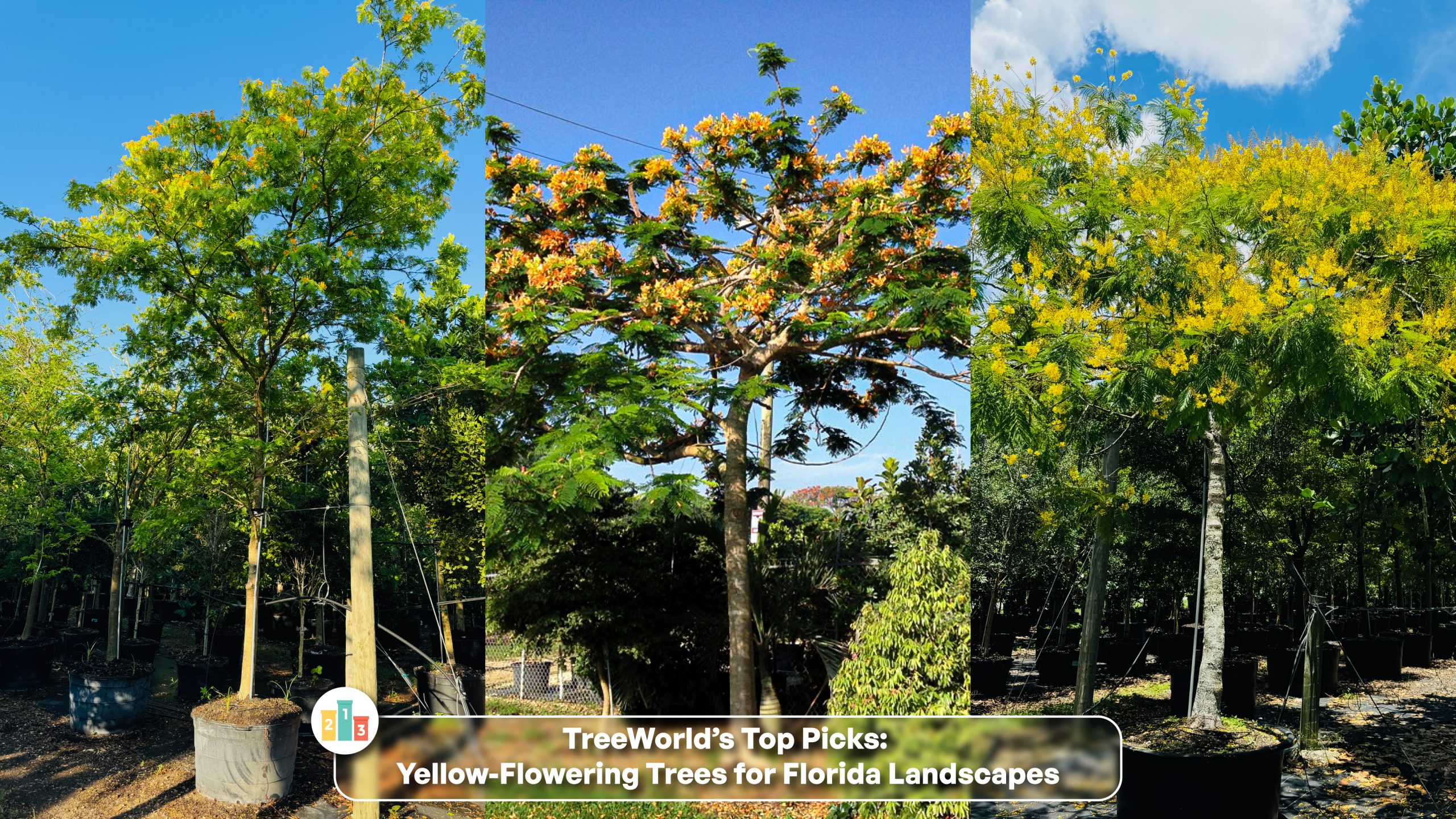
With their eye-catching color, seasonal appeal, and design versatility, yellow-flowering trees can truly transform any Florida landscape. Whether you’re aiming for bold visual contrast or a cheerful focal point, there’s a tree for sale in Florida to fit your needs. Below are three trees with yellow flowers that thrive in Florida’s climate and bring a splash of sunshine to your outdoor space.
The Verawood Tree (Bulnesia arborea)
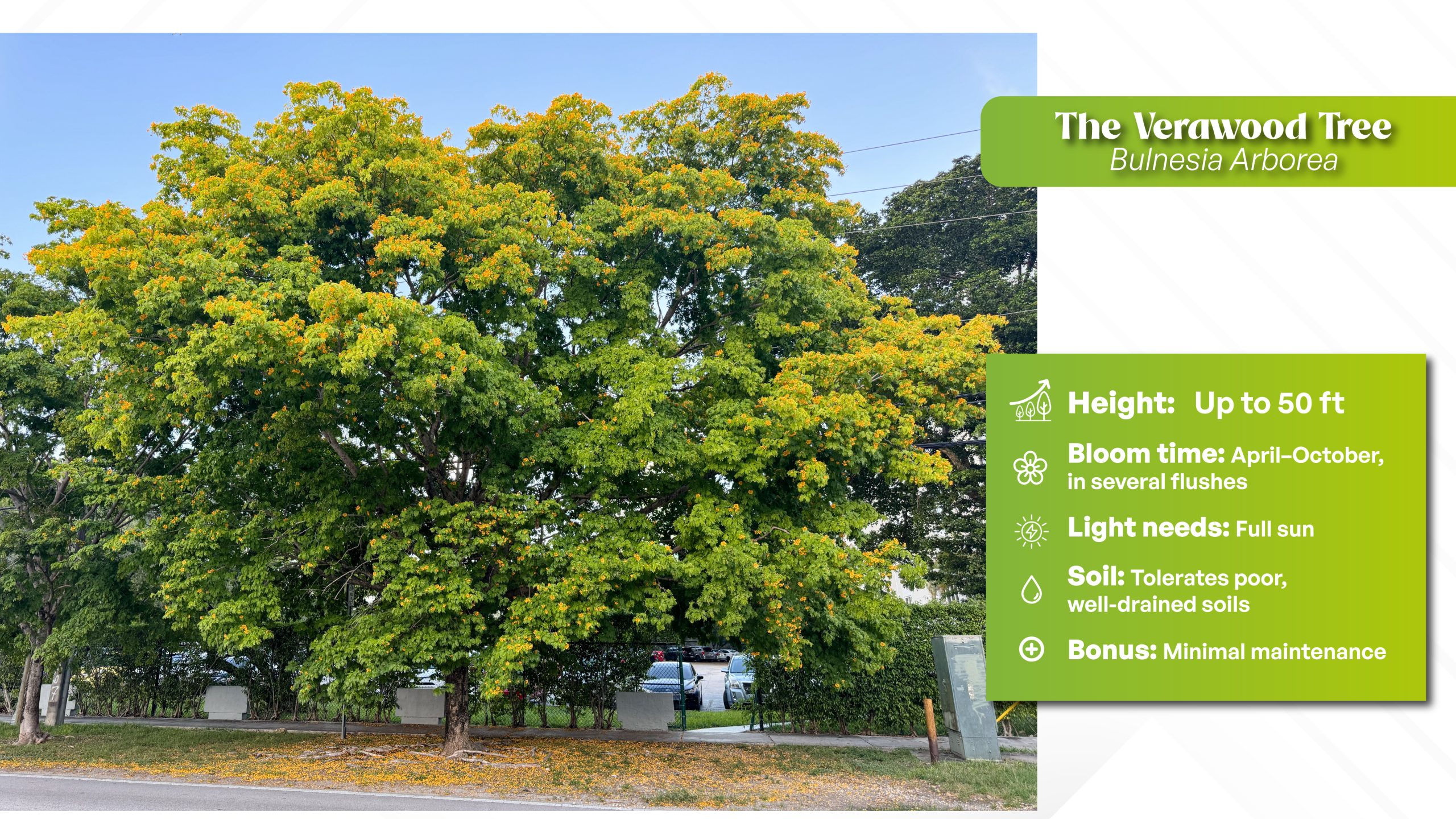
Native to northern South America—especially Colombia and Venezuela—Bulnesia arborea grows naturally in dry tropical forests. Thanks to its ability to handle heat and drought, it’s a great match for Florida landscapes, especially in areas with poor soil or limited rainfall. It’s tough, low-maintenance, and visually striking, which makes it a solid pick for everything from home gardens to busy city streets.
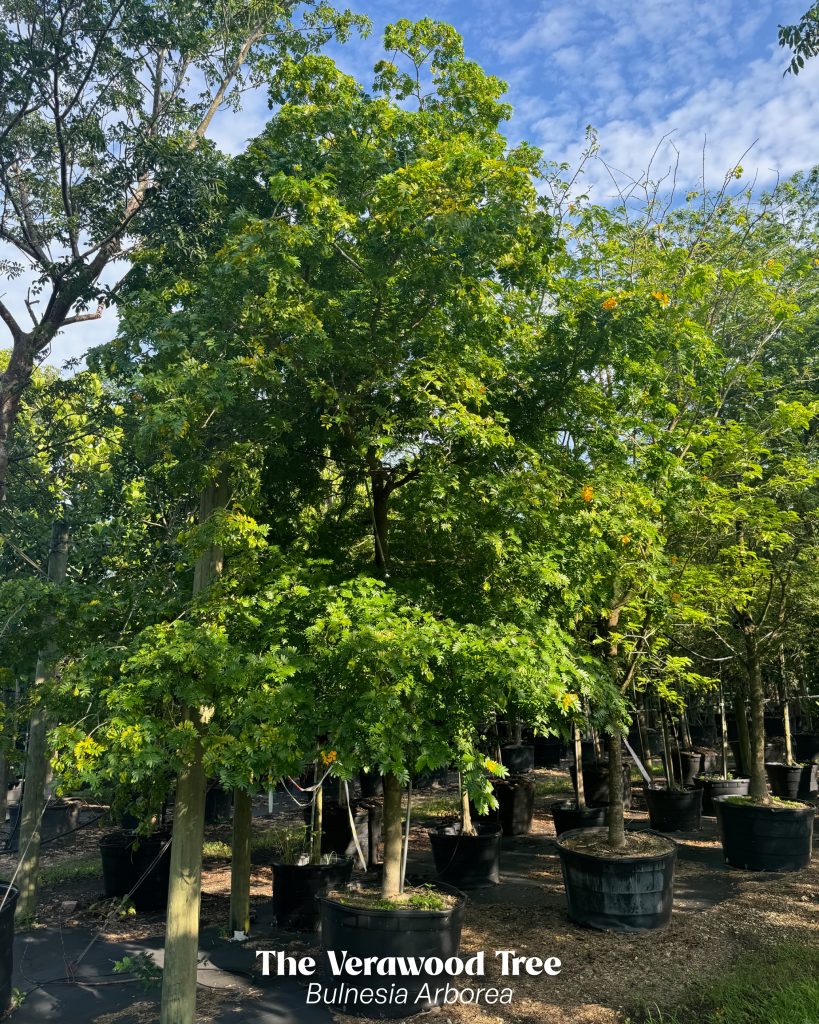
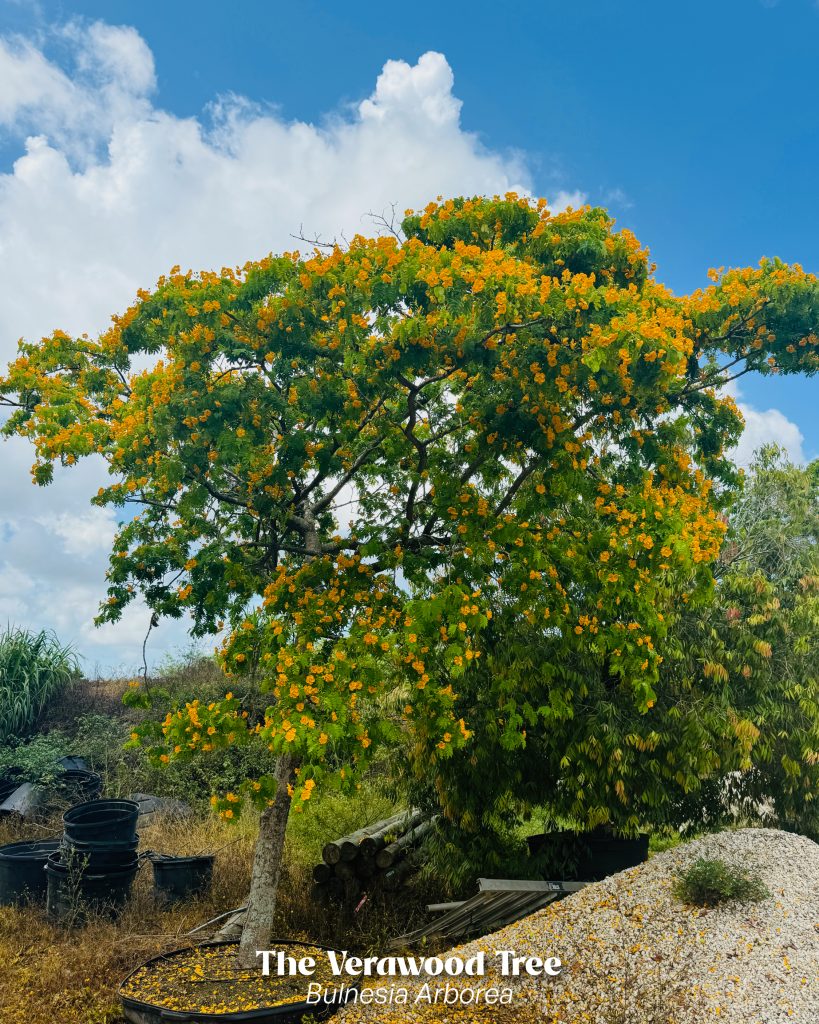
In Florida, Verawood blooms several times a year, starting in late spring and continuing through early fall (roughly April to October). It really makes a statement with its bright yellow-to-golden flowers, which pop up two to four times a year, each blooming stretch lasting a few weeks. Warm weather followed by rain tends to kick off a fresh round of blossoms, so you’ll often spot golden bursts after early summer showers and again as the rainy season winds down.
From a Landscaper’s Point of View
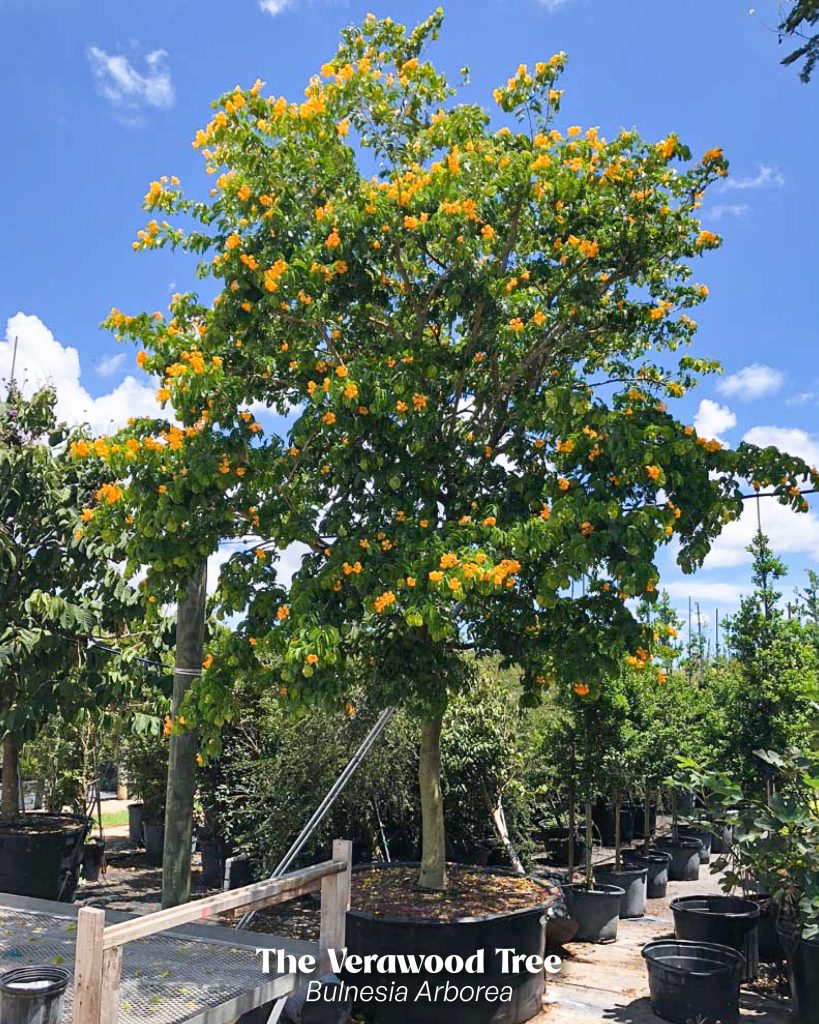
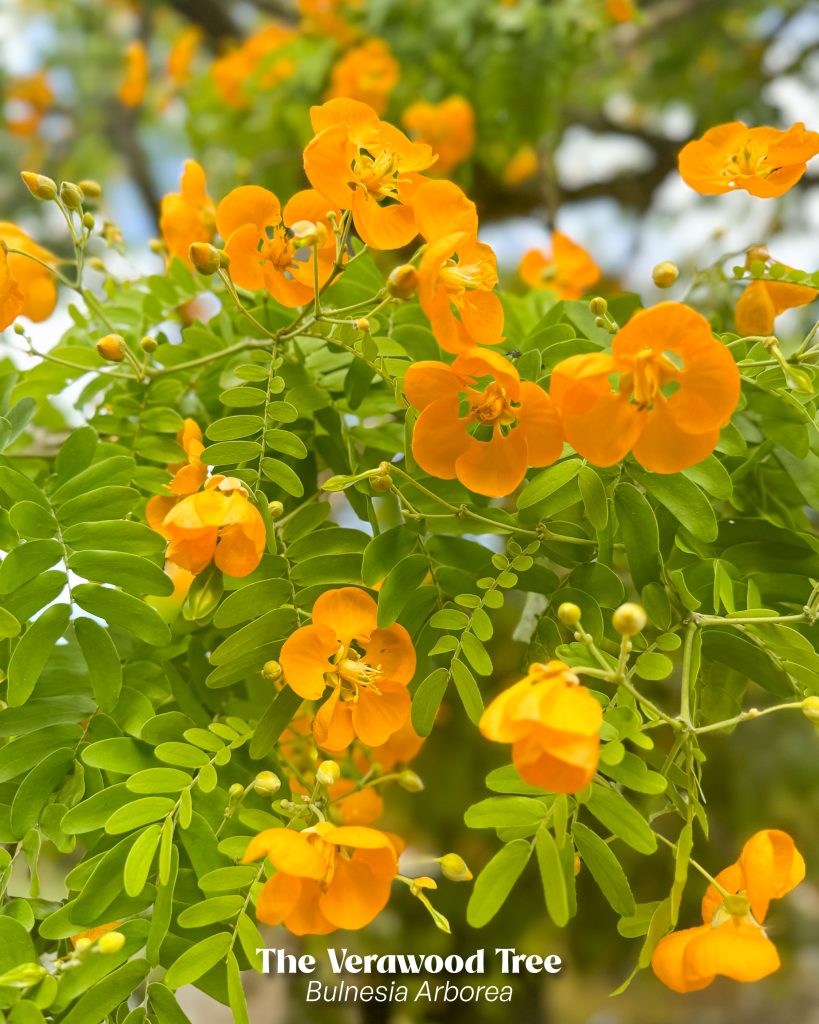
One of the best things about Verawood? It puts on a repeat show. While other trees may have just one flowering season, this one keeps the color coming—filling in those duller times like early spring and late summer when not much else is blooming. Since it blooms in waves, it catches the eye again and again, making it ideal for spots that need some extra punch—like entryways, courtyards, or public plazas. And cleanup’s a breeze: each bloom drop is light, so there’s no major mess to worry about.
Verawood at a Glance
This tropical tree with yellow flowers in Florida grows to about 50 feet tall, with a clean, upright trunk that stays branch-free for up to 20 feet. Up top, it spreads out into a dense, finely branched crown that often grows wider than the tree is tall—great for adding shade. Check the Bulnesia arborea specifications chart for average sizes and gallon sizes.
Its leaves are olive green and feather-like, with 7 to 14 small leaflets on each side. But it’s the flowers that steal the show. Big, golden blooms that show up in clusters at the ends of the branches, giving your space a bright, cheerful feel that lasts for months.
Delonix regia Var. Flavida (Yellow Poinciana)
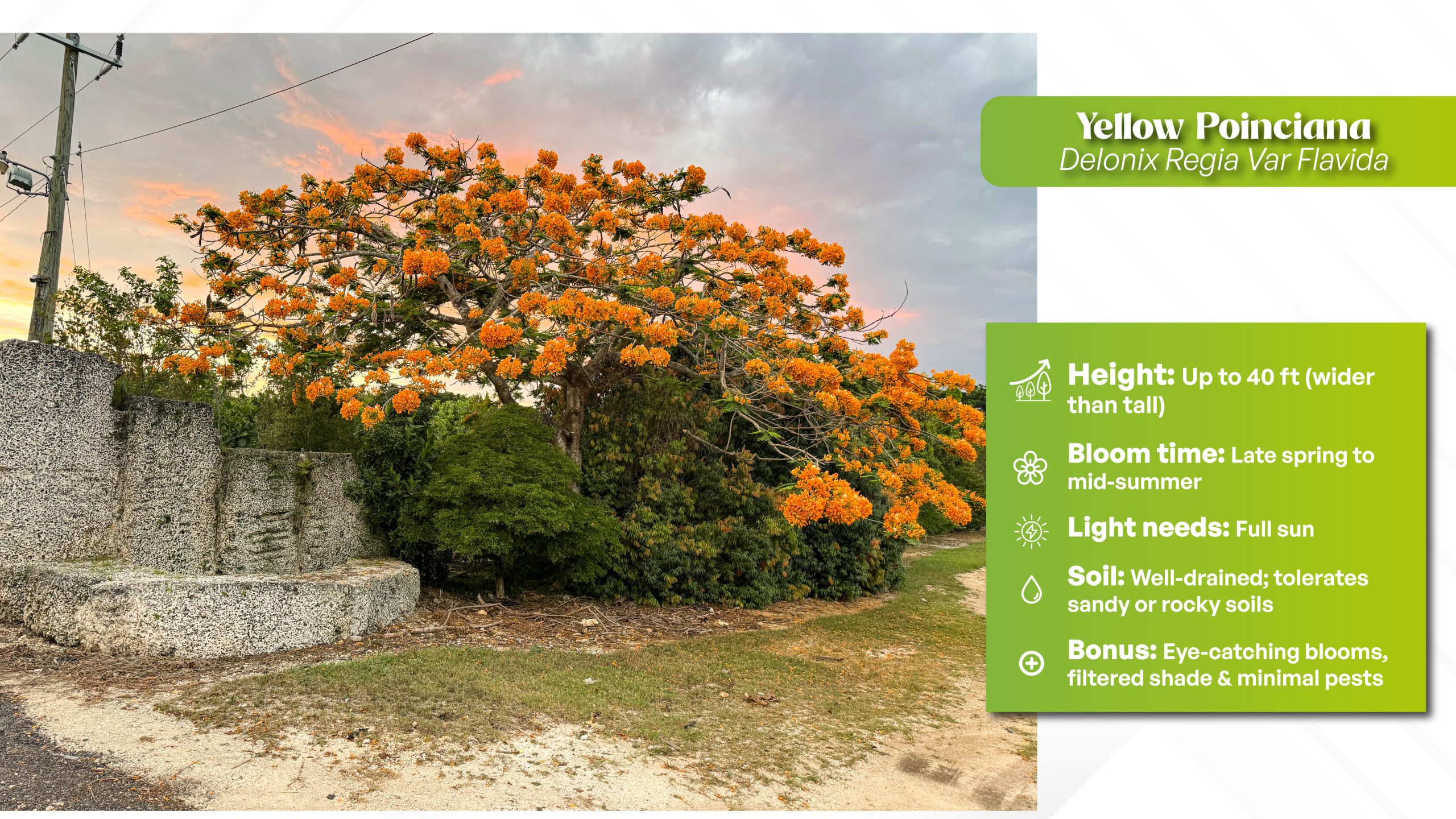
We all know the Royal Poinciana is a summer favorite in Florida—but what could possibly top that? The yellow poinciana. Unlike the classic red Delonix regia, this yellow-golden variety delivers massive bursts of sunshine-colored blooms that light up the landscape from late spring through early summer. When in full bloom, its bright yellow flowers are guaranteed to turn heads.
The Golden Twist on a Summer Classic
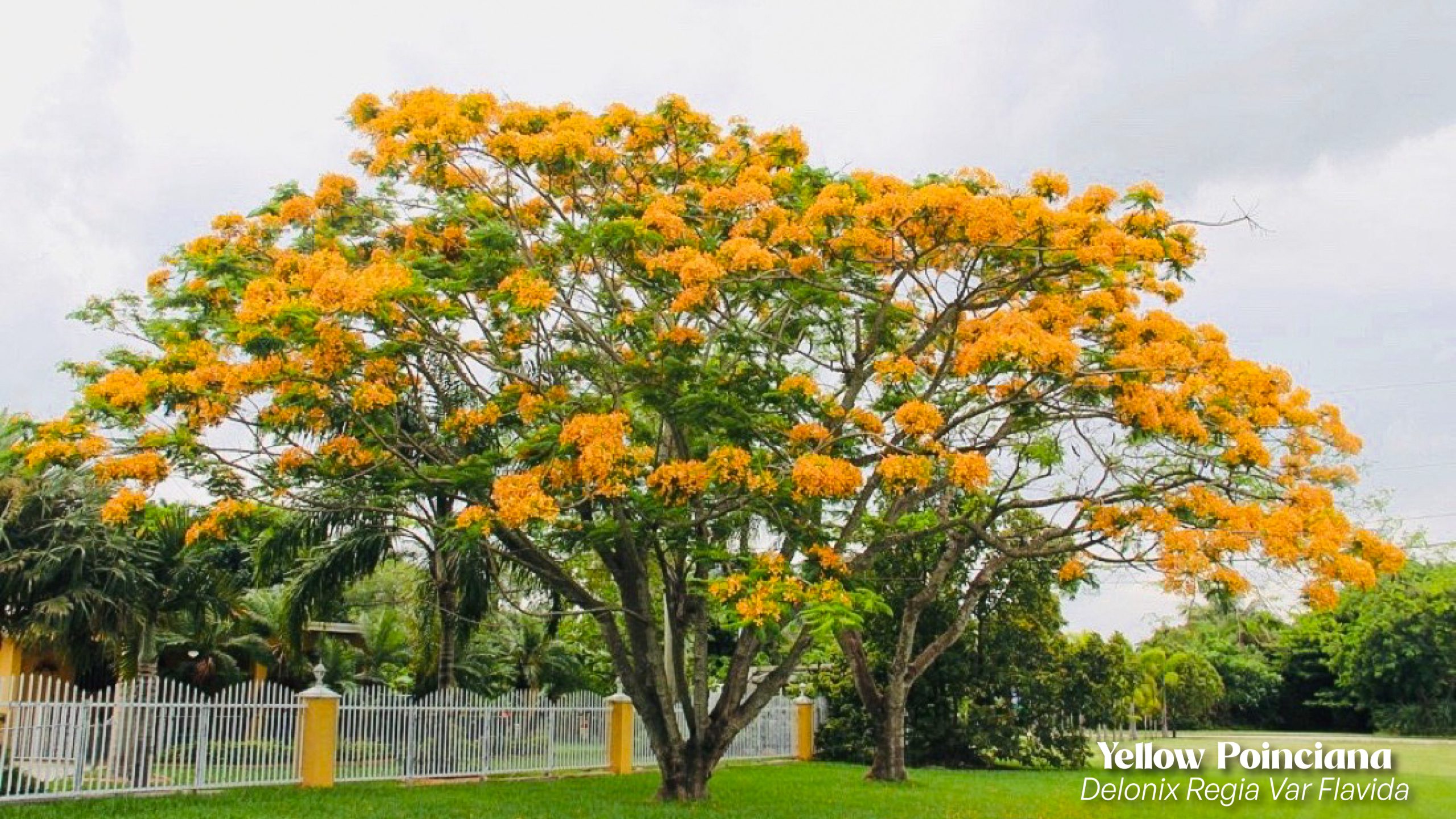
With its broad, umbrella-like canopy and bold color, this tree with yellow flowers creates that tropical vacation vibe Floridians and guests can’t get enough of. It’s perfect for framing large lawns, enhancing public spaces, or standing tall as a centerpiece in expansive landscapes.
But the tree’s appeal goes beyond beauty. Its wide canopy provides broad, filtered shade, making it ideal for parks, parking lots, and big yards where form meets function.
Yellow Poinciana 101
This golden version of the Royal Poinciana—Delonix regia var. flavida—is a true show-off, in the best way. With a massive, spreading canopy, it often grows wider than it is tall, making it a bold and dramatic choice for open spaces like plazas or large front yards.
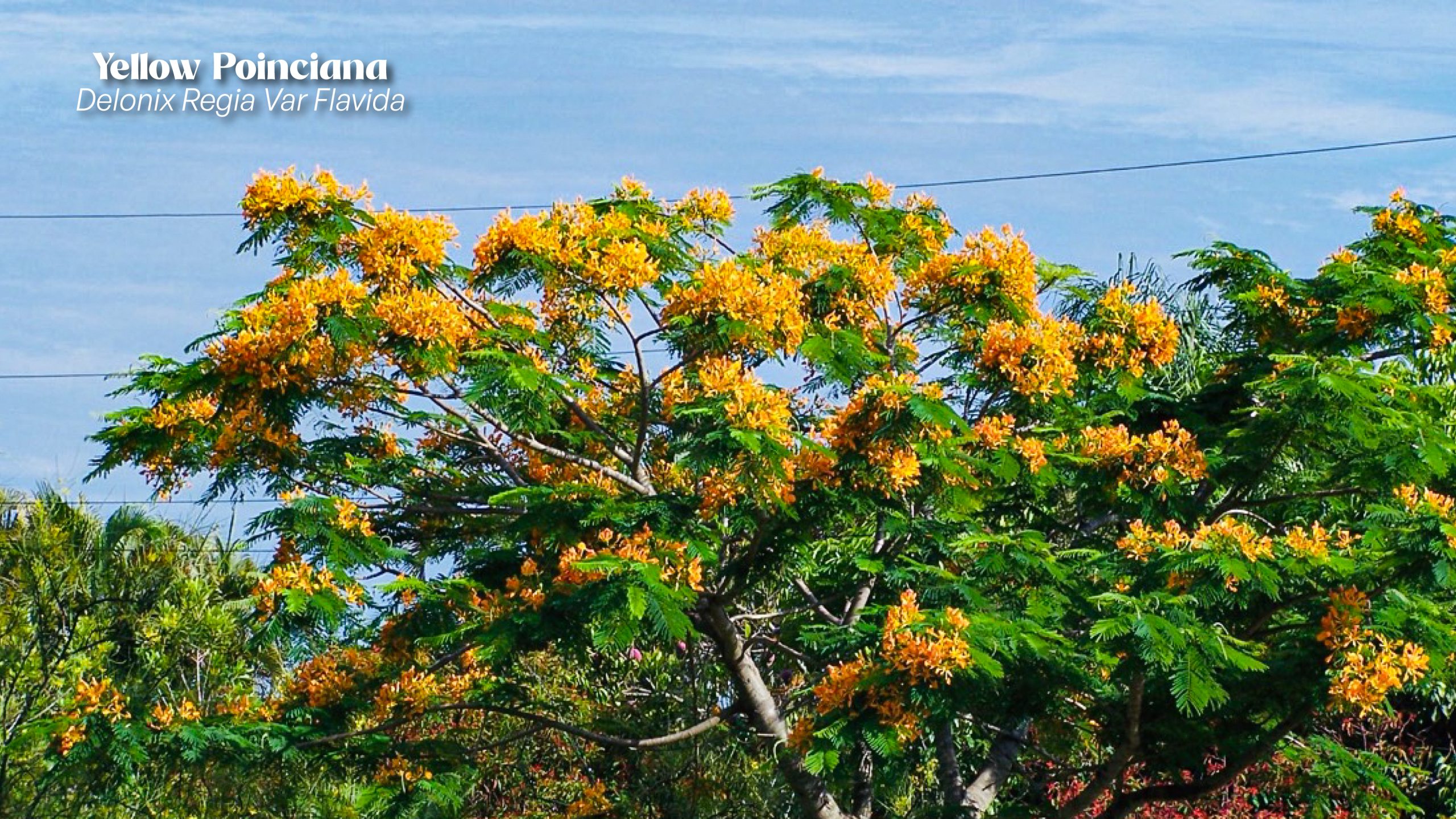
Its lacy, fern-like leaves are bright green and finely textured, giving the tree an elegant, airy look even when it’s not blooming. But when it is? Get ready. From late spring through mid-summer, it explodes into huge clusters of golden-yellow flowers that completely blanket the canopy.
It may not bloom often, but when it does, it steals the show.
After flowering, the tree drops long, flat seed pods—something to keep in mind if planting near patios or paved areas. It’s largely pest- and disease-free, but like the red variety, it has shallow, spreading roots, so be sure to plant it away from sidewalks, foundations, and driveways.
Copperpod (Peltophorum pterocarpum)
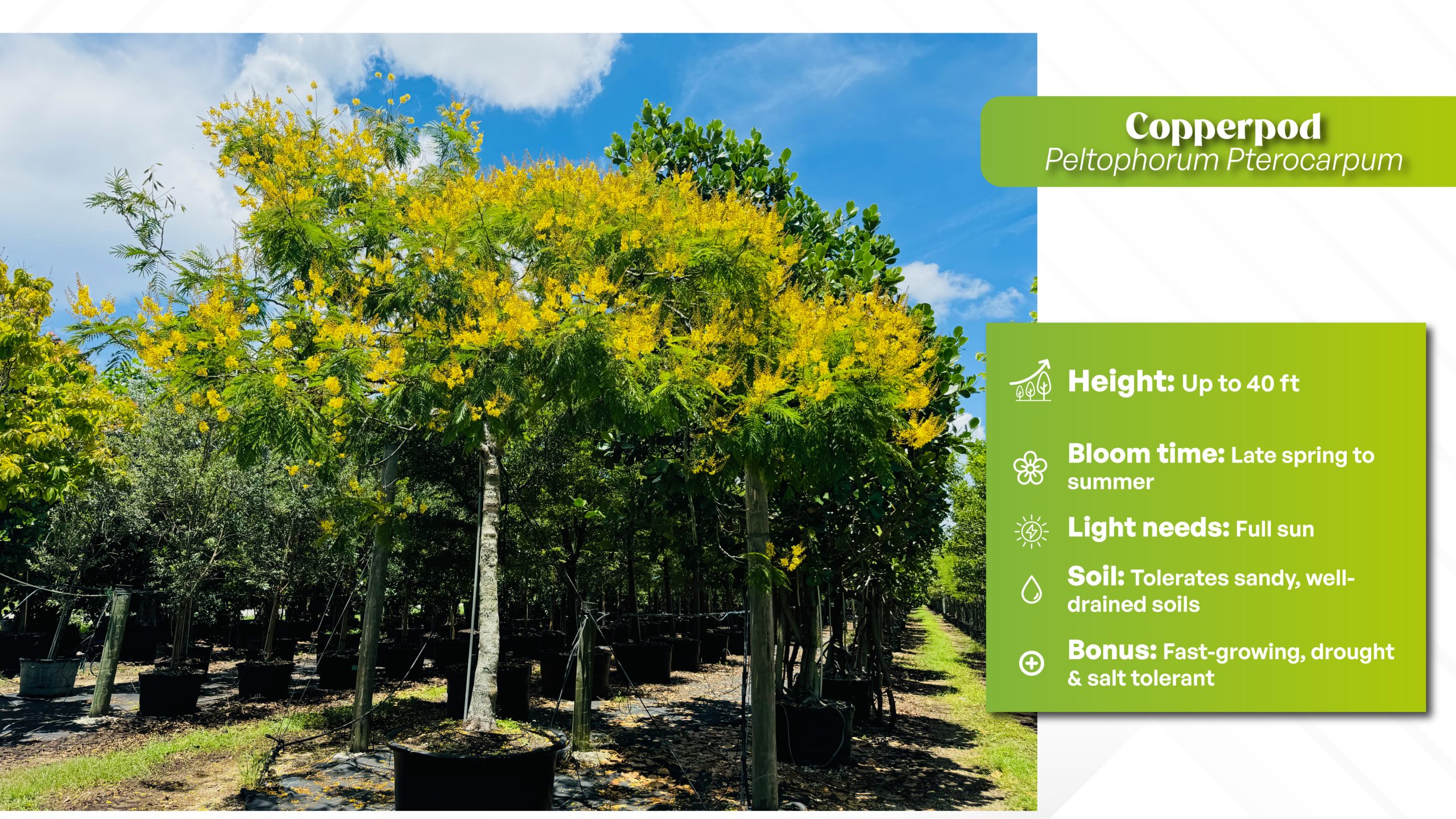
Also known as the Yellow Flame Tree, Peltophorum pterocarpum is a tropical showstopper that brings the perfect mix of drama, shade, and golden blooms to Florida landscapes.
If you’re after a fast-growing shade tree with yellow flowers that also puts on a sunny show, Copperpod is one to keep an eye on. Native to Southeast Asia and loved across tropical regions, it’s known for its wide canopy, soft fern-like leaves, and big sprays of golden-yellow flowers that really turn heads.
Why Landscapers Love Copperpod?
Copperpod doesn’t just look good, it makes a statement. With bright yellow flowers popping against its fine, lacy foliage, it gives off strong tropical vacation vibes. It’s a go-to for adding a resort feel in parks, commercial spaces, or big backyards.
The blooms start popping from late spring into summer, lighting up the canopy and breaking up all the green. It’s a great way to highlight key spots in the landscape and bring energy to big, open areas.
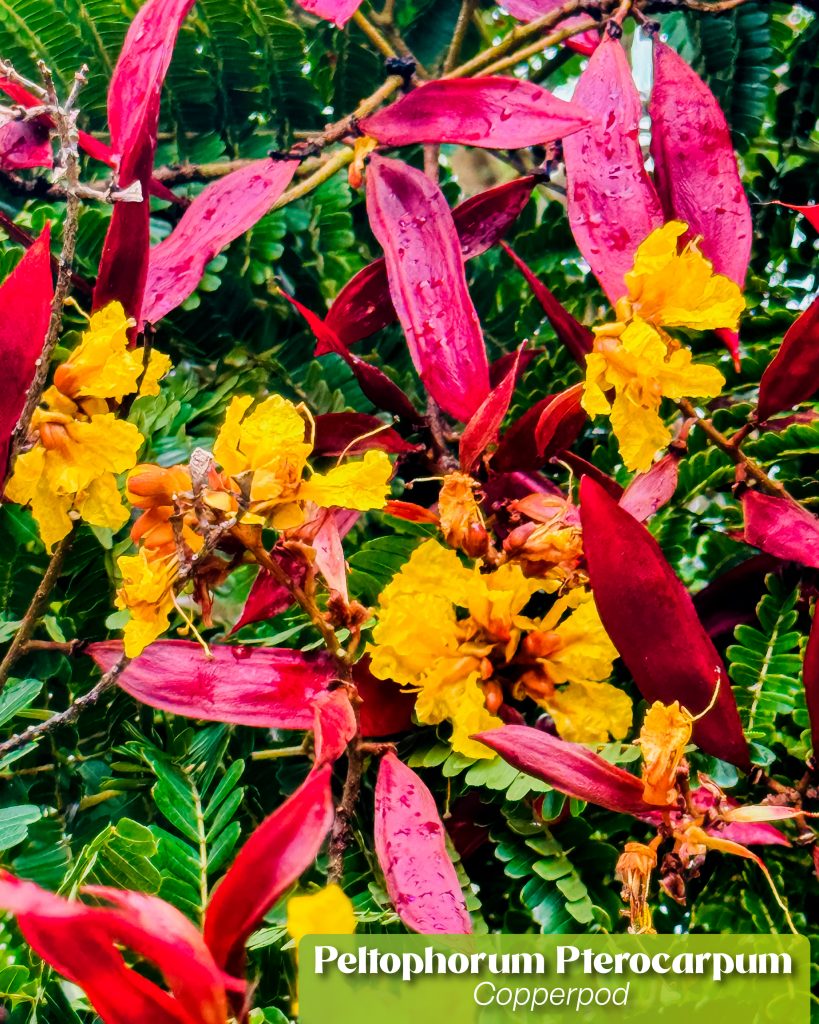
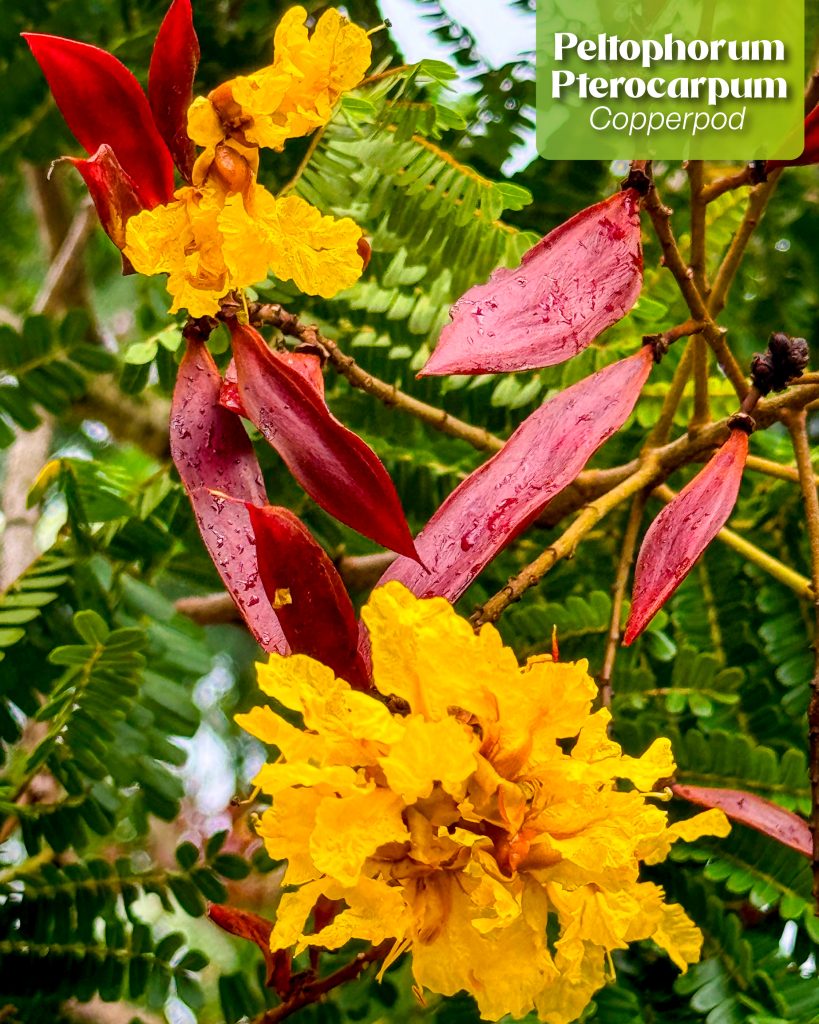
But maybe the best part? It grows fast and gives off a ton of shade perfect for cooling down places like playgrounds, large yards, or even parking lots. On top of that, it’s super tough. It handles drought and salty air like a champ, which makes it a great fit for Florida’s sandy soils and coastal areas.
Behind the Blooms: Quick Tree Facts
Copperpod usually tops out around 40 feet and grows a wide, umbrella-shaped crown; often as broad as it is tall. Its twigs and branches have rust-colored hairs, giving it some texture even when it’s not flowering.
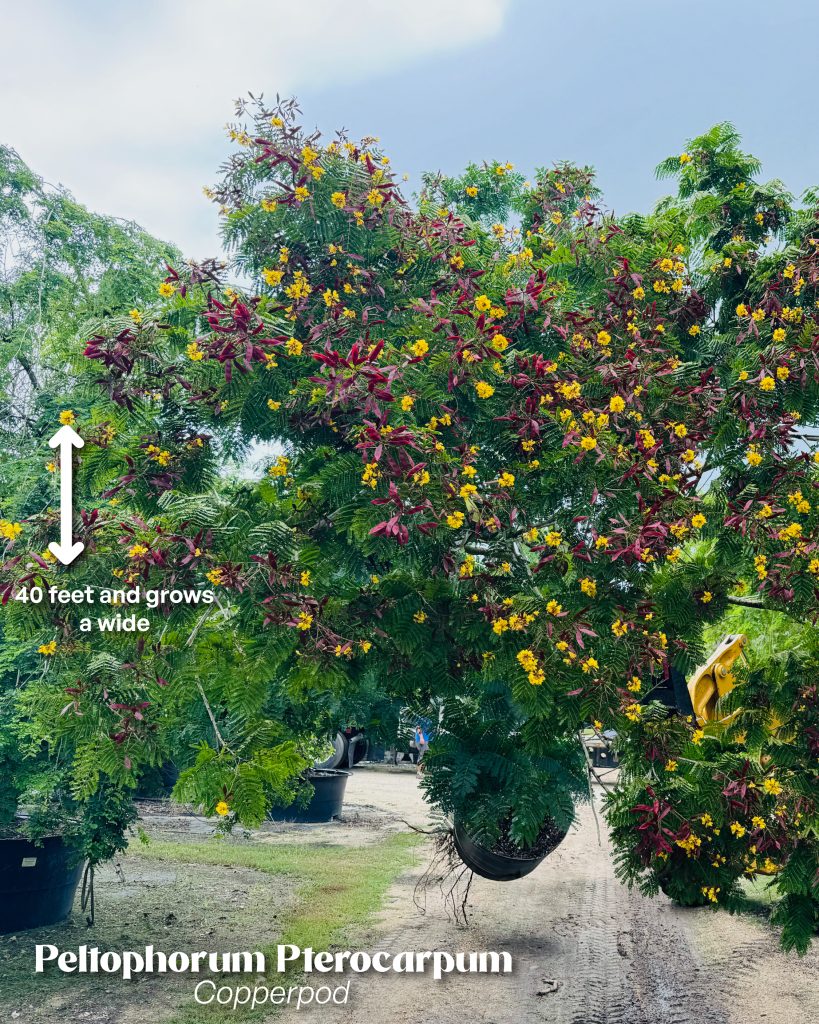
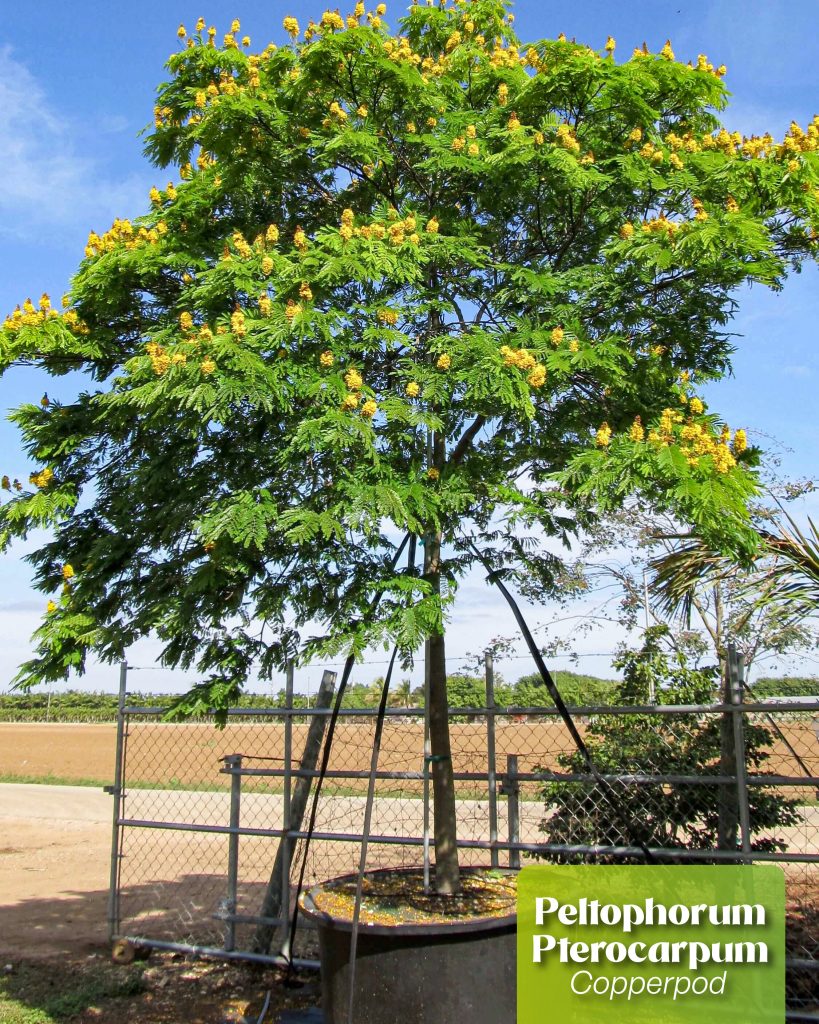
The leaves are soft and airy-looking: bright green, fern-like, and up to 2 feet long, made up of dozens of tiny oblong leaflets. During its flowering season (late spring through summer), the canopy fills with upright clusters of fragrant yellow flowers, each around 1 to 1.5 inches across. It’s like a burst of sunshine you can’t miss.
After flowering, the tree drops long, dry seed pods that turn a deep coppery-red. These contain seeds used for propagation. The Peltophorum pterocarpum is quite adaptable but does best in sunny spots and well-drained soils. And because it doesn’t mind tough conditions, it’s a top choice for urban, coastal, or dry areas.
More Trees with Yellow Flowers in Florida
Of course, there are many other trees with yellow flowers that thrive in Florida, but we had to narrow it down so this entry wouldn’t get too long. Some honorable mentions include Cassia fistula (aka the Golden Shower), Tecoma stans (better known as Yellow Elder), the Yellow Geiger (Cordia lutea), and a beautiful group of Handroanthus—like Handroanthus caraiba, chrysotricha, guayacan, and donnell-smithii. Beyond these, other yellow-flowering contenders worth exploring include standouts like: Desert cassia, Glaucous cassia, Bauhinia tomentosa, and the charming Ochna serrulata, also known as the Mickey Mouse tree.
Even trees with subtler blooms, like Caesalpinia granadillo and Caesalpinia ferrea, deserve a mention.
🌳 Got a favorite tree with yellow flowers we didn’t mention? Or if you’d like us to dive deeper into any of these, feel free to email us at info@treeworldwholesale.com
And for availability or to schedule an appointment, you can email us or text us at 305-245-6886. We’re TreeWorld—your best tree source—and we’ll help you find the right tree for your design.