
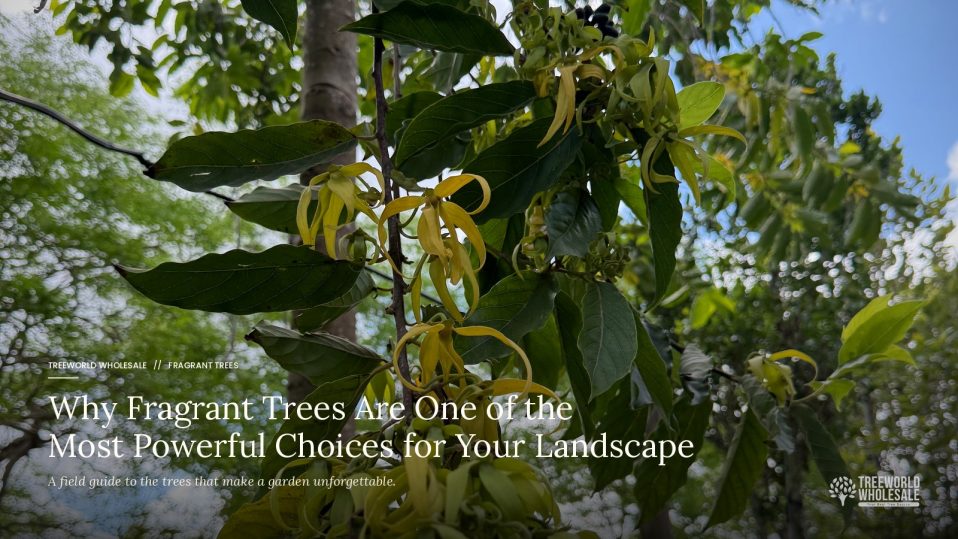
Fragrant trees are perhaps one of the most powerful tree choices you can make. Smell is the only sense that goes directly to the emotional brain. All other senses pass first through the thalamus, which acts as a kind of relay station for processing. But smell goes straight to the limbic system, the part of the brain that handles emotion and memory. With no stops in between, a scent can trigger an emotion or a memory before your conscious mind even registers it.
Key Takeaways:
- Smell is the only human sense linked directly to the limbic system, making fragrant trees a scientifically proven tool for triggering memory and setting a distinct emotional baseline in landscape design.
- Selecting species from a curated list of fragrant trees allows you to design in layers, utilizing large canopy species for widespread scent and small fragrant trees for intimate, localized patio settings.
- Aromatic plants function through various botanical mechanisms; while species like Ylang Ylang and Michelia Champaka release scent passively into the air, others like the Bay Rum Tree and Cinnamon Bark require physical interaction to release their volatile oils.
Fragrant trees are perhaps one of the most powerful tree choices you can make. Smell is the only sense that goes directly to the emotional brain. All other senses pass first through the thalamus, which acts as a kind of relay station for processing. But smell goes straight to the limbic system, the part of the brain that handles emotion and memory. With no stops in between, a scent can trigger an emotion or a memory before your conscious mind even registers it.
The Proust Effect: Why a Fragrant Tree Can Stop You in Your Tracks
This is known as the Proust Effect. The phenomenon where a smell instantly transports you to a place or moment from the past with an almost startling clarity. A garden, a person, an entire chapter of your life.
That is what makes fragrant trees and shrubs such powerful additions to any landscape design. They don’t only light up a place — they take you somewhere.
The Secret Behind the Most Fragrant Trees in the World
And here is something most people don’t know about the most fragrant trees in the world: their scent was never meant for us.
The aromatic compounds in trees like ylang ylang (Cananga odorata ) or Stemmadenia aren’t accidental, and they weren’t designed for human pleasure. They are chemical signals, to attract pollinators, communicate with neighboring plants, and repel pests. The fact that we find them beautiful is almost a side effect of millions of years of coevolution; between plants and insects.
A List of Fragrant Trees and Shrubs That Work for Any Garden
This is true whether you are talking about large statement trees or small fragrant trees. Either tucked into a courtyard or patio. Any fragrant tree brings that same ancient chemistry into your space. What makes a garden built around a curated list of fragrant trees and shrubs truly special; is that you are not just designing something pretty. You are designing an experience that enters through the brain’s back door. The one with no rational filter.
| Botanical Name | Common Name | Scent Profile & Timing | Scent Mechanism | Ideal Landscape Application |
|---|---|---|---|---|
| Cananga odorata | Ylang Ylang | Romantic floral, custard, honey; peaks dusk to early morning | Passive | Near terraces, entrances, or outdoor evening seating |
| Stemmadenia litoralis | Milky Way Tree | Soft, vanilla-sweet, musky; peaks sunset to sunrise | Passive | Patios, courtyards, and medium-to-large containers |
| Michelia champaca | Orange Champaka | Rich, intense golden-orange, warm floral; builds all day | Passive | Open landscapes and spacious estate layouts |
| Michelia x alba | White Champaka | Delicate, fruity, sweet, airy quality; reliable bloomer | Passive | Smaller gardens, structural container planting |
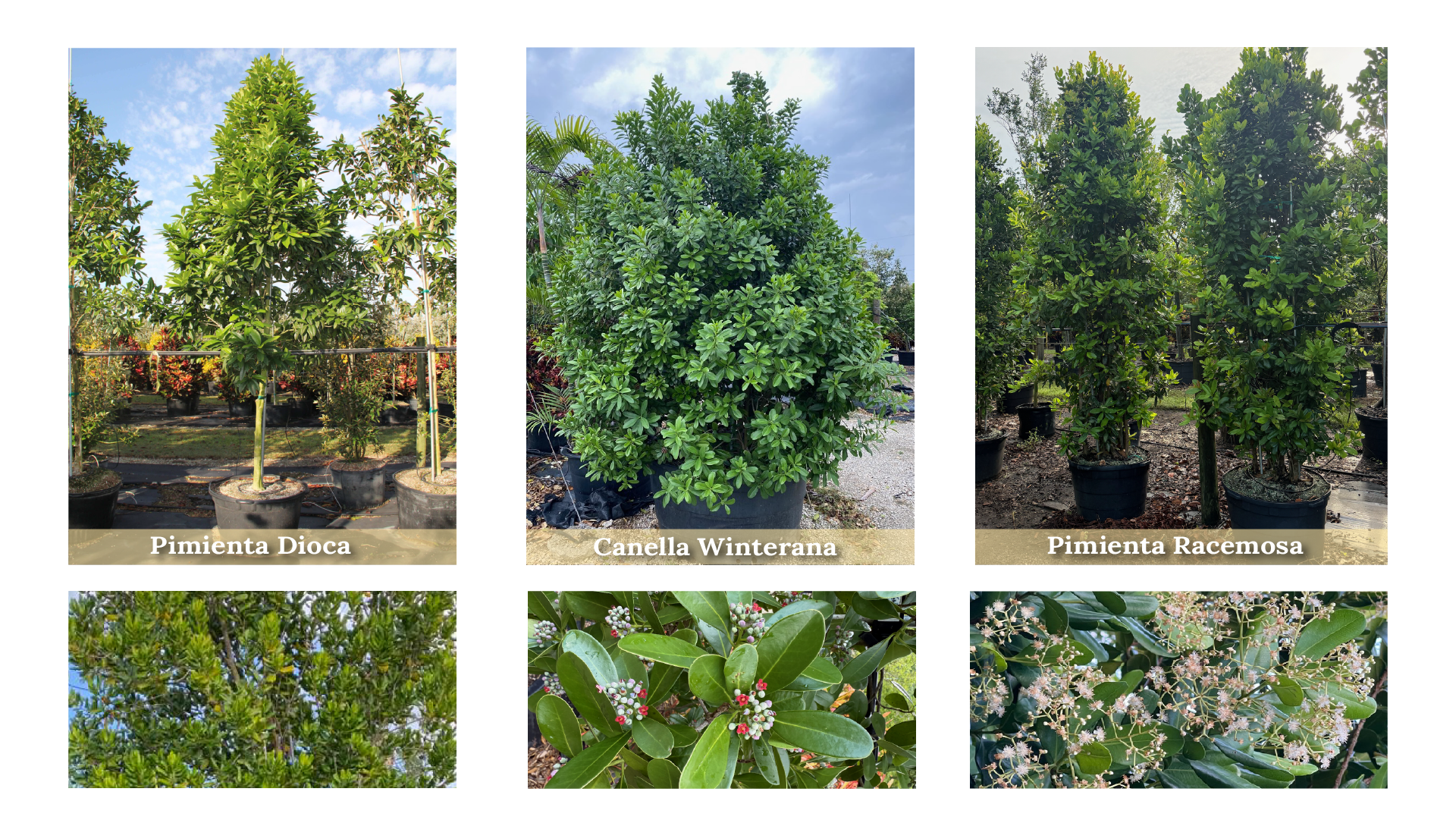
| Pimenta racemosa | Bay Rum Tree | Intense blend of clove, cinnamon, and distinct spicy notes | On Touch (Crushed foliage) | Narrow architectural spaces and privacy hedges |
| Canella winterana | Cinnamon Bark | Warm, spicy, fiery cinnamon-like character | On Touch (Brushed leaf) | Structural specimen tree, screen, or conservation planting |
| Pimenta dioica | Allspice Tree | Complex mix of cloves, cinnamon, and nutmeg | On Touch (Crushed leaf/bark) | Subtropical landscapes and multi-purpose edible gardens |
Ylang Ylang: The Queen of Perfume
Have you worn Chanel No. 5, Poison by Dior, or Acqua di Giò by Armani? Or at least caught their fragrance on someone walking by? If so, you are already acquainted with this tree. Cananga odorata, best known as ylang ylang, is one of the most widely used fragrant trees in the history of perfumery.
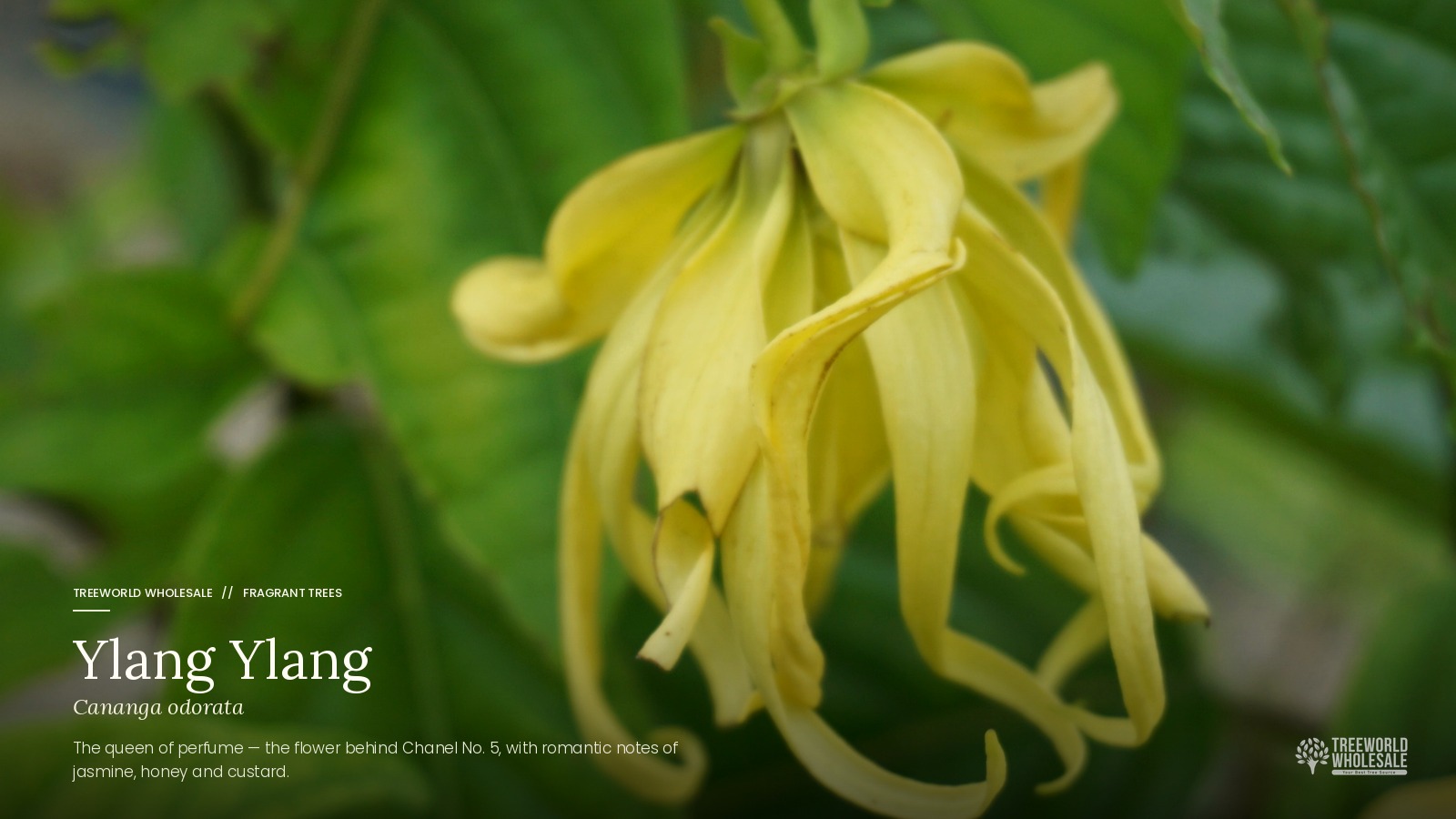
Its scent carries romantic floral notes with hints of custard, jasmine, banana, neroli, and honey — a complexity that is almost impossible to describe without simply standing beneath one in bloom.
Its floral sweetness comes from a shifting mix of aromatic compounds, which together create its characteristic and instantly recognizable odor. In the garden, this means that no two trees smell exactly the same, and the fragrance shifts throughout the day, reaching its peak between dusk and early morning.
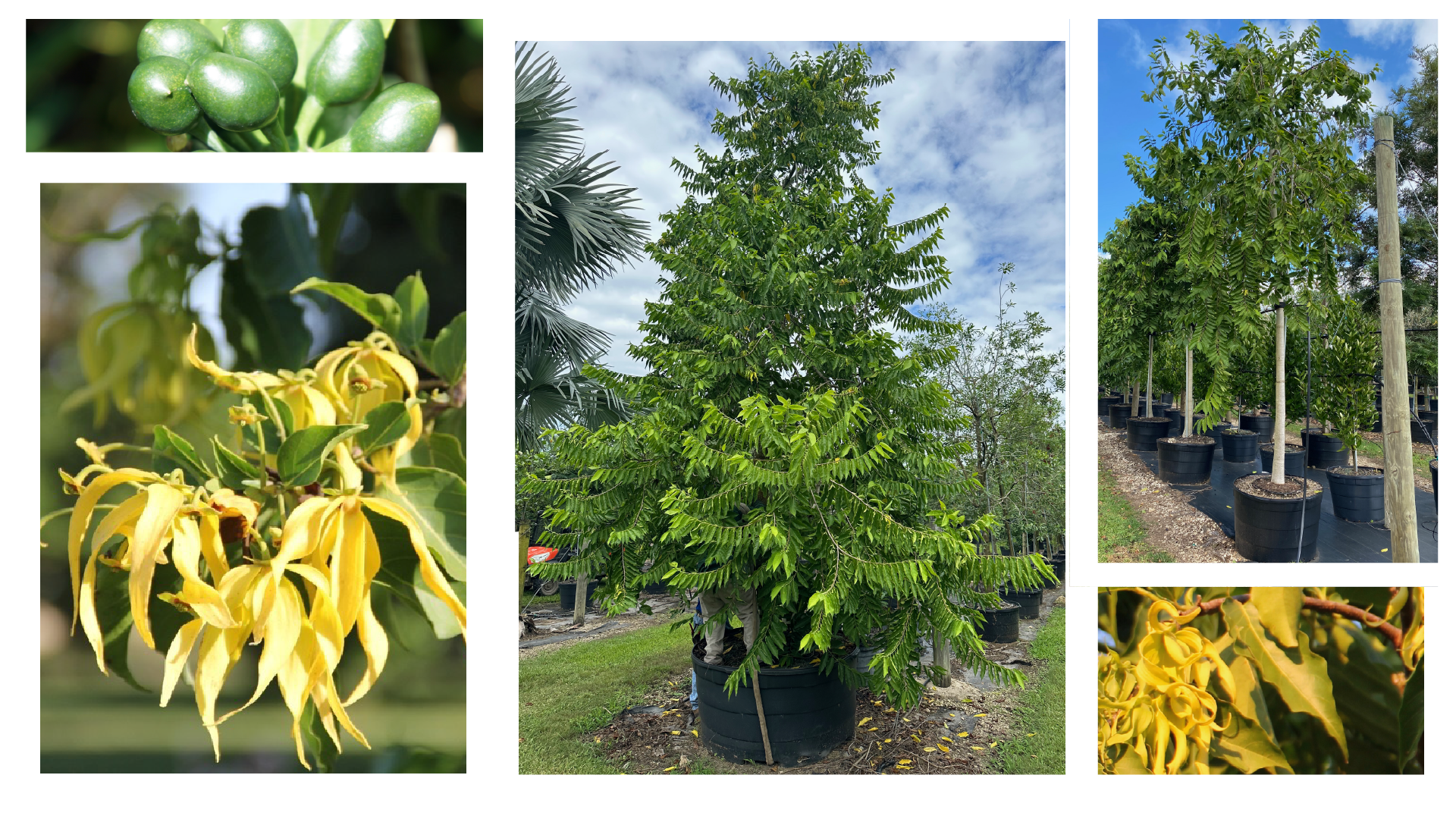
As a landscape tree, ylang ylang is fast-growing and pendulous, with drooping branches that can reach 3 to 6 meters long, giving it an elegant, almost weeping silhouette that is as ornamental as it is aromatic. Its roots are non-invasive, it has virtually no pest problems, it is evergreen and tidy, and it blooms almost year-round.
It thrives in full to partial sun and responds well to pruning, making it manageable even in smaller gardens. Plant it near a terrace, entrance, or outdoor seating area where its evening fragrance can be fully appreciated.
Milky Way Tree— The Fragrant Tree That Stays With You
There are trees you admire and trees you remember. Stemmadenia litoralis , widely known as the Milky Way Tree belongs to the second category.
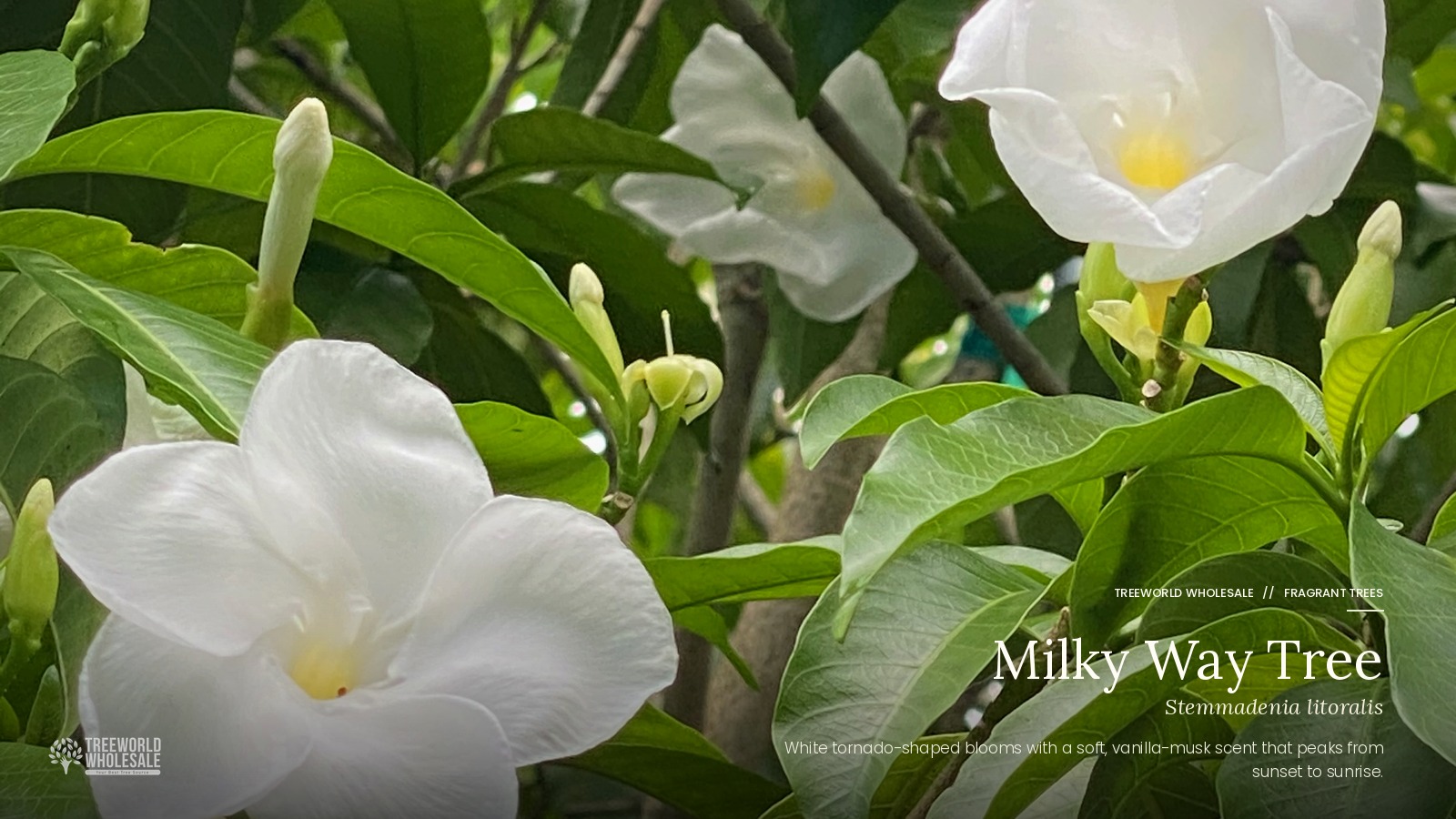
Native to the coastal rainforests of Tropical America, this small but remarkable tree produces masses of large, white, tornado-shaped flowers. The fragrance is soft, vanilla-sweet, and unmistakably musky. The kind of scent that stops a conversation mid-sentence.
What makes it exceptional is not just the scent itself — but when it delivers it. The flowers are especially perfumed from sunset to sunrise. This tree works hardest precisely when you are most likely to be outside and still.
In full bloom, the fragrance permeates the entire garden. White flowers contrast sharply against glossy green leaves. The ground below becomes carpeted with fallen blossoms. A spectacle that is as visual as it is aromatic.
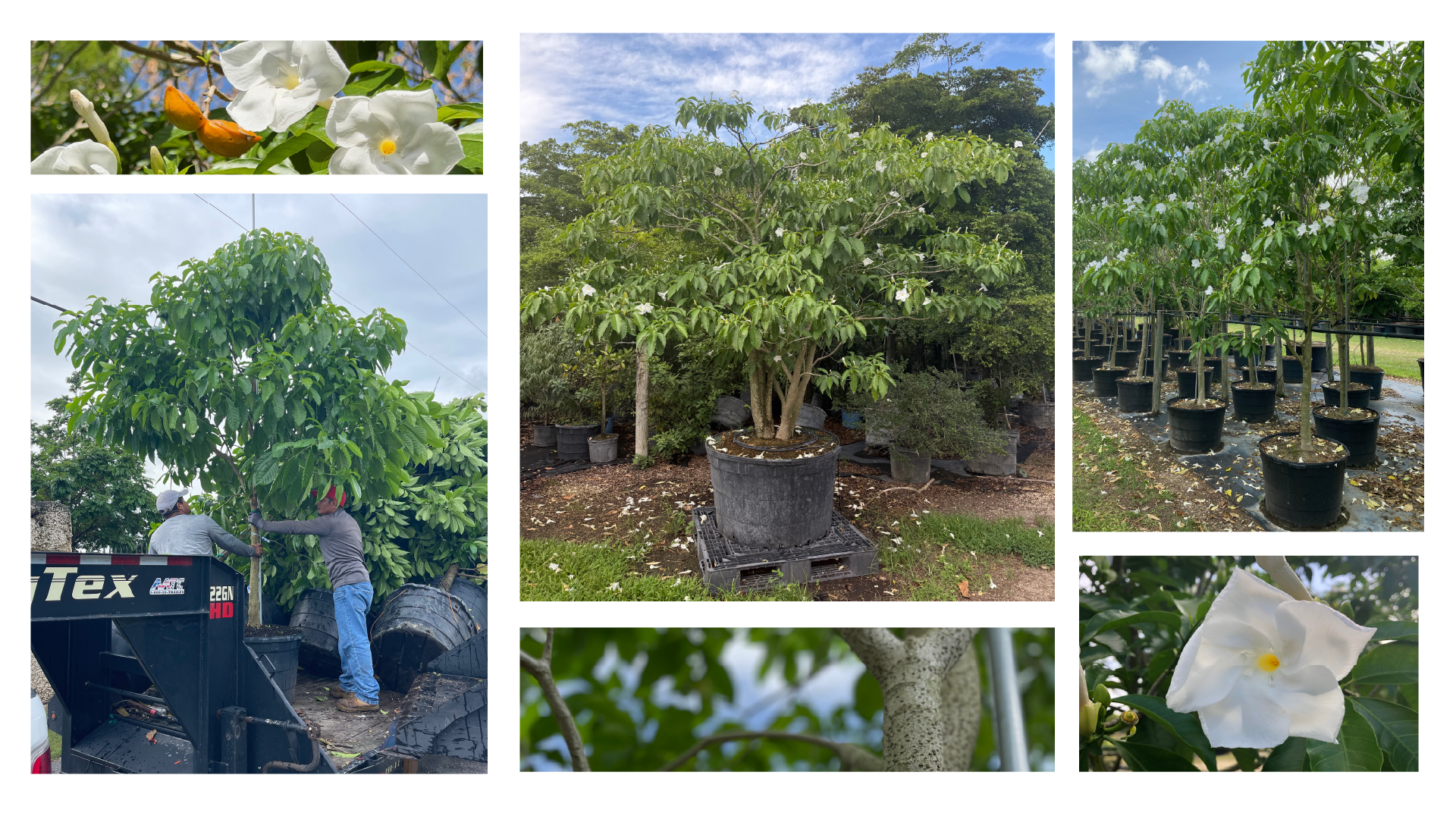
It is also one of the most practical small fragrant trees on this list. Compact enough for containers and patios. Tolerant of partial shade. Low maintenance once established. It fits gardens where space is limited — but the desire for fragrance is not.
Michelia Champaka — The Fragrant Tree That Activates the Brain
In South Asian traditions, the blooms are used in worship ceremonies, worn in hair as natural perfume, and floated in bowls of water to scent rooms. Jean Patou’s Joy — one of the world’s most celebrated perfumes — was built around its flowers.
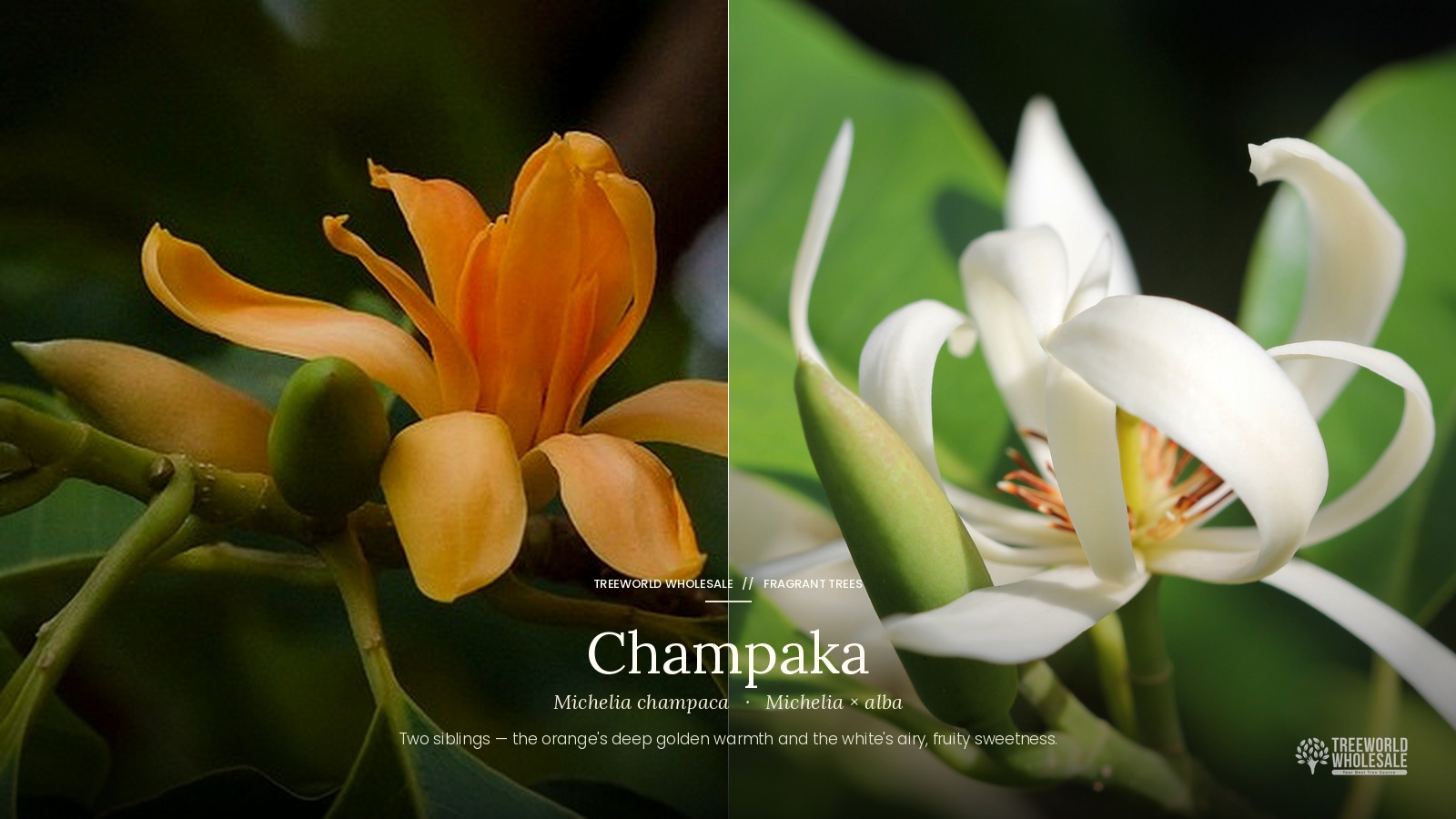
The science behind the scent is remarkable. Research has found that michelia activates the hypothalamus, which regulates hormone levels. The effect appears specific to michelia and jasmine — no other floral compounds produce the same response. The champaka scent profile is so complex that perfumers treat it as a category of its own.
The fragrance builds through the day. It begins in the early morning, intensifies during the afternoon, and fills the surrounding space completely by night. On a warm humid evening, it can be detected from several hundred feet away.
At our nursery we carry both varieties — and each one offers a different experience.
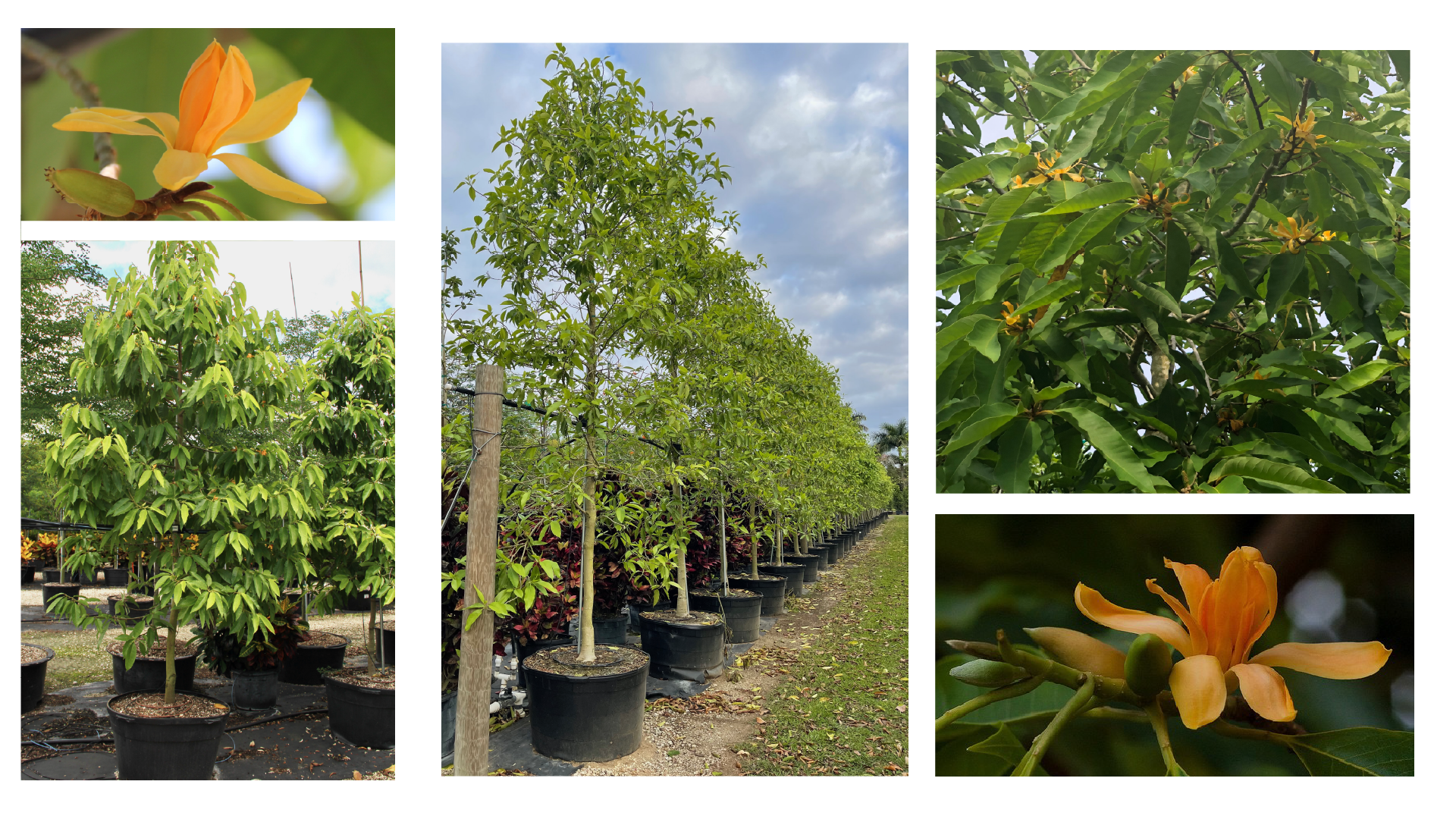
Orange Champaka (Michelia champaca) delivers the richer, more intense fragrance. Deep golden-orange flowers with a warm, full floral scent. More cold tolerant and suited for open landscapes. Grows 15 to 20 feet, though it responds well to pruning for smaller spaces.
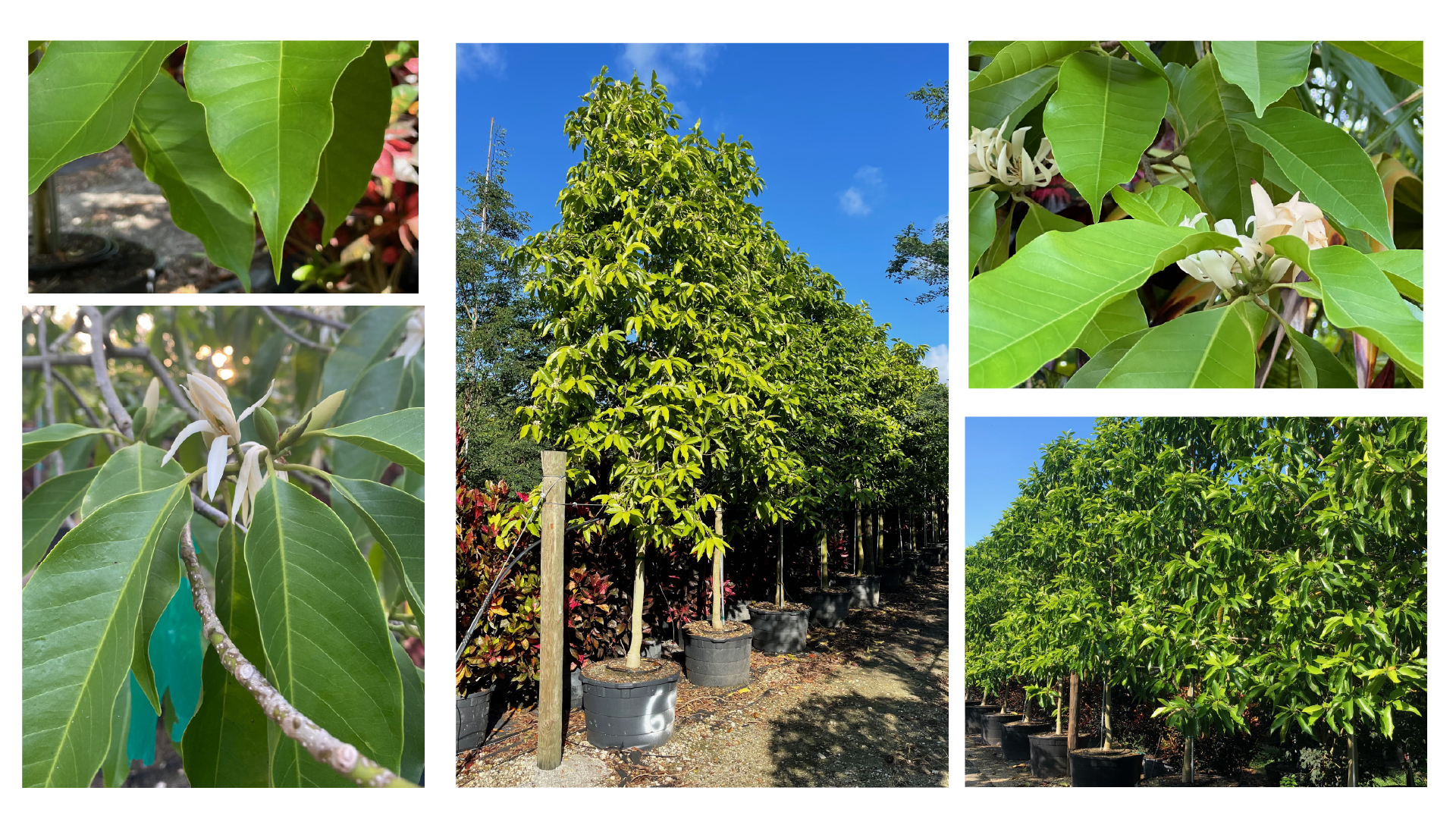
White Champaka (Michelia x alba) offers a more delicate, fruity fragrance with a sweet, airy quality. Creamy white blooms, a more compact and slower-growing habit, and a reputation as a more reliable bloomer — making it ideal for containers or smaller gardens. It blooms earlier and more consistently, even when young.
Fragrant Trees and Shrubs That Reveal Themselves on Touch
Most fragrant trees release their scent passively — you walk past and the fragrance finds you. But there is another category of aromatic trees that works differently. These are trees that hold their fragrance until you reach out and ask for it. A brushed leaf, a crushed twig, a moment of contact — and suddenly the air around you changes completely.
This is one of the most underappreciated experiences in garden design. And these three trees deliver it beautifully.
Bay Rum Tree — The Caribbean in the Palm of Your Hand
When the leaves of Pimenta racemosa are crushed, they release a distinctive and intense fragrance — a blend of clove, cinnamon, and spicy notes that is immediately recognizable.
Native to the Caribbean region, this small tree in the myrtle family has been at the heart of island culture for centuries. Its leaves were historically distilled with rum and water to produce bay rum cologne — a product that defined Caribbean fragrance from the 1800s onward. Rub a single leaf between your fingers and the fragrance will stay with you for hours.
As a landscape tree it is highly practical. At Treeworld it is one of our top privacy hedges — evergreen, with a compact pyramidal form ideal for narrow spaces, a beautiful exfoliating trunk, leathery green leaves, fluffy white flowers, and green-black berries. It thrives in full sun and is well suited to South Florida conditions.
Cinnamon Bark — A Rare Native That Smells Like History
Canella winterana is one of those trees that rewards the curious. Walk past it and it is an elegant, well-behaved evergreen. Reach out and touch a leaf — and it releases a warm, spicy fragrance with a fiery, cinnamon-like character that led early Europeans to export its inner bark as a substitute for true cinnamon.
It is the only species in its genus and is native to the Caribbean, southeastern Mexico, southern Florida, and Venezuela. It is also state-listed as endangered in Florida — making it not just a beautiful tree but a meaningful one to grow and preserve. Its small flowers have five bright red petals with noticeable yellow anthers, and the tree attracts butterflies including the Schaus’ swallowtail.
Slow-growing and evergreen, it works beautifully as a specimen tree or screen in full sun to partial shade. A small fragrant tree with a story that goes back centuries.
Allspice Tree — One Tree, Every Spice
Pimenta dioica was named allspice because the fragrance and flavor of its dried berries resembles a combination of cloves, cinnamon, and nutmeg — all at once, from a single tree. When Christopher Columbus encountered it in the Caribbean, he mistook it for pepper. He was not entirely wrong — the whole tree is aromatic from bark to berry to leaf.
Brush or crush the leaves and they release that same warm, spiced fragrance. Beyond the garden, Pimenta dioica has been used in perfumery, as a food spice, and in folk medicine across the Caribbean and Central America for generations.
A small evergreen tree that typically grows between 20 and 40 feet tall, with leathery, oblong aromatic leaves and creamy white flowers in summer. It performs well in full sun and is well suited to tropical and subtropical landscapes. One of those rare trees that is as useful in the kitchen as it is beautiful in the garden.
Designing With Fragrant Trees: A Three-Layer Approach
A well-designed aromatic garden is not just a collection of fragrant trees and shrubs. It is a layered experience — one that engages the senses at every level.
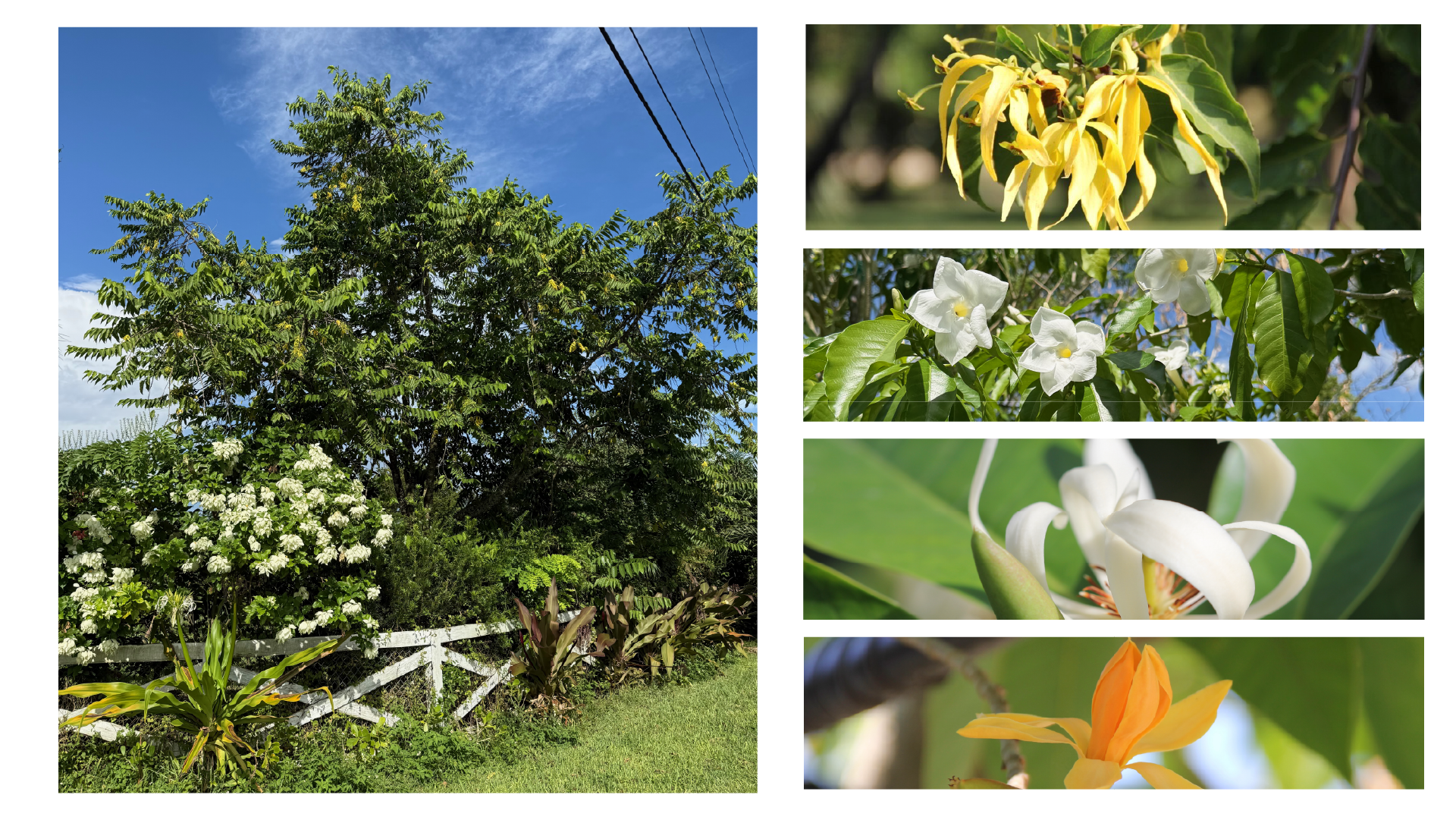
- The Canopy Layer: where ylang ylang, champaka, and allspice work best. Tall, evergreen, and broadly fragrant, these trees diffuse scent across the entire space. Their fragrance finds you whether you are near or far.
- The Mid Layer: belonging to Stemmadenia and the Bay Rum tree. Compact and directional, these small fragrant trees anchor specific areas — a seating corner, a courtyard, a building entrance. Their scent is intimate and concentrated.
- The Touch Layer: running along pathways and edges. Canella winterana and Pimenta racemosa reward whoever passes close enough to brush a leaf. This is the layer that turns a walk through the garden into a full sensory experience.
Bring This to Your Next Project
Whether you are specifying trees for a residential garden, a commercial landscape, or a large-scale development — fragrant trees create landscapes people remember.
At Treeworld we carry all the species featured in this list, from field-grown specimens to container stock ready for specification.
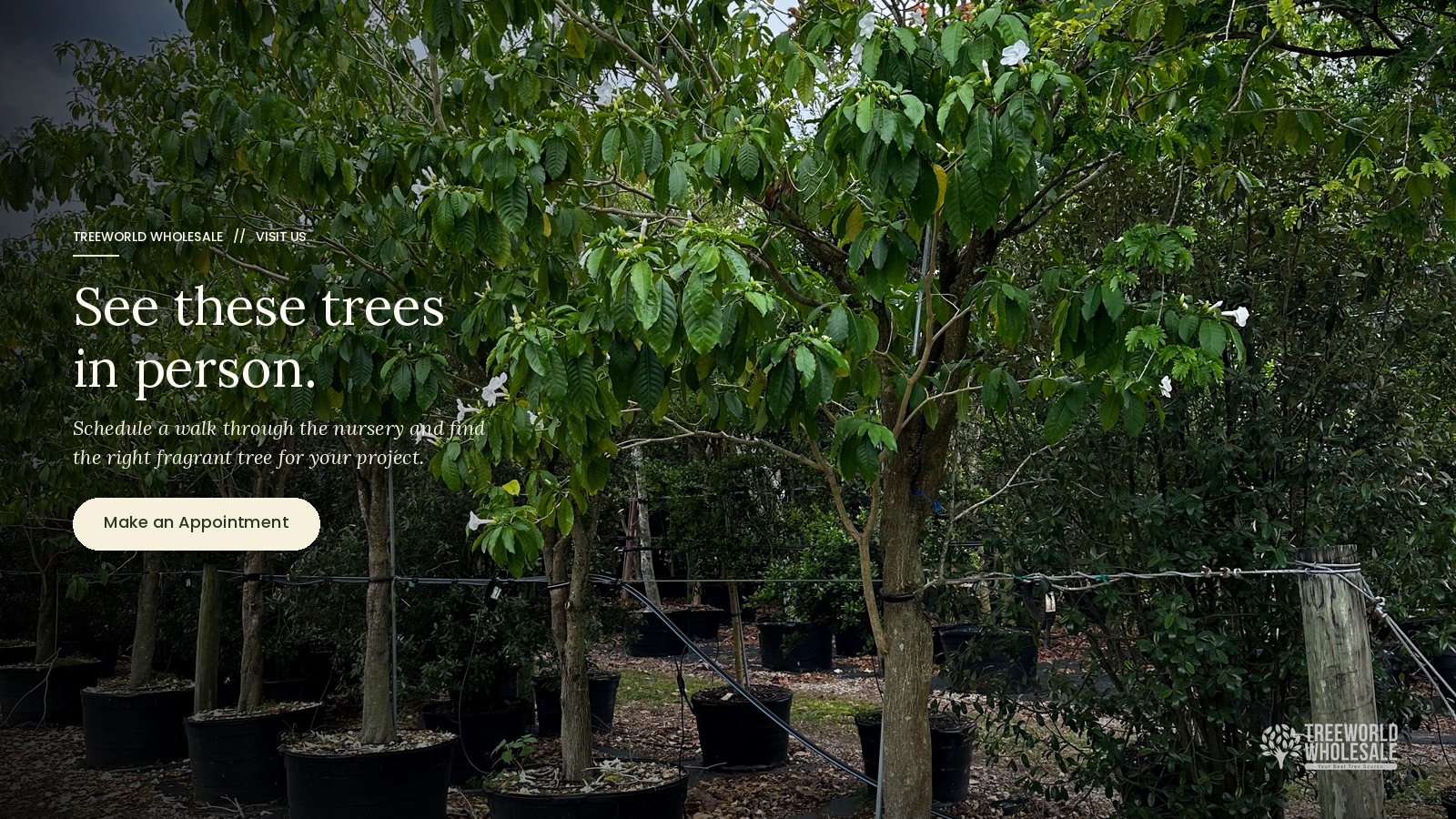
Come see them in person. Visit our nursery in Homestead, Florida, or contact our team to arrange a consultation.
📍 24605 SW 192 Ave, Homestead, FL 33031
📞 305-245-6886
✉️ info@treeworldwholesale.com
Frequently Asked Questions About Fragrant Trees
What is the easiest fragrant tree to care for?
For low maintenance, the Bay Rum Tree (Pimenta racemosa) is an exceptional choice. Once established, it requires very little care, acts as a fantastic evergreen privacy hedge, and its aromatic leaves provide a stunning scent year-round without the mess of heavy floral drops.
Can I grow small fragrant trees in containers?
Absolutely. If you have limited space or want to bring the scent directly onto a balcony, the White Champaka (Michelia x alba) and the Milky Way Tree (Stemmadenia litoralis) are two of the best small fragrant trees for pots. They remain compact and respond very well to pruning.
Which tree has the strongest fragrance?
If you are looking for sheer aromatic power, Ylang Ylang (Cananga odorata) and the Orange Champaka (Michelia champaca) top the list of fragrant trees. A single mature Champaka on a warm, humid evening can scent an area from hundreds of feet away.