
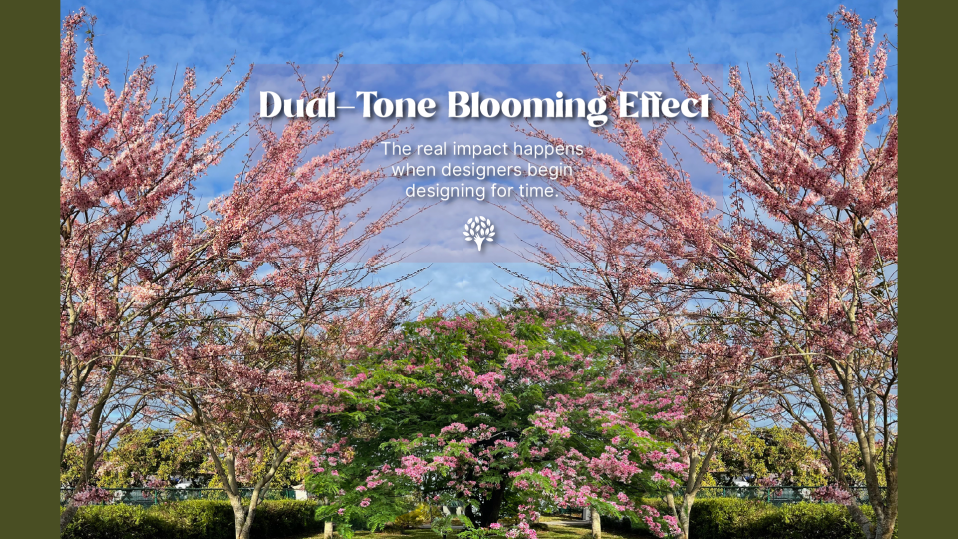
Dual-tone blooming and seasonal color transitions may sound technical, but the process is far more fluid than people often imagine. Landscape designers are the masterminds behind these compositions. Especially when they design not only for space, but for time.
To understand this, think of the most memorable flowering landscapes. They are rarely shaped by a single spectacular bloom, but by carefully staged flowering cycles that seamlessly weave into one another.
Instead of one brief week of color, a thoughtful combination of trees can create months of evolving bloom, allowing gradual and intentionally timed transitions.
What is the Concept of Dual-Tone Blooming in Landscape Design?
Dual-tone blooming refers to the intentional pairing of two or more flowering trees whose bloom periods occur in close succession. Because their flowering windows slightly overlap, the landscape experiences a brief moment when both are in bloom at the same time.
Rather than displaying a single uniform color, the canopy begins to show multiple tones simultaneously, creating a soft transition from one hue to another.
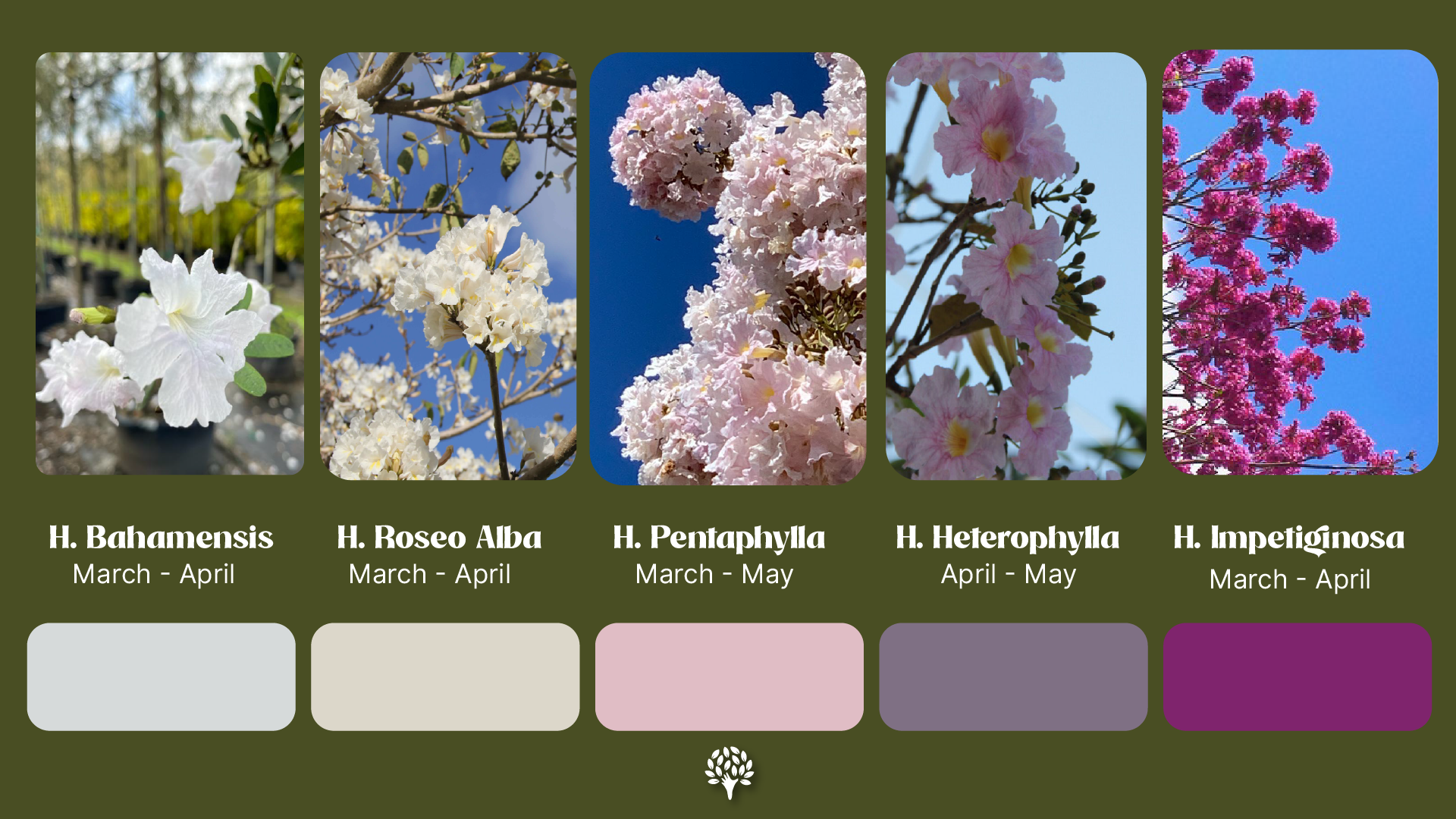
Instead of a landscape that peaks for only a single week and then fades, this approach allows color to unfold gradually over time. It allows designers to work with time as an element of design, not just space.
Where Bloom Cycles Meet: Cassia bakeriana and Cassia javanica
Two of our favorite spring-flowering trees are excellent examples of this strategy. Both share a similar structure but differ slightly in the timing and tone of their blooms. While Cassia bakeriana blooms from April to May, Cassia javanica typically flowers from May to June.
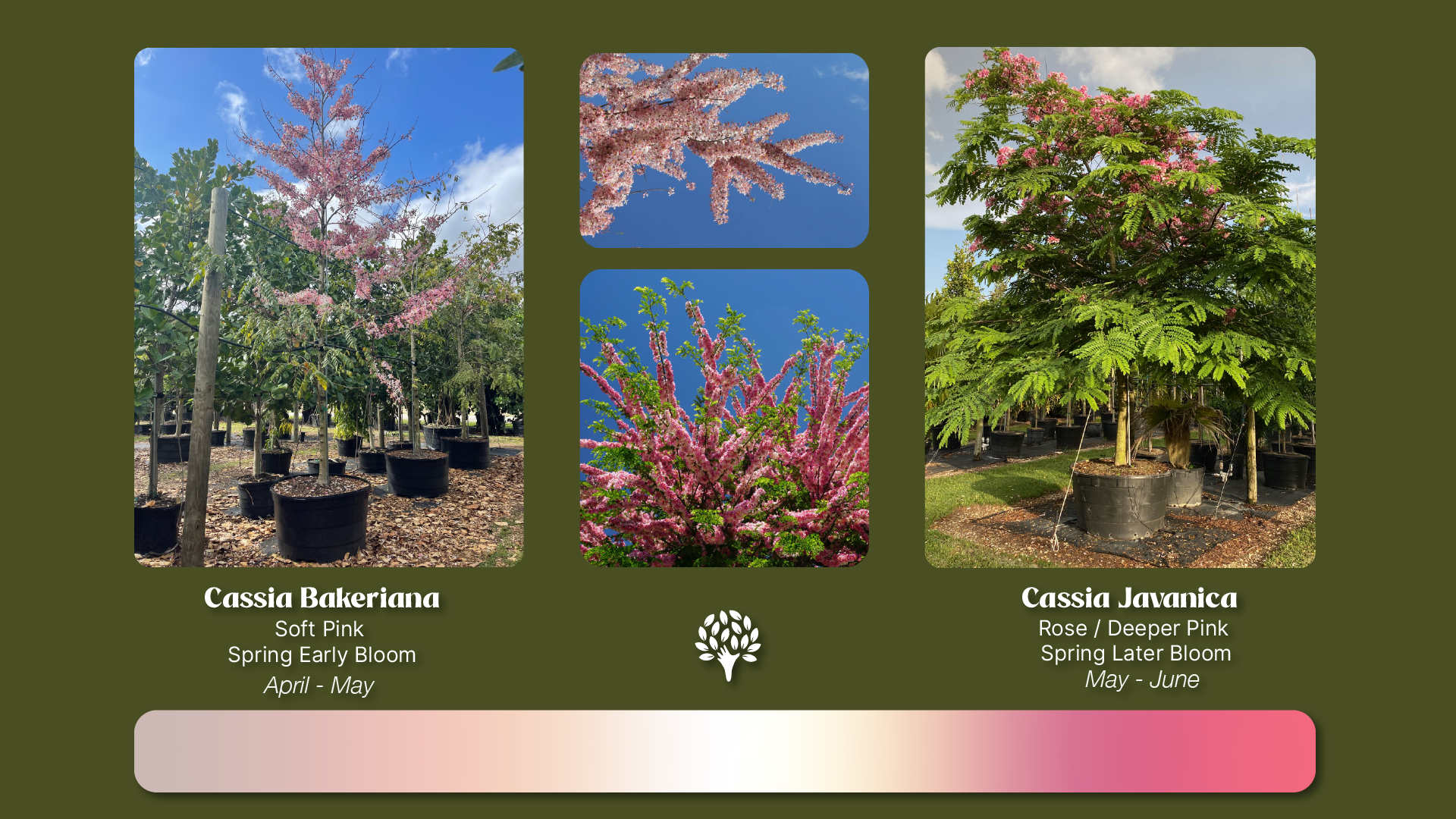
Because their bloom cycles occur in close succession, there is a brief but important window when both species flower simultaneously.
Cassia bakeriana typically opens first, covering its canopy in soft pastel pink clusters that appear delicate and airy against the foliage. As these early blossoms begin to mature and thin, Cassia javanica begins to flower. Its blooms emerge in lighter tones that gradually deepen into richer rose hues as they develop.
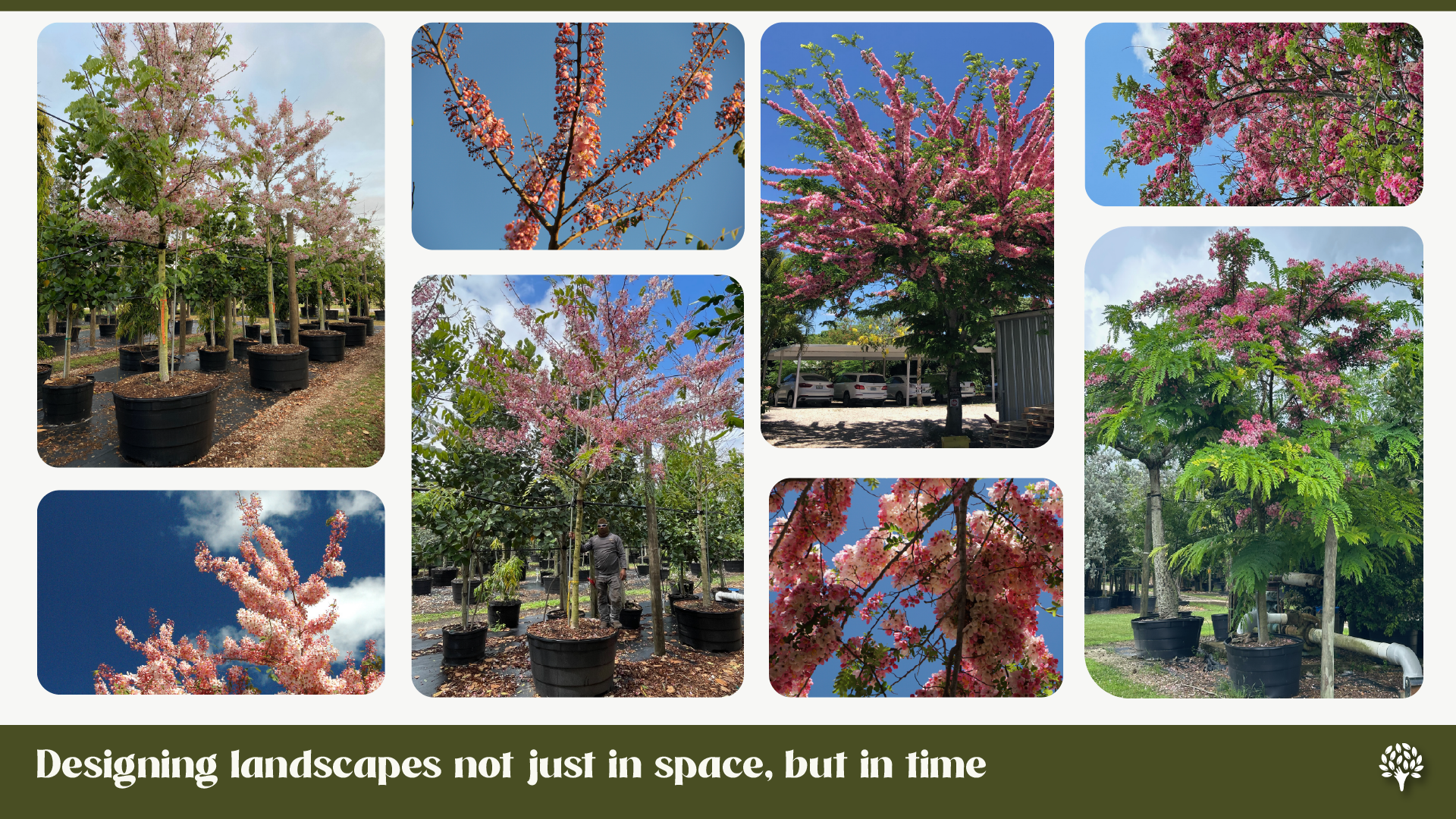
During this overlap, the canopy no longer reads as a single color. Instead, multiple shades of pink layer across the trees, creating a gentle gradient that feels subtle yet striking.
Understanding Bloom Timing
To design landscapes that evolve through color and season, designers look beyond the individual beauty of a tree and consider when and how it blooms. This approach is often referred to as phenological sequencing.
Phenology refers to the study of natural cycles in plants, including flowering, leaf emergence, and seasonal change. In landscape design, it means selecting species whose seasonal behaviors interact in a meaningful way.
Rather than focusing on a single moment of bloom, designers begin to consider how flowering events unfold over time.
Seasonal Bloom Progressions in Tropical Landscapes
When flowering trees are selected with bloom timing in mind, landscapes can develop seasonal color stories. Instead of a single peak bloom, different species take turns flowering, allowing color to evolve gradually over several months.
Dual-Tone Blooming: Exploring Different Pairings
With this foundation, designers can begin experimenting with flowering tree combinations that allow color to evolve throughout the season.
Lavender → Pink → Scarlet
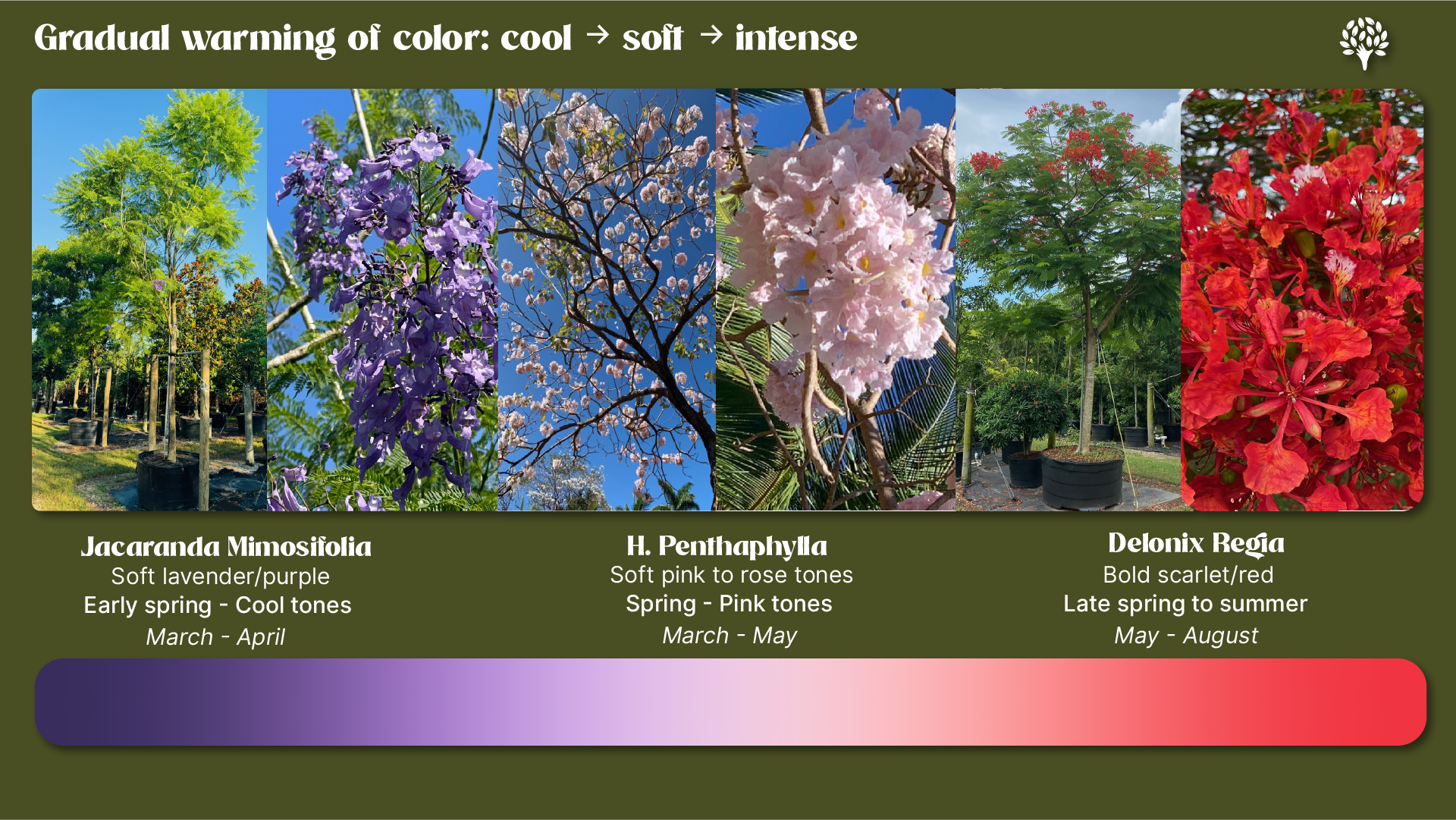
This sequence begins with the cool lavender tones of jacaranda, transitions into softer pink blooms, and concludes with the vibrant scarlet canopy of Delonix regia. The gradual warming of color creates a dynamic seasonal progression, ideal for avenues and large open landscapes.
Scarlet → Orange → Gold
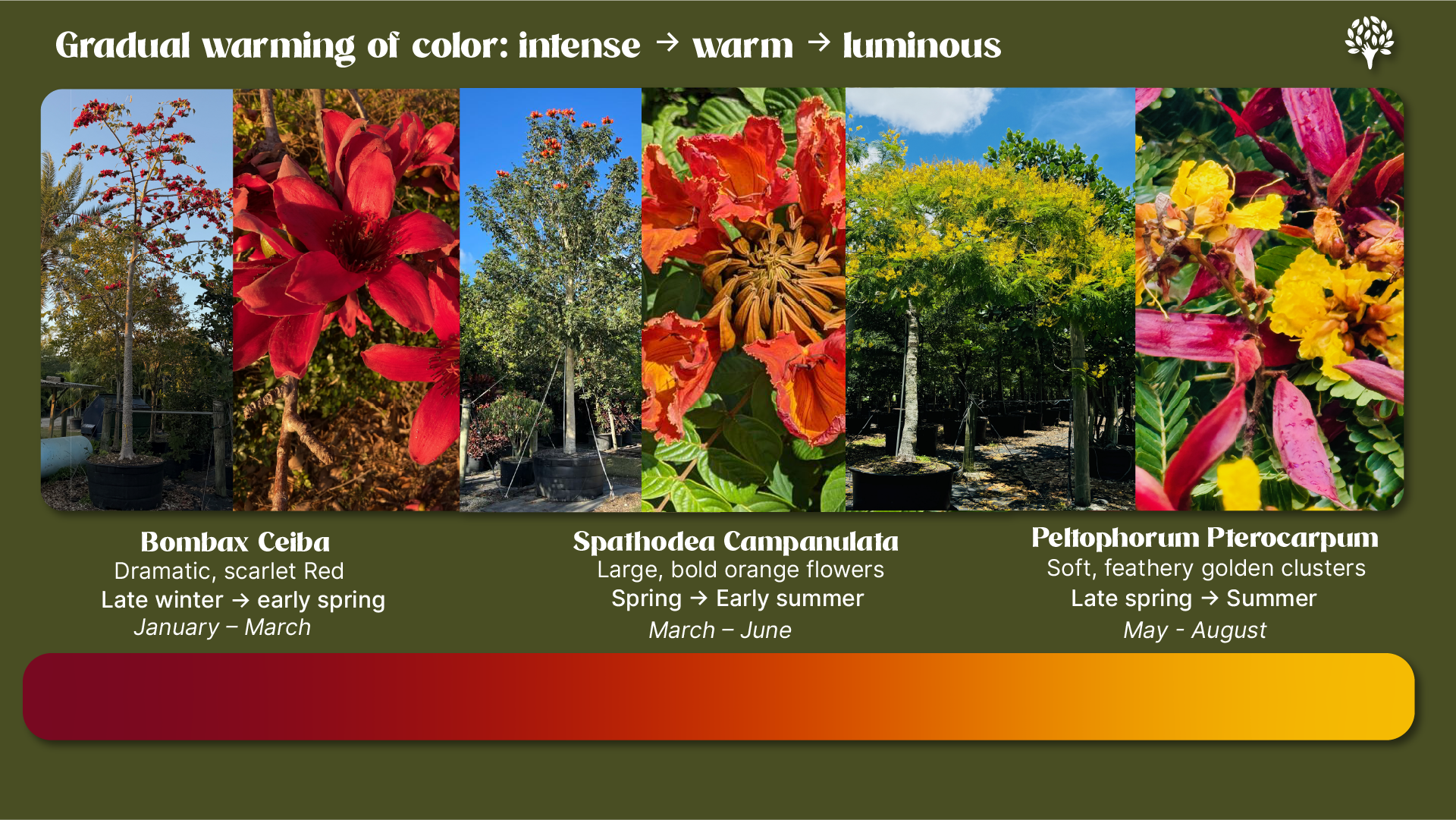
This sequence creates a bold tropical progression that begins with the striking scarlet flowers of Bombax ceiba, which often appear on leafless branches in late winter. As the season advances, the large orange blossoms of Spathodea campanulata introduce a warm transition in tone. Later, the golden sprays of Peltophorum pterocarpum brighten the canopy and extend the flowering display into early summer.
Designing Landscapes for Time
At its core, this approach reflects a broader idea: landscapes are not static compositions. They are living systems in continuous change.
When designers work with these natural rhythms, they shape not only the physical structure of a landscape, but also its temporal character.
Mastering time through bloom is, in many ways, an exercise in observation. Color does not arrive all at once, it moves through the landscape. It is within these subtle transitions that landscapes become most memorable.
At TreeWorld, we see these trees for sale not only as individual specimens, but as part of a composition that continues to evolve long after planting.
Contact us to source the right trees and design landscapes that evolve in color, season, and impact.