Six South Florida Natives You Should Be Specifying on Your Plant List
Key Takeaways:
- Spanish stopper develops a unique exfoliating bark over time that reveals a fresh orange surface beneath, making mature specimens highly sculptural.
- Crabwood serves as an excellent native understory tree because it tolerates dense root competition and thrives under an existing hammock canopy.
- Black ironwood possesses a specific gravity of 1.42, making it one of the densest woods on earth and highly resistant to disease, termites, and salt spray.
- Pigeon plum grows into a polished 30–40-foot canopy tree that tolerates full sun, dry limestone soils, and direct coastal exposure, with dark fruit clusters that reliably draw birds.
- Jamaica dogwood produces dramatic clusters of white to pale lavender flowers in the spring before its new leaves emerge.
- The autograph tree features exceptionally thick, leathery leaves durable enough to hold permanently carved text, alongside pink-and-white miniature magnolia-like blooms.
Working on your native plant list but unsure if you need to shake things a bit? Because lately you’ve been specifying seagrapes, buttonwood, and Simpson’s stopper on repeat, you’re not alone — but you’re also leaving some exceptional natives on the table. South Florida’s native options are both deep and layered, with a handful of species that thrive in our conditions. Support local wildlife, and hold up to the demands of commercial and residential landscapes almost never make it into project specs.
Here are six that should be on your upcoming plant native plant list!
Eugenia foetida — Spanish Stopper
Spanish stopper is one of those plants that rewards patience. Young specimens are unremarkable; dense, tidy, useful as a hedge. But mature trees are breathtaking. They develop bark that becomes a genuine design feature. The smooth brownish-gray surface exfoliates over time to reveal fresh orange bark beneath. Giving older specimens a mottled, sculptural quality that holds visual interest year-round and puts them firmly in specimen territory.
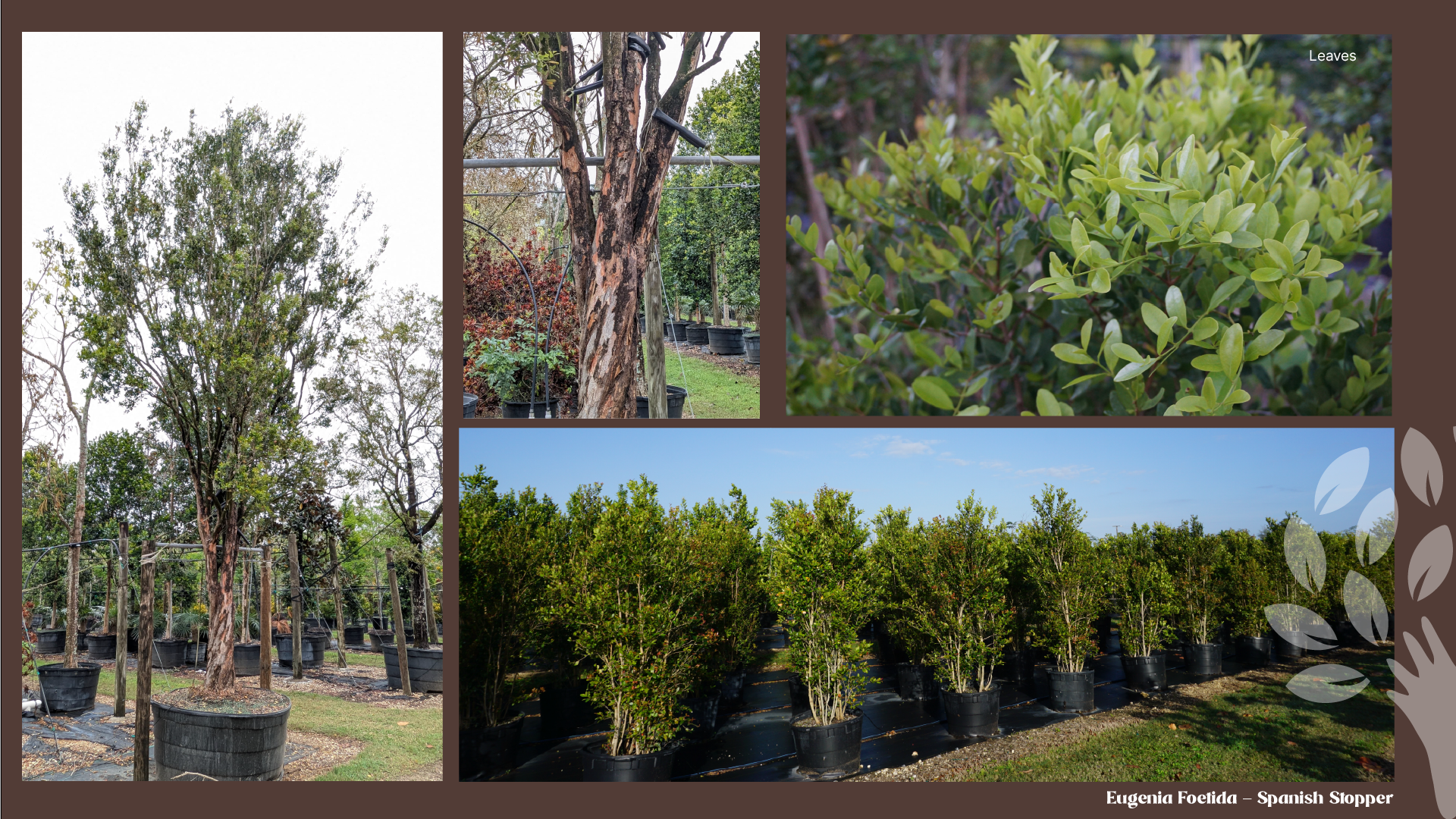
The plant grows as a multi-trunked shrub or small tree, typically 9 to 15 feet, with leathery opposite leaves that are dark green above and yellowish beneath, carried on distinctive reddish petioles. Flowers are white and frilly — four petals with a spray of yellow stamens — and bloom year-round with peak production in spring and summer, drawing a wide range of pollinators. The small berries ripen from red to purplish-black and are reliably consumed by birds.
Spanish stopper, tolerates both formal shearing and naturalistic growth. Handles calcareous soils well, and holds up through hurricane winds. The species epithet foetida (meaning foul-smelling) refers to the flowers and crushed leaves in summer heat — worth knowing before the client meeting, but not a problem at normal viewing distances.
Best use: Hedges, narrow spaces and tight rights-of-way, specimen for bark interest, mixed native screens.
Conditions: Full sun to part shade; moderately drought tolerant; calcareous, well-drained soils; Zones 9A–11.
Gymnanthes lucida — Crabwood
Crabwood is a quiet overachiever. This native understory tree — also found in the Bahamas and Cuba — has some of the glossiest, most refined foliage of any South Florida hammock species. The leaves are deep, lustrous green and hold color through the dry season without complaint. But what gives the tree its distinctive character is the way the foliage is held: the leaves angle upward along the branches in a strongly upright, almost pleated arrangement. That creates a layered, light-catching texture unlike most native understory trees. Mature specimens reach 15–25 feet, making them ideal for spaces that need a canopy presence without overwhelming scale.
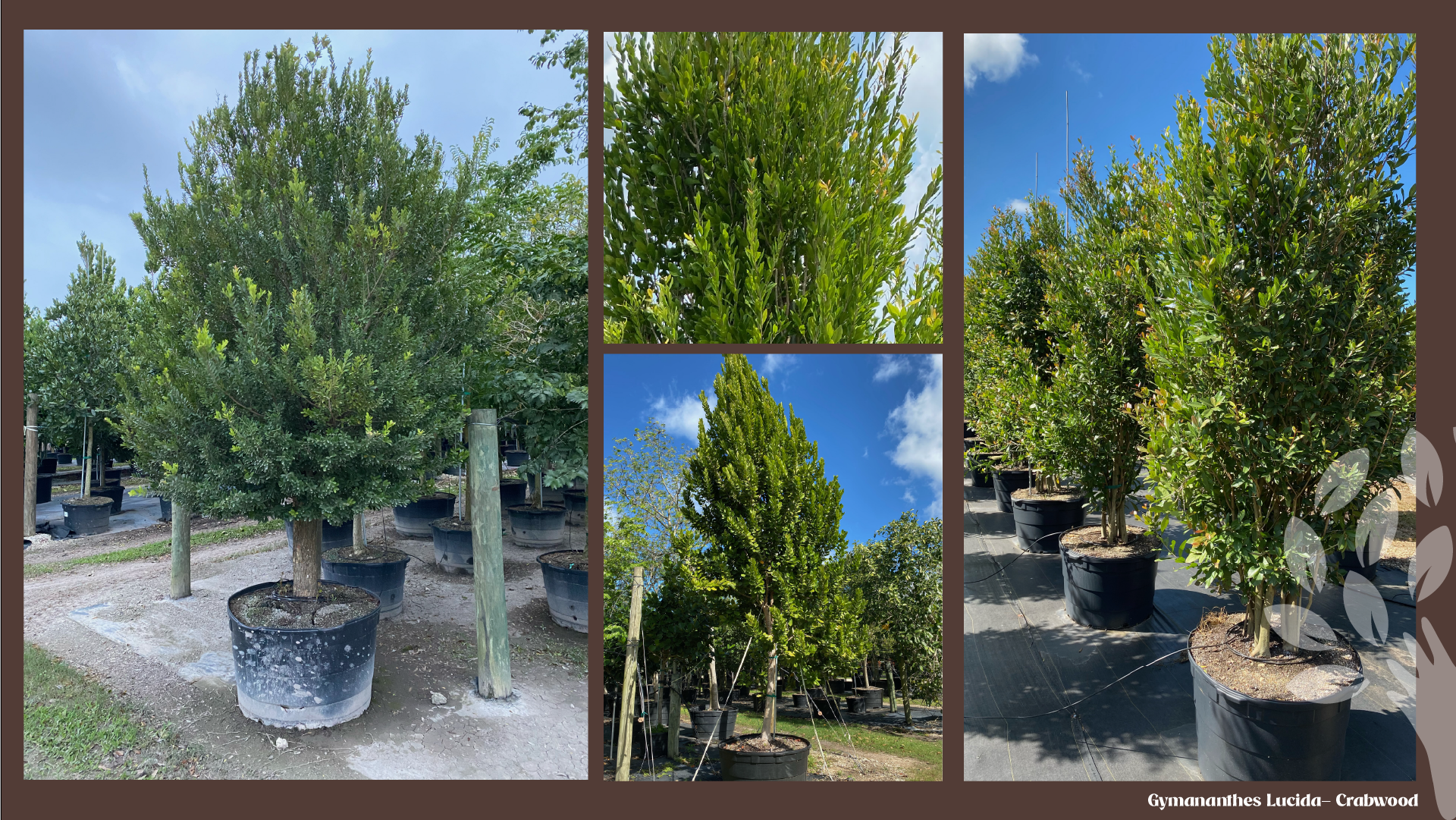
What makes it especially valuable to designers is its tolerance of dense root competition and its ability to naturalize under existing canopy. It’s one of the few native trees that can genuinely thrive in the interior of a hammock-style planting. Wildlife value is solid, and the plant asks for almost nothing once it’s established.
Best use: Understory planting beneath larger canopy trees, naturalistic hammock designs, private garden canopy.
Conditions: Part shade to full shade; moderate drought tolerance; prefers well-drained soils.
Krugiodendron ferreum — Black Ironwood
Start with this: drop a green twig of black ironwood into salt water and it sinks. That’s how dense this wood is — a specific gravity of 1.42, putting it on par with Lignum Vitae and making it one of the densest woods on earth.
The name says it all: Krugiodendron ferreum translates literally as “Krug’s Iron Tree,” and ferreum — iron — is not hyperbole. Black Ironwood resists disease, termites, and salt spray better than actual iron, and when freshly cut it releases an aroma nearly identical to molten lead.
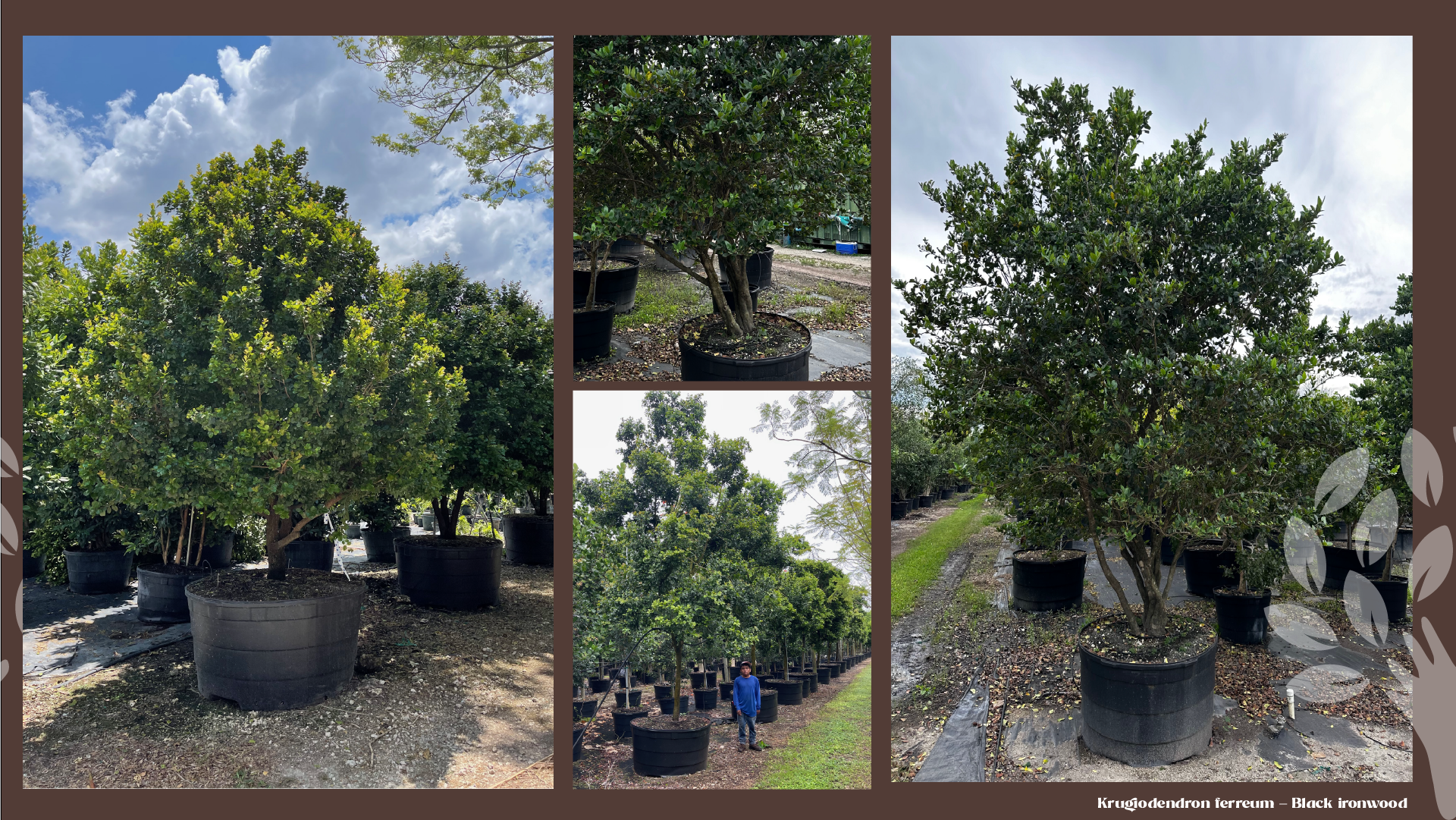
The longevity of this wood is almost hard to believe. Botanist Dr. Daniel Austin took undergraduate students to a South Florida hammock for 31 consecutive years, and a piece of blown-down black ironwood heartwood he found there remained visibly unchanged across all those decades. While any piece of iron left in the same environment had long since corroded away.
As a landscape tree, black ironwood grows slowly into a tight, upright form. small glossy leaves, attractive bark, and a refined presence that suits confined spaces well. The small fruits, which resemble dark M&Ms, attract birds. Great for courtyards, medians, or hardscape settings, few natives offer this combination of longevity, character, and ecological value.
Best use: Medians, courtyards, coastal hardscape planting, specimen in tight spaces.
Conditions: Full sun; highly drought tolerant; limestone-adapted; salt tolerant; Zone 10A+.
Coccoloba diversifolia — Pigeon Plum
Pigeon plum is having a moment — and for good reason. Landscape professionals and clients alike are increasingly drawn to its polished, upright form and dark, glossy foliage. It grows as a mid to large canopy tree, reaching 30–40 feet, and tolerates a wide range of conditions including coastal exposure, dry limestone soils, and full sun. The clusters of small dark fruits are a magnet for birds, making it as functional as it is attractive. Perfect for projects that need a native with presence, it’s one of the strongest choices in the current palette.
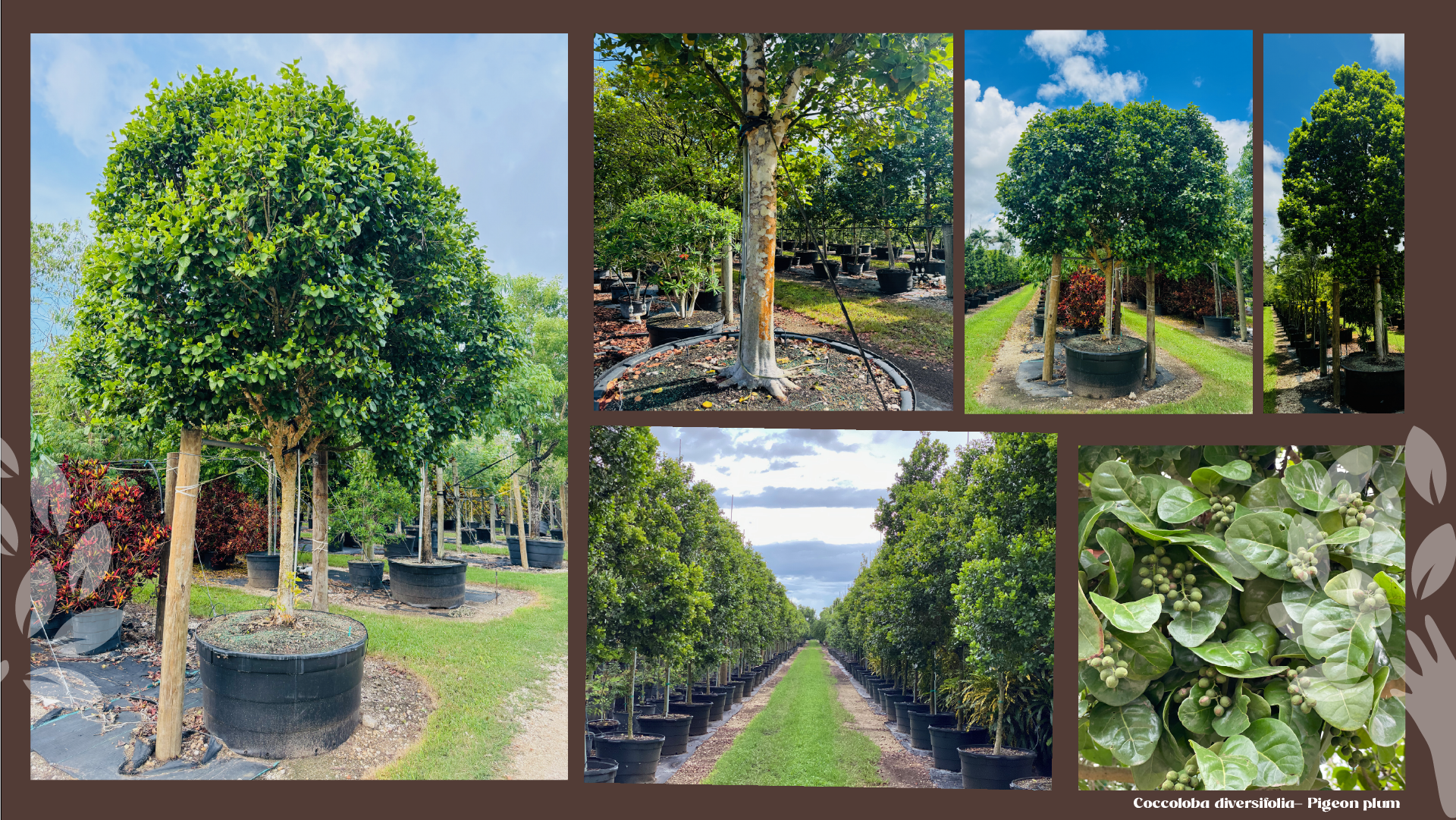
Best use: Street trees, residential canopy, coastal mixed plantings, wildlife gardens.
Conditions: Full sun; highly drought and salt tolerant; limestone-adapted.
Piscidia piscipula — Jamaica Dogwood
Jamaica dogwood is one of South Florida’s most visually dramatic natives and one of its most overlooked. In spring, before the new leaves emerge, mature trees erupt in dense clusters of white to pale lavender flowers. A display that rivals anything in the exotic ornamental tree catalog. The rest of the year it holds a graceful, spreading canopy of compound leaves that provides good filtered shade.
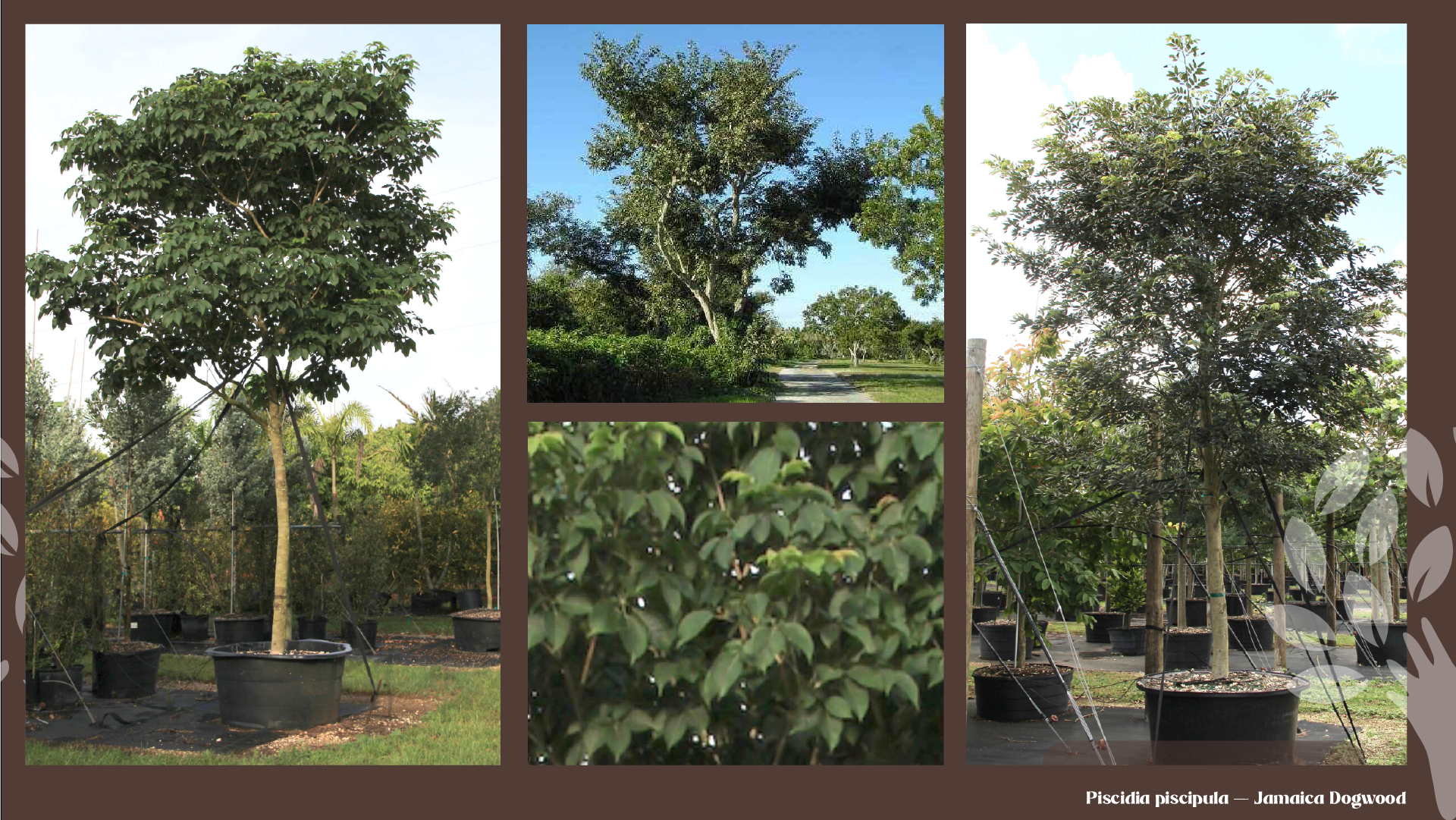
It grows quickly to 30–40 feet and handles both drought and periodic flooding, a combination that suits South Florida’s feast-or-famine wet/dry seasons well. It’s a documented host for several native Lepidoptera and the flowers support native bees heavily..
Best use: Specimen flowering tree, park and streetscape canopy, mixed native groves.
Conditions: Full sun; drought tolerant; tolerates periodic flooding; limestone soils.
Clusia rosea — Autograph Tree
Clusia rosea earns its keep on presence alone. The leaves are extraordinarily thick and leathery. Broad, dark, waxy ovals that feel almost architectural. The tree carries them with a density and boldness that makes most other native shrubs and trees look delicate by comparison. It grows as a large shrub or small tree to around 25–35 feet, and in the landscape it reads as a serious, structural plant. The common name “autograph tree” comes from the leaves being hard enough to carve text into and hold it permanently. A novelty that clients tend to remember.
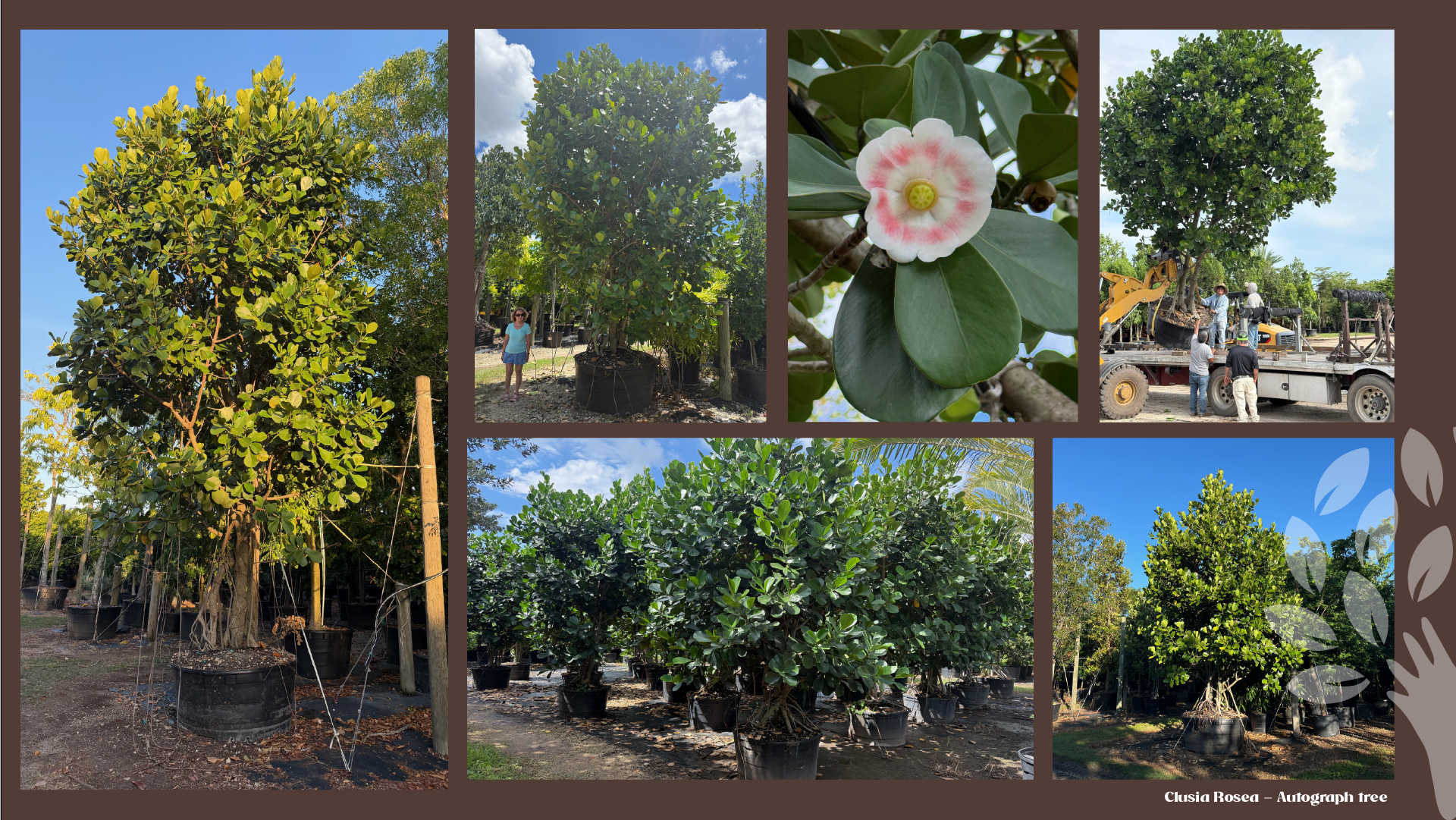
The flowers are showy and worth noting: pink and white, resembling a magnolia bloom in miniature, they appear in clusters and are followed by golf ball-sized green fruits that split open at maturity to reveal vivid orange-red seeds. Both flowers and fruit add seasonal interest to what is already a strong year-round performer.
Clusia handles full coastal exposure, salt spray, and drought with ease once established, and it takes well to pruning, making it equally suited to a formal hedge or a loose specimen planting.
Best use: Coastal screens and hedges, specimen tree, accent in tight spaces, poolside planting.
Conditions: Full sun to part shade; highly salt and drought tolerant; limestone soils; Zone 10B–11.
Start Specifying Natives — We Can Help
South Florida has one of the most extraordinary native floras in North America, and it deserves to show up in more project specs. Every time a landscape professional chooses a proven native over a default exotic, they’re delivering a plant that’s adapted to the soils, the rainfall patterns, the salt, and the wildlife that are already here — and that will still be performing decades from now with far less intervention.
If you’re ready to expand your native palette or want help sourcing any of these species for an upcoming project, reach out to us. We’re happy to talk availability, sizing, and what works best for your specific site conditions.
📍 24605 SW 192 Ave, Homestead, FL 33031
📞 305-245-6886
✉️ info@treeworldwholesale.com
Monday–Friday 8am–5pm · Saturday & Sunday by appointment
Frequently Asked Questions About Native Plants of Florida
What are the primary landscape uses for the Spanish stopper?
The Spanish stopper is highly versatile and works exceptionally well for hedges, mixed native screens, tight rights-of-way, or as a standalone specimen tree valued for its striking, mottled bark.
How does black ironwood compare to actual iron in coastal environments?
Black ironwood resists disease, termites, and salt spray better than actual iron, with a wood density so high (a specific gravity of 1.42) that green twigs will sink when dropped into salt water.
What makes the Jamaica dogwood a strong structural choice for South Florida seasons?
The Jamaica dogwood grows rapidly to 30–40 feet and easily tolerates both extreme drought and periodic flooding, making it perfectly adapted to South Florida’s alternating wet and dry seasons.
Can the autograph tree handle coastal exposure and heavy pruning?
Yes, the autograph tree is highly salt- and drought-tolerant, handles full coastal exposure with ease, and takes well to pruning for use as either a formal hedge or a loose specimen tree.
What makes crabwood different from other South Florida understory trees?
Crabwood’s leaves angle sharply upward in a layered, light-catching pattern unlike most native understory trees, and it’s one of the few species that can genuinely thrive in deep shade and dense root competition beneath an established canopy.
What makes pigeon plum a strong choice for coastal landscape projects?
Pigeon plum grows into a polished, 30–40-foot canopy tree that handles coastal exposure, dry limestone soils, and full sun with ease, while its dark fruit clusters provide a reliable food source for birds.