
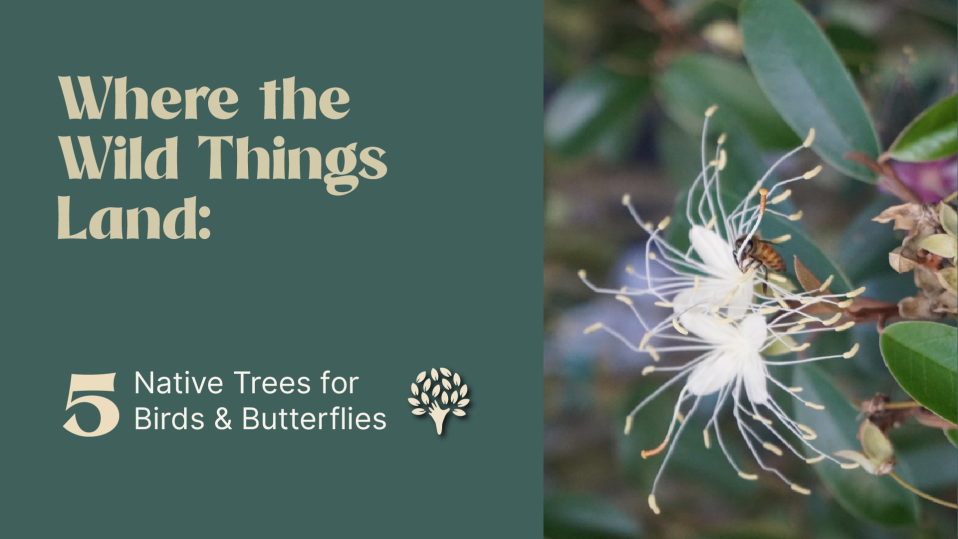
There’s a quiet shift happening in South Florida landscapes. For decades, the region’s yards, medians, and commercial grounds were planted for looks alone. Fast color, dense shade, a familiar silhouette. Increasingly, though, the people who design and plant these spaces are asking a different question. What does this tree do for the land it sits on — and what shows up because of it?
It’s a question institutions have been answering for years. Fairchild Tropical Botanic Garden’s Native Plant Network — a citizen-science program running for nearly two decades — encourages Miami-Dade and Monroe County residents to grow indigenous plants at home, then tracks the pollinators and wildlife that return as a result. The program pays special attention to the pine rockland, a habitat Fairchild calls “critically imperiled” and one that exists almost nowhere on Earth outside the Miami area and the Florida Keys. When you plant the right native, you’re not just landscaping. You’re rebuilding a fragment of that ecosystem — and giving birds, butterflies, and bees a reason to move in.
The good news for growers, landscape architects, and homeowners alike is that many of the trees anchoring this movement are already available at nursery scale. Here are five South Florida natives worth knowing — what each one attracts, what makes it ecologically valuable, and where it fits in a real planting plan.
Key Takeaways:
- Native trees like Gumbo Limbo, Jamaican Caper, Locustberry, Marlberry and Spicewood support birds, butterflies and bees in South Florida landscapes
- Planting natives in layers (canopy + understory) mimics a natural hammock and creates year-round habitat
- Native trees are adapted to South Florida’s soils, salt, heat and storms — meaning lower maintenance long-term
- Some species like Locustberry are larval hosts for rare pine rockland butterflies
- New plantings need consistent watering for 8–12 weeks; fall and rainy season are ideal planting windows
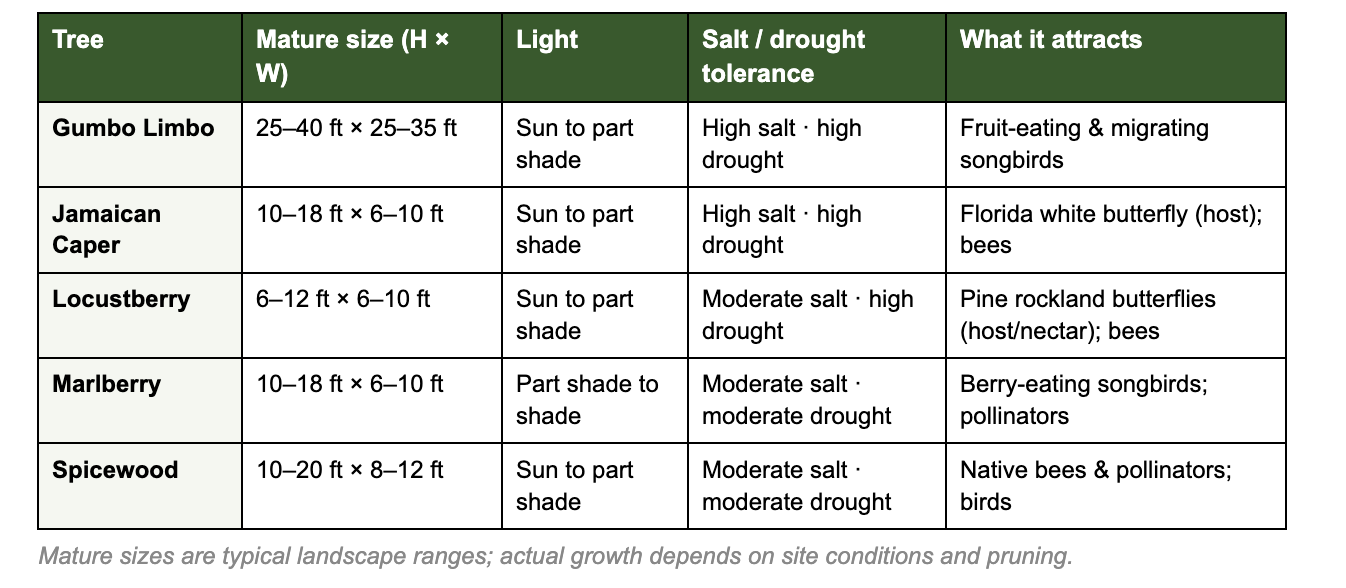
5 South Florida Native Trees for Wildlife – Size, Light & What They Attract
Gumbo Limbo (Bursera simaruba)
If South Florida had a signature tree, this would be a strong contender. Gumbo Limbo is instantly recognizable by its coppery, peeling bark — the reason locals nicknamed it the “tourist tree,” a wry jab at sunburned visitors. But its appeal runs deeper than looks. Gumbo Limbo is one of the most wind-tolerant trees in the region, routinely surviving hurricanes that flatten less resilient species, and it re-leafs quickly after storm damage. Its broad canopy delivers genuine shade in a climate that demands it.
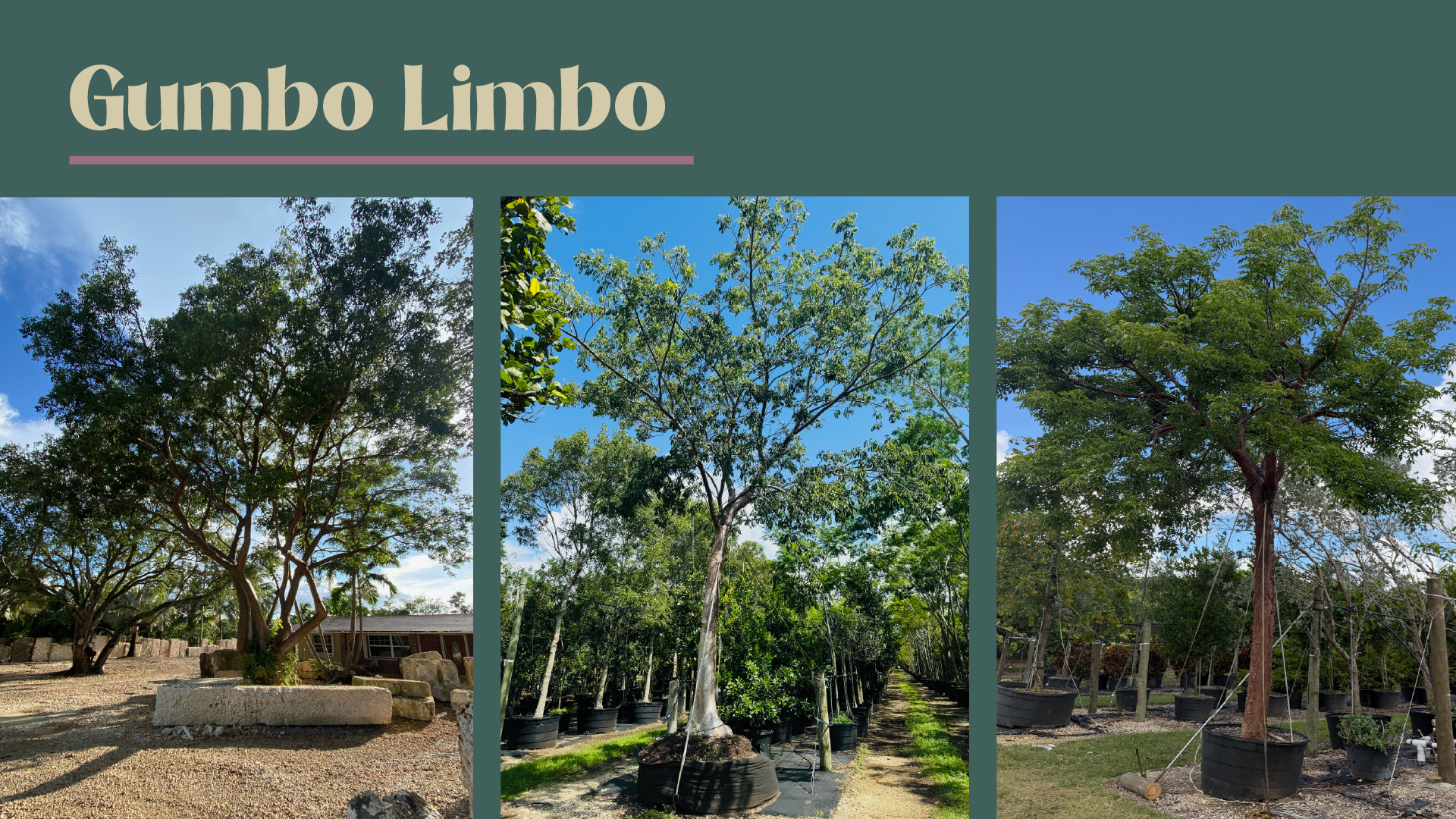
Wildlife it draws: Mockingbirds, catbirds, vireos, and migrating warblers feed heavily on its red fruit through fall and winter — making a mature specimen a genuine bird magnet.
For a specimen tree that combines toughness, wildlife value, and unmistakable character, it’s hard to beat. TreeWorld carries Gumbo Limbo in large field-grown sizes up to 600 gallons, making it a practical choice for instant-canopy projects.
Jamaican Caper (Capparis cynophallophora)
Where Gumbo Limbo makes a statement, the Jamaican Caper works quietly and beautifully. This small evergreen tree or large shrub has glossy dark-green leaves with a distinctive coppery, silver-backed underside, and its flowers open as showy sprays of white stamens that blush to purple — one of the more ornamental blooms among South Florida natives.
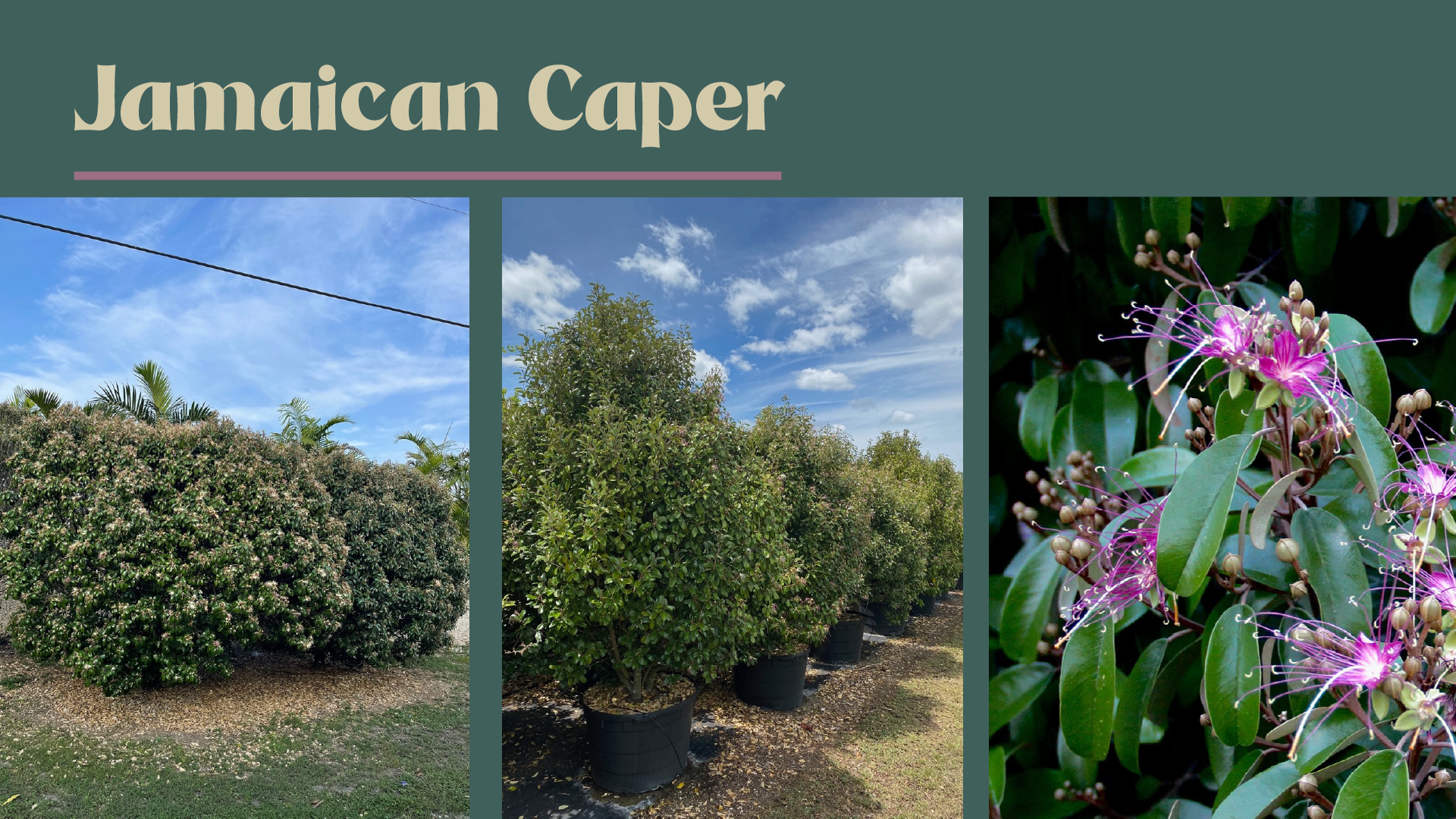
Wildlife it draws: A larval host for the Florida white butterfly — meaning the species can complete its life cycle here, not just pass through — while the nectar-rich flowers pull in native bees.
Salt-tolerant and drought-hardy once established, the Jamaican Caper suits coastal plantings, screens, and hammock-style understory groupings where a refined, low-maintenance native is wanted.
Locustberry (Byrsonima lucida)
If any tree on this list embodies the pine rockland mission, it’s the Locustberry — a plant Fairchild itself has spotlighted in its native-plant outreach. This slow-growing small tree produces clusters of flowers that open white and pink before deepening to red, so a single plant can appear to bloom in several colors at once.
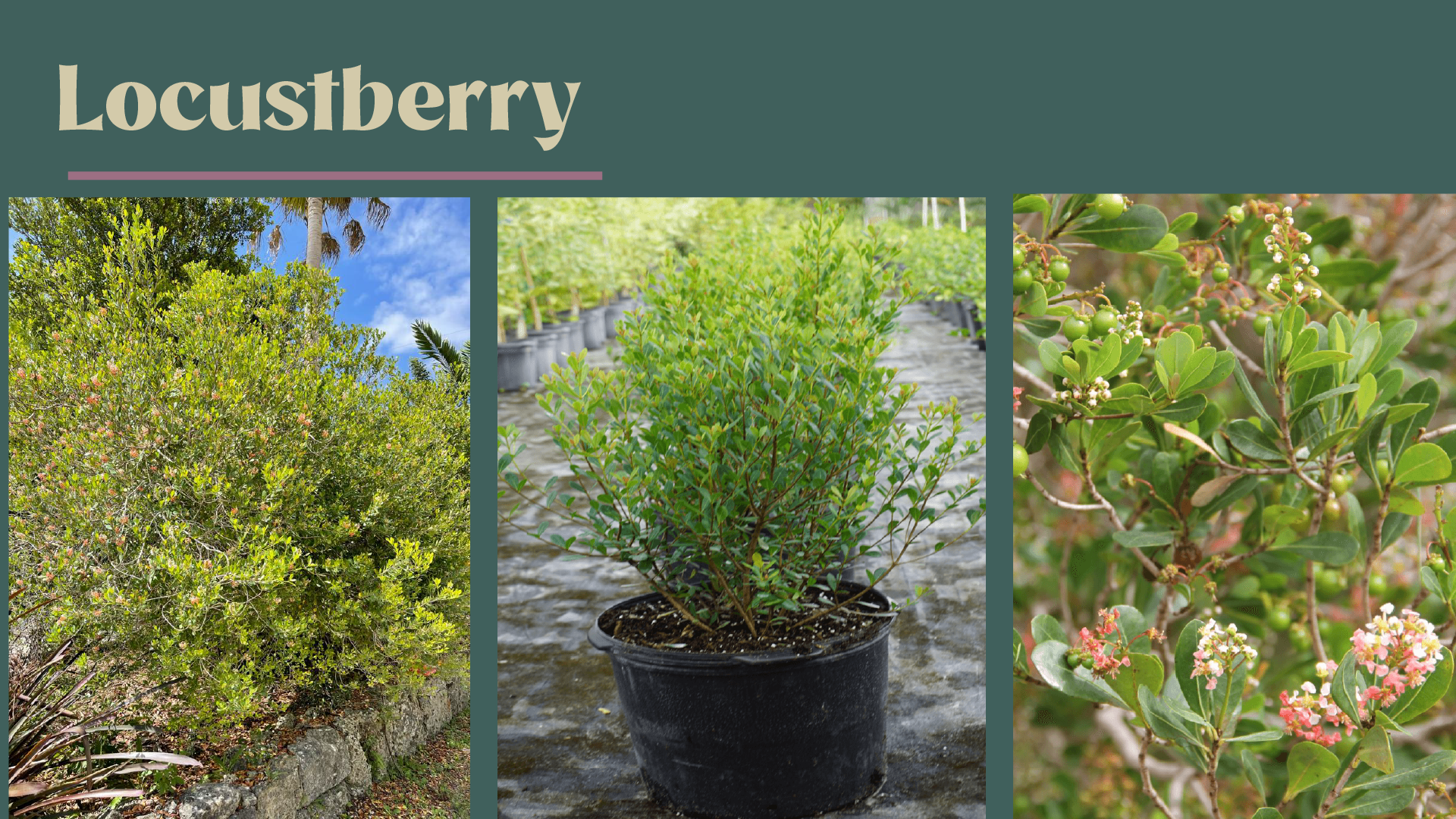
Wildlife it draws: A nectar source and larval host tied to rare pine rockland butterflies — the very pollinators the Native Plant Network works to monitor and recover — plus a reliable draw for native bees.
Because it’s naturally at home in the thin, rocky, well-drained soils of the pine rockland, Locustberry does real conservation work in a restoration or habitat-focused planting — the kind of species that turns a landscape into habitat.
Marlberry (Ardisia escallonioides)
Not every native needs full sun, and Marlberry is proof. This adaptable understory tree tolerates shade well, making it one of the more versatile natives for filling in beneath a larger canopy or softening a shaded corner where turf and exotics struggle. It offers fragrant white flower clusters followed by dark berries, extending a garden’s value into the lower layers where much of the wildlife activity actually happens.
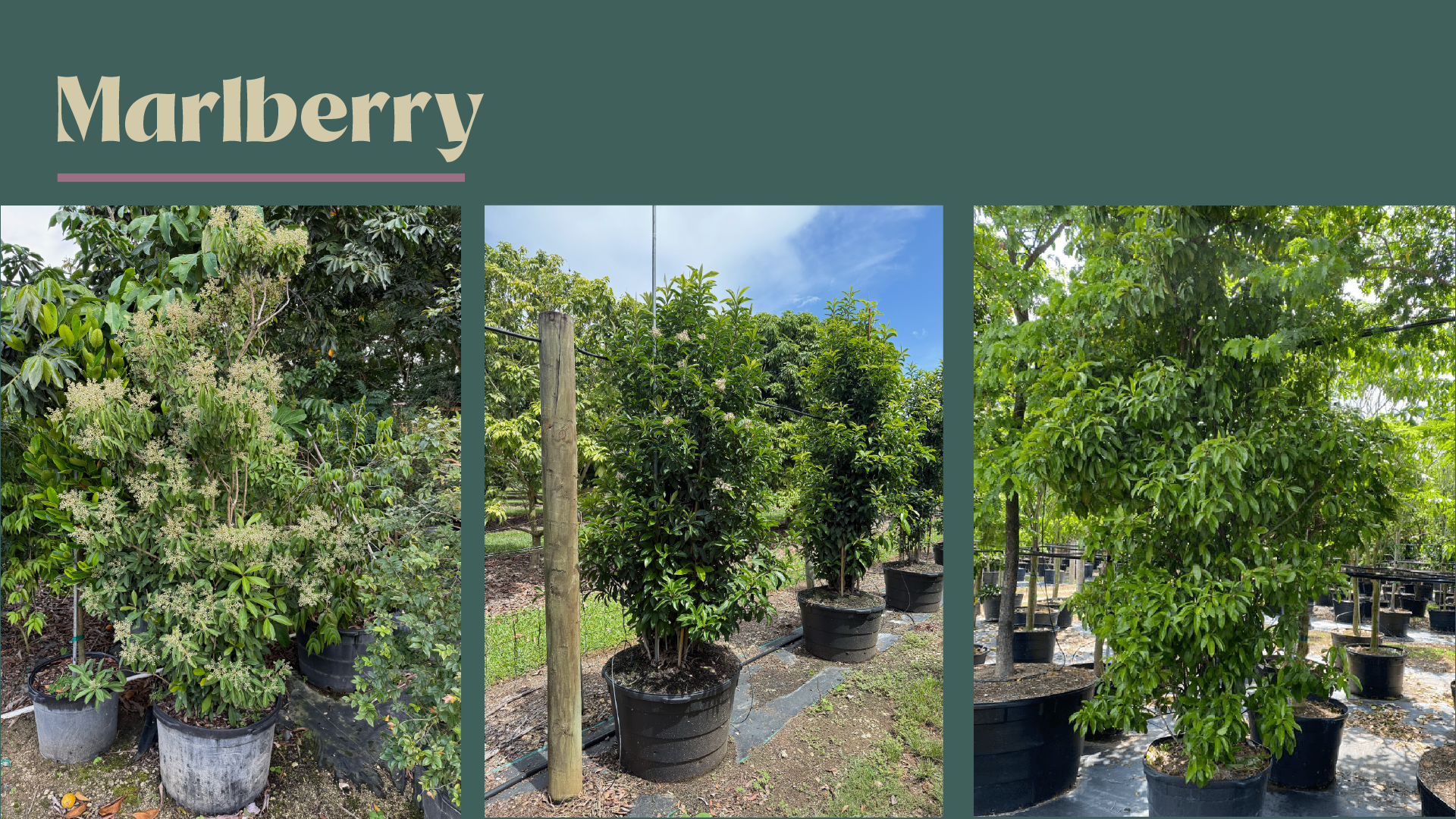
Wildlife it draws: Its berries feed mockingbirds, cardinals, catbirds, and other songbirds, while the fragrant flowers bring in bees and other pollinators.
For designers building the kind of layered, multi-tier planting that mimics a natural hammock — canopy, understory, and groundcover working together — Marlberry is a dependable middle-story choice.
Spicewood (Calyptranthes pallens)
Rounding out the list is a native that rewards a closer look. Spicewood is a small, dense evergreen tree with aromatic foliage and delicate flushes of new growth that emerge in warm reddish tones before maturing to green. It fits neatly into tighter residential and commercial spaces where a large canopy tree won’t work.
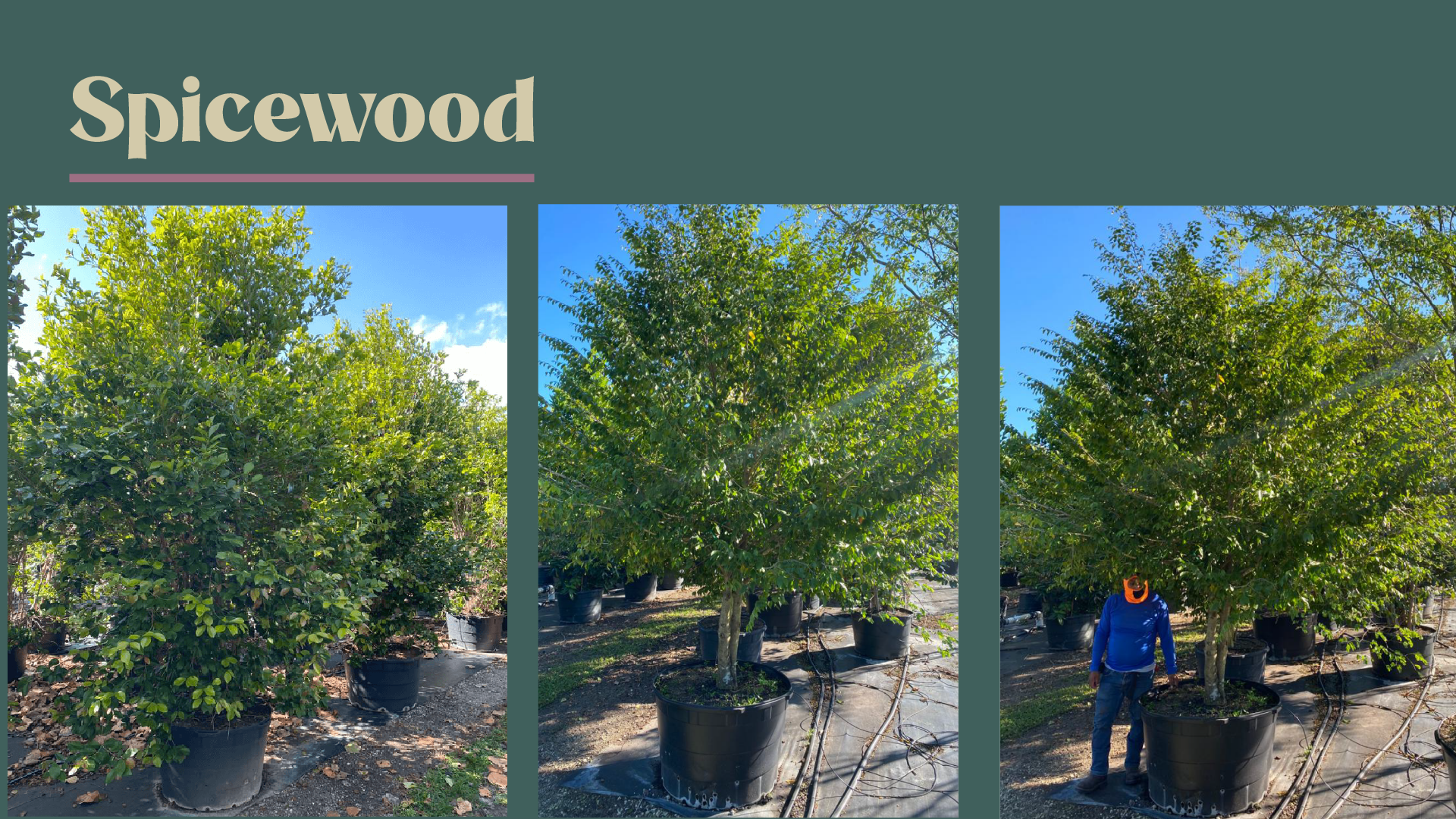
Wildlife it draws: Its small white flowers are a magnet for native bees and other pollinators, and its berries feed songbirds — a lot of ecological function in a compact package.
As a member of the myrtle family well-suited to South Florida’s hammocks, Spicewood brings both fragrance and pollinator value to plantings that need a smaller-scale native.
How to plant native trees together for year-round wildlife habitat?
The real payoff comes from combining these species rather than planting them in isolation. Pair a canopy tree like Gumbo Limbo with understory Marlberry and Spicewood and a sun-loving Locustberry or Jamaican Caper at the edge, and you build the layered structure — canopy, understory, groundcover — that a natural hammock uses to support wildlife. Staggered bloom and fruit across the group means something is feeding birds, butterflies, or bees in nearly every season.
Why South Florida native trees are worth planting?
The case for natives isn’t only ecological — though the ecological case is strong. Native trees are adapted to South Florida’s soils, heat, salt, and storm cycles, which generally translates to:
- Lower irrigation demand
- Less fertilizer and pesticide dependence
- Better long-term survival than many imported ornamentals
Programs like Fairchild’s Native Plant Network even ask participants to garden pesticide-free, precisely because natives can sustain the food web on their own once established.
For a landscape architect specifying plants for a resilient commercial site, a municipality restoring habitat, or a homeowner who wants their yard to mean something, that combination of durability and purpose is exactly the point.
Discover the best spring flowering trees for your garden – read our full guide!
A quick word on establishment
“Low-maintenance” doesn’t mean “no care at first.” Even the toughest native needs regular water through its first few months while roots take hold:
- Plan on consistent irrigation for the first 8 to 12 weeks, then taper off as the tree settles in.
- Fall and the start of the rainy season are ideal planting windows in South Florida, giving roots time to establish before the next dry stretch.
- A ring of mulch (kept off the trunk) helps hold moisture and cuts down on weeds while the tree gets going.
Source your natives from a local grower
At TreeWorld Wholesale, we field-grow a deep bench of South Florida natives — more than fifty species — on our farm in Homestead, in landscape-ready sizes from small material to large specimens. Growing here, in the same soils and climate our trees will live in, means the natives we ship are already adapted to the sites they’re headed to. Whether you’re planting a single specimen or sourcing hundreds of trees for a habitat-scale project, we can help you match the right natives to the right site.
Ready to plant for wildlife?
Send us your plant list and we’ll check current availability and pricing.
Request a quote: treeworldwholesale.com/contact-us-get-a-quote
Call: 305-245-6886 Email: sales@treeworldwholesale.com
Visit: 24605 SW 192 Ave, Homestead, FL 33031
Hours: Mon–Fri 8:00 a.m.–5:00 p.m. · Sat–Sun by appointment
Want to learn more about growing natives at home? Explore Fairchild Tropical Botanic Garden’s Native Plant Network.
Sources & further reading:
- Fairchild Tropical Botanic Garden — Native Plant Network
- Fairchild Tropical Botanic Garden — Locustberry (Byrsonima lucida)
- UF/IFAS Gardening Solutions — Gumbo Limbo
- Florida Native Plant Society — Jamaican Caper (Quadrella jamaicensis)
- Florida Native Plant Society — Locustberry (Byrsonima lucida)
Frequently Asked Questions About Native Trees for Birds & Butterflies in South Florida
Which native tree should I choose for my landscape?
Gumbo Limbo if you need a large canopy tree that’s hurricane-tough and attracts migrating songbirds. Jamaican Caper if you want a smaller ornamental native that supports butterflies and bees in coastal or hammock-style plantings. Locustberry if your site has thin rocky soil and you want to support rare pine rockland butterflies. Marlberry if you’re working with shade or partial shade and want a reliable understory tree with bird-friendly berries. Spicewood if space is limited but you still want fragrant foliage, pollinators and songbirds in a compact package.
Can I mix all five trees in one planting?
Yes — and it’s encouraged. Pairing a canopy tree like Gumbo Limbo with understory species like Marlberry and Spicewood, and edge species like Locustberry or Jamaican Caper, creates the layered structure of a natural hammock. Staggered bloom and fruit times mean something is feeding wildlife in nearly every season.
How much water do these native trees need?
Once established, all five are well-adapted to South Florida’s dry periods and need minimal supplemental irrigation. New plantings need consistent watering for the first 8–12 weeks while roots take hold — after that, taper off and let the trees manage on their own.
When is the best time to plant?
Fall or the start of the rainy season. Roots have time to establish before the next dry stretch, and trees go into their first dry season with a stronger foundation.
Do these trees need fertiliser or pesticides?
Generally no. Native trees are adapted to local soils and sustain the food web on their own. Programs like Fairchild’s Native Plant Network even ask participants to garden pesticide-free — natives don’t need the chemical support that many imported ornamentals do. A light compost amendment at planting helps in very poor or compacted soils.